

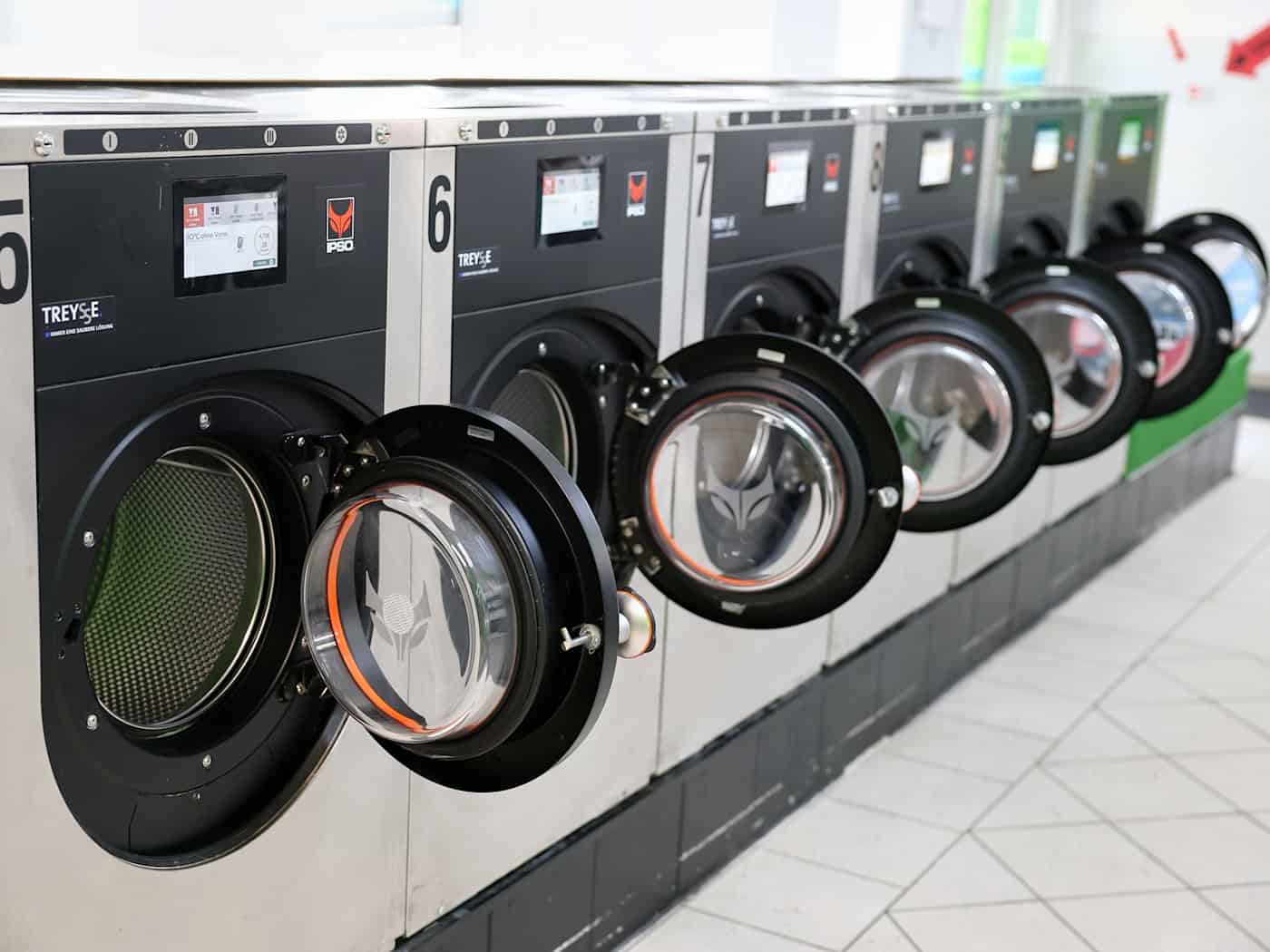
Students and mechanics, grandmothers with bed linens, hairdressers with towels, janitors with work clothes: A wide variety of people come together at Marcus Kober’s laundromats in Leipzig. They all have one thing in common: they want to get their laundry done quickly. Load the machine, select a cycle—in about an hour, everything should be clean and dry. “Time is the most important factor,” explains Kober. The image of the laundromat as a place where you sit for a long time and drink coffee is outdated. “What’s in demand are fast machines and easy operation.” Kober operates five laundromats under the Snowball brand in Leipzig, and an expansion into Saxony-Anhalt is planned. A basic wash cycle costs around five euros at his laundromats. Demand is rising, he explains. But why do without your own washing machine and make the trip to the laundromat? Reasons include limited space in the apartment, the cost of buying a machine, and greater flexibility when moving. In Chemnitz, Rosemarie Weidauer has experienced consistency: Her clientele has remained surprisingly loyal over the years, she reports. Her Laundry Center, which has been in business since 1991, is surrounded by large apartment buildings in the heart of the city and features 21 washing machines and eight dryers. Regular customers come in, along with walk-in customers during cultural events or nearby motorcycle rallies. “Major events really make a difference,” says Weidauer. In Chemnitz, modern technology blends with traditional customs. “We’re on the edge of the Ore Mountains, where people still use mangles—and we offer that service, too. We also provide a shirt-pressing service.” Now “bedding season” is beginning—and that’s when the machines, which can hold up to 15 kilograms, are especially needed. Bedding, large items of laundry, running multiple loads at once—that’s why even customers who have a washing machine at home but reach their limits with such large quantities come here. Peter Krauß has a set laundry day each week. His apartment is just a few minutes’ walk from the Chemnitz Laundry Center. He values the connections he makes with other customers, he says. “We talk about all sorts of things.” Five years ago, he decided against buying his own machine. “The new machines break down faster than they used to, and repairs are expensive,” says Krauß, recounting a long tradition of communal laundry in Chemnitz. Even back in the GDR, the city had the “Fix” service cooperative. “You could drop off your dirty laundry there.” In contrast, the classic self-service laundromat was far less common in East Germany before 1990, adds Rosemarie Weidauer. At Mark-Archie Lehmann’s laundromat in Bautzen, customers now expect the latest technology and customized laundry services, the operator explains. In the past, it was mainly repairmen and singles who came; now, more and more families are using the large machines. Rugs, lounge chair cushions, and pet blankets are part of everyday life there. Machines with larger capacities are available for this purpose, including a special machine for horse blankets and dog gear. The equipment has also evolved. Customers can pay cashless, select programs via touchscreen, and add laundry detergent, fabric softener, or waterproofing agents. A standard load of laundry, including detergent, costs around six euros. According to Lehmann, laundromats are also used as a convenient stopover: After a vacation, families spread their laundry across several machines, head into town in the meantime, and then continue their journey with clean laundry. “At home, they’d be busy for several days.” Prices are the main reason laundromats work: “We have the same technology as a dry cleaner or laundry service, but we save on labor costs.” As a result, his laundromat has become attractive not only to new private customers but also to small businesses such as hair salons. For operators, the business remains a challenge, explains Marcus Kober. He points to high costs for electricity and gas. And customers are watching their spending. Fewer of them are using dryers and are instead taking their laundry home while it’s still wet. Opening on Sundays and holidays is also difficult for operators to manage, says Kober. “I’ve been threatened with heavy fines if I open my laundromats on Sundays, even though it’s allowed in other federal states. Commuters and service technicians, in particular, need Sundays.” The problems with the opening regulations for laundromats are well known, the Ministry of Economic Affairs in Dresden explains upon inquiry. Minister Dirk Panter (SPD) has received several letters from operators. He intends to advocate for a change and a “pragmatic solution.” “The unequal regulations governing the operating hours of laundromats and car washes are no longer realistic,” the ministry quotes him as saying. The number of businesses in the “laundry and dry cleaning” sector has declined in Saxony. According to the State Statistical Office, there were a total of 160 establishments in this sector in 2024, compared to 209 in 2019 and 248 in 2014. However, the statistics include not only self-service laundromats but also traditional laundries and dry cleaners. A separate figure for self-service laundromats cannot be derived. Copyright 2026, dpa (www.dpa.de). All rights reservedLarge washing machines for bedding and more
Laundromat as a Meeting Place—“We Talk About All Sorts of Things”
Laundromats are attracting new customer groups
Laundromats remain an energy-intensive industry


