

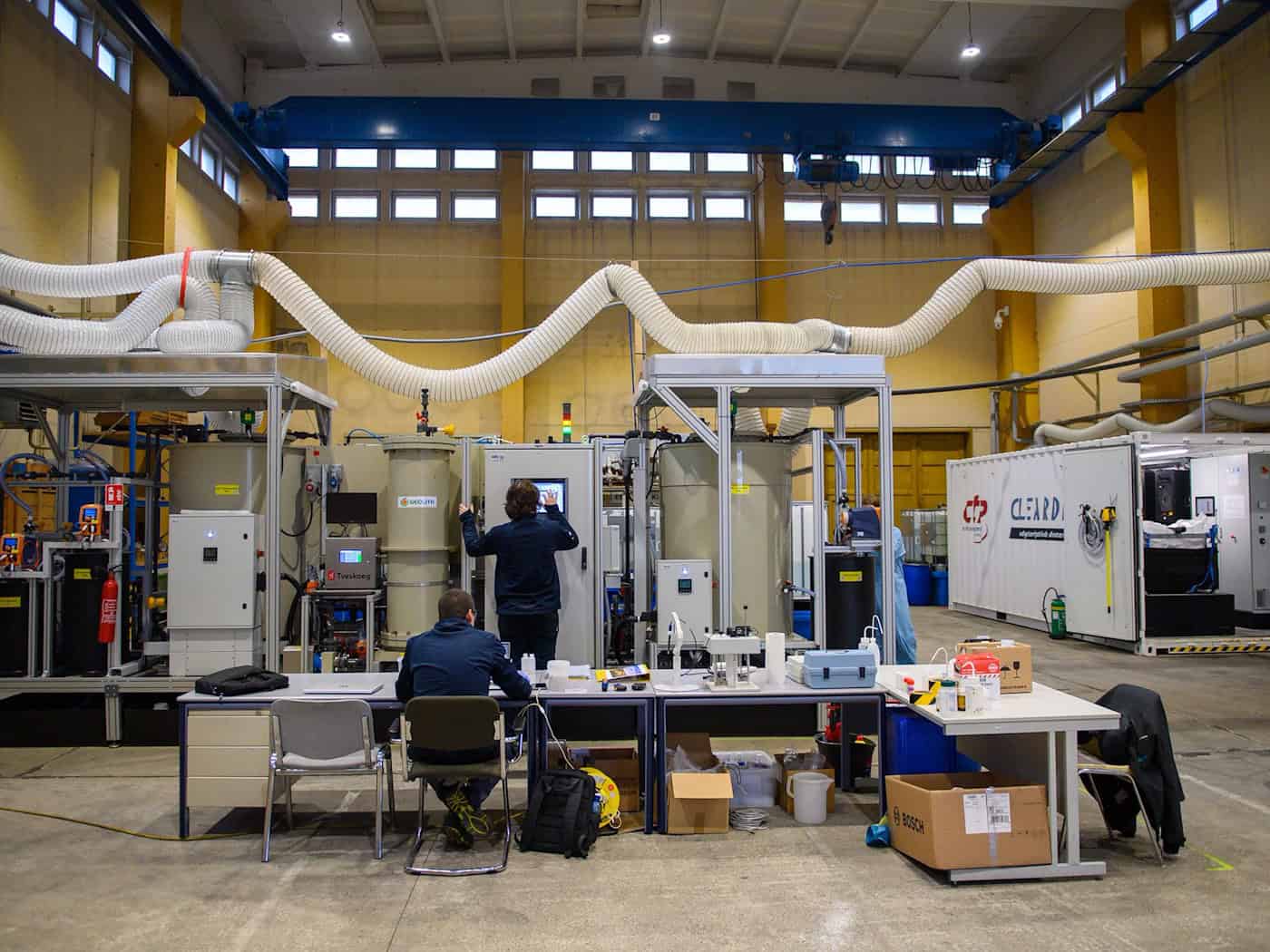
The European Commission has designated two lithium mining projects in Saxony and Saxony-Anhalt as strategically important projects for critical raw materials. This means that the projects by Neptune Energy in Salzwedel and Zinnwald Lithium in Zinnwald-Georgenfeld are among a group of 46 new projects in 16 EU member states that will receive special support in the future. Eight of the projects are in Germany. There were a total of 171 applicants, said EU Commissioner Stéphane Séjourné when announcing the selection in Brussels. The 46 selected projects are set to benefit, among other things, from accelerated permitting processes and improved access to financing. The goal is a “genuine value chain from the mine to recycling.” By 2030, the European Union aims to cover 10 percent of its raw material needs through its own mining projects. In the case of lithium mining, he believes this goal will be achieved in the foreseeable future. Following an initial decision last year to select critical projects, the EU has now committed to a total of 93 such strategic projects under the so-called “Critical Raw Materials Act.” The company Zinnwald Lithium plans to mine lithium from solid rock beneath Zinnwald-Georgenfeld, directly on the border with the Czech Republic, where a lithium project on the Czech side—aimed at mining the same ore body—has already been granted EU status as a critical project. Until now, there had been talk of an annual mining volume of up to 1.5 million metric tons of lithium ore in Saxony. This year, the parent company, Zinnwald Lithium Plc, was fully acquired by the Dutch AMG Lithium Group. In Bitterfeld-Wolfen, AMG Lithium has also commissioned Europe’s first lithium hydroxide refinery. Neptune Energy is testing the extraction of lithium from thermal water at depths of up to 4,000 meters in the Altmark region. The company operates a pilot plant in Salzwedel to research this process. Eventually, lithium is to be extracted on an industrial scale in the Altmark region. The lithium is dissolved deep underground in the thermal water, which is distributed throughout fine pores in the rock. The raw material is to be extracted from the water through drilling and a special adsorption process. Its status as a strategic project confirms the Altmark region’s potential for European raw material security, said Neptune Energy CEO Andreas Scheck. “Europe needs its own reliable and sustainable sources of critical raw materials, as well as the development of downstream value chains.” The lithium project in the Altmark could play an important role in this regard. Lithium is a key raw material for batteries, energy storage, and electric mobility. According to the company, the deposit in the Altmark is among the most significant known lithium brine deposits worldwide. Citizens’ initiatives in the Altmark and the Ore Mountains warn of the environmental impacts of the mining projects and view them critically. Classification as a strategic EU project does not entail additional funding. For the companies, this status primarily means the prospect of faster approval procedures and, consequently, easier access to capital. Depending on the type of project, the duration of the process is to be reduced to a maximum of 27 months in the future, according to the European Commission. Until now, the process could take up to ten years. Saxony’s highest mining authority, the Oberbergamt in Freiberg, recently stated that the EU status means additional staff capacity for processing the matter, but not less stringent regulations. Copyright 2026, dpa (www.dpa.de). All rights reservedRaw materials for batteries, energy storage, and electric mobility
Companies aim to extract lithium from deep water and rock
The deposit in the Altmark region is considered one of the most significant in the world
Citizens’ initiatives are critical of the mining projects


