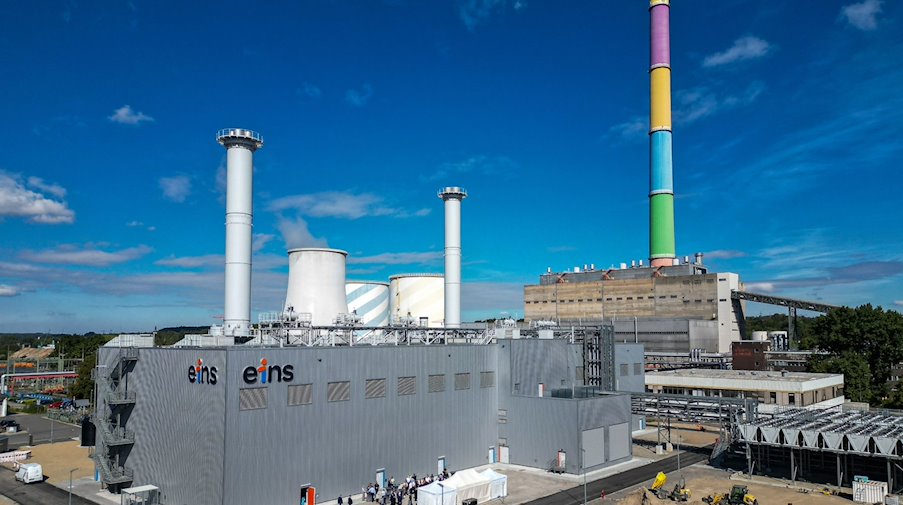
The plug will be pulled on Chemnitz' lignite-fired power plant at the beginning of 2024. The two units, which supply eastern Germany's fourth-largest city with heat and electricity, will be replaced by two gas-fired engine power plants. They were officially commissioned on Monday. This will reduce CO2 emissions by 60 percent, said Roland Warner, managing director of Energy One. That's about as much as 230,000 passenger cars emit, he said. Warner spoke of a "historic step" for the city in the direction of climate neutrality.
The planning for the conversion of the energy supply reportedly goes back about 8 years. In total, the company is investing about 400 million euros, of which about 220 million euros are for new power generation plants. At the same time, Eins is now getting out of coal earlier than originally planned. Initially, only one block was to go off the grid this year, the other only at the end of 2029.
The power plant blows so far just under a million tons of CO2 a year into the air and is considered the largest emitter of the climate-damaging gas in the region. For this purpose, lignite is brought in by freight train from the Leipzig area: in summer about 2,000 tons, in winter about 4,500 tons a day. The supply contract expires at the end of the year, Warner reported. The storage facility will then be emptied before the smoke from the 300-meter-high vent dries up. However, the chimney, which is visible from afar, is to be preserved. It was designed by artist Daniel Buren and is considered a work of art.