

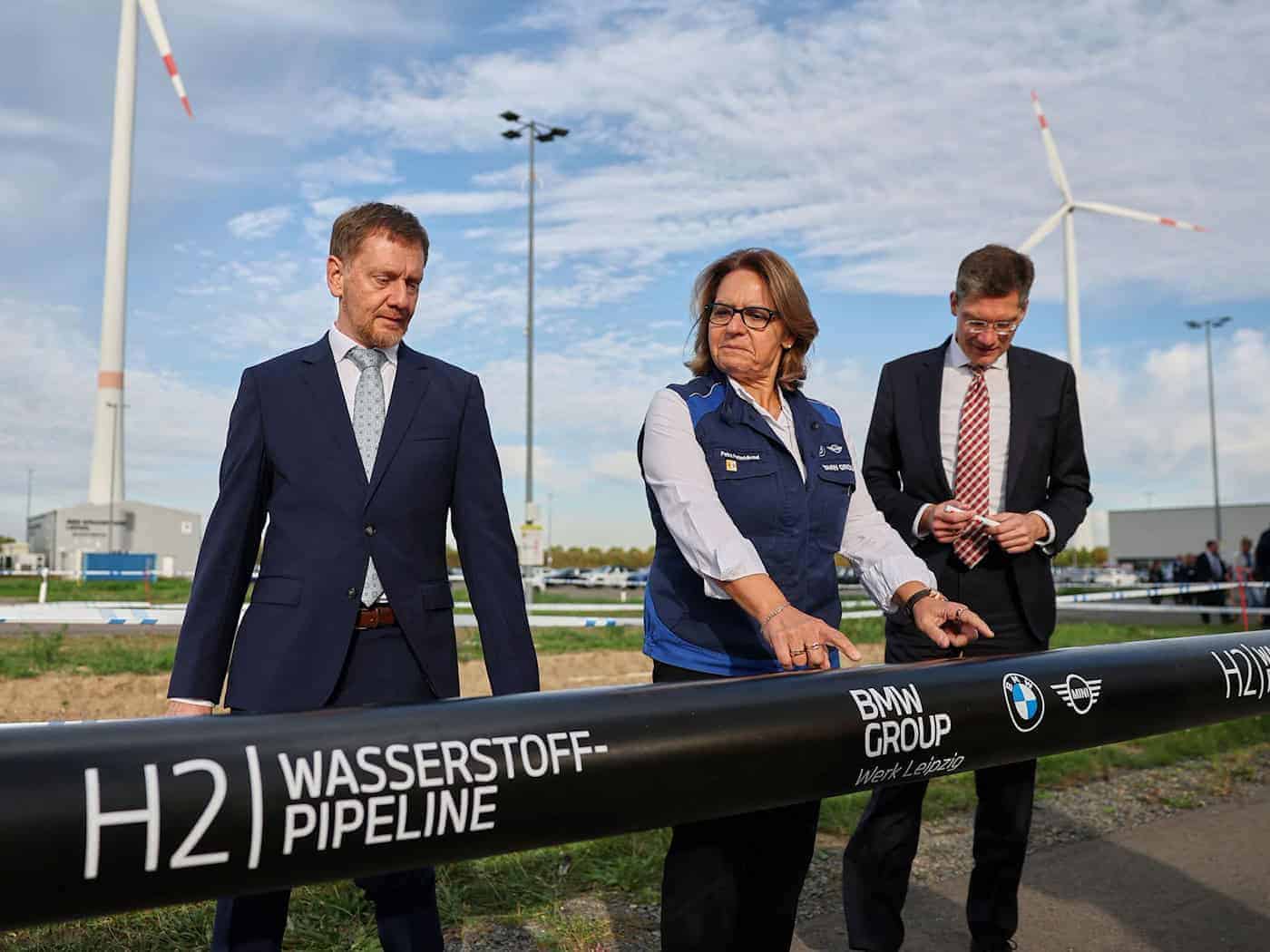
Automaker BMW is connecting its Leipzig plant to the future core hydrogen network via a pipeline. The company announced that this will make the plant the world’s first automobile factory that can be supplied with hydrogen directly via a pipeline. The pipeline, approximately two kilometers long, is scheduled to be completed and connected in the first half of 2028. The nationwide core hydrogen network is currently still largely a pipe dream. By 2032, approximately 9,000 kilometers of pipelines are to be built nationwide, connecting major industrial centers, storage facilities, production plants, and import points. To achieve this, existing natural gas pipelines, among other infrastructure, will be converted. According to the Federal Ministry for Economic Affairs, the network will be built out gradually. BMW views the direct connection of its Leipzig plant to the network as a contribution to decarbonization. Using hydrogen could reduce the site’s CO2 emissions. The pipeline construction is being funded with EU and state funds. According to the automaker, it has been using hydrogen on-site since 2013. Currently, approximately 230 forklifts and tow trucks on the premises are powered by fuel cells. In addition, hydrogen has been used in the paint shop for the past four years. The pipeline connection will enable its use on an entirely different scale in the future: In energy-intensive processes—such as the dryers in the paint shop—hydrogen could replace natural gas in the future. According to the company, the BMW plant in Leipzig currently employs around 6,800 people. They produce the BMW 1 Series, two 2 Series models, and the Mini Countryman. Copyright 2026, dpa (www.dpa.de). All rights reservedUse of hydrogen in the paint shop


