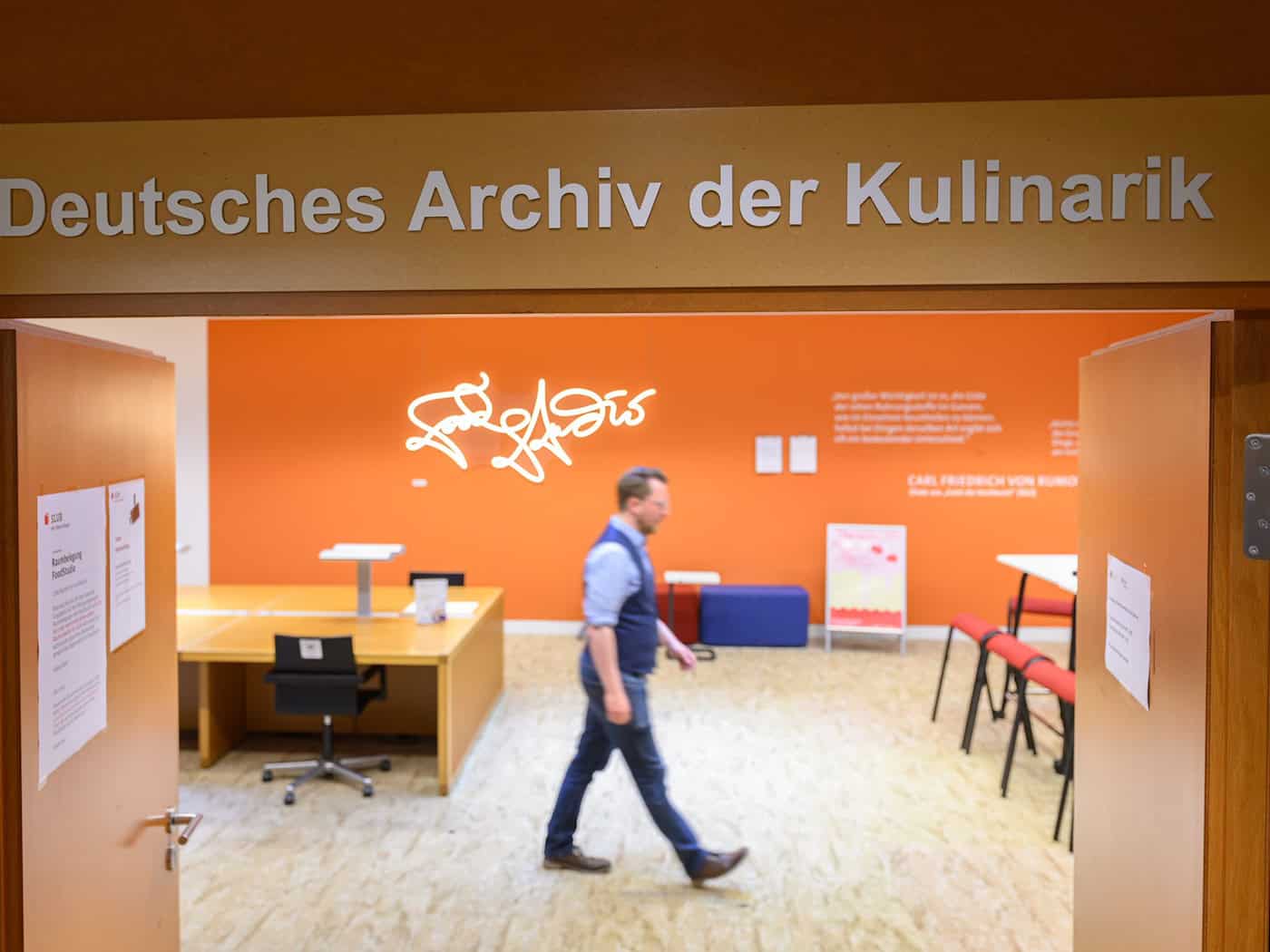
The Culinary Archive in Dresden has added more culinary creations to its collection, thereby preserving them for the future. For the first time, a culinary creation by a woman has been honored. Larissa Metz, head pastry chef at the two-star restaurant “Vendôme” at the Grand Hotel Schloss Bensberg, won the award with a composition featuring beurre blanc-bergamot ice cream, Williams Christ pear, Imperial caviar, and jasmine blossom infusion, as announced by the archive’s operators. The dishes are now meticulously documented there. Michelin-starred chef Peter Knogl from “Les Trois Rois” in Basel created a dish featuring pan-seared veal sweetbreads, baby spinach, capers, and lemon. Thomas Bühner (“La Vie by Thomas Bühner”/Düsseldorf) created “Otoro,” a dish featuring tuna, cod, and saffron stock. Jörg Sackmann (“Hotel Sackmann” in Baiersbronn) impressed with three variations on tripe. Harald Rüssel from “Rüssels Landhaus St. Urban” in Naurath served saddle of venison with crue de cacao, spruce smoke, braised cabbage rolls, pork knuckle jus, apple layer cake, elderberry gel, rutabaga purée, and pickled beech mushrooms. The Saxon State Library—State and University Library (SLUB) and the Technical University of Dresden (TUD) founded the German Culinary Archive in the fall of 2022. The extensive collection, which includes manuscripts, books, and journals as well as menus, commercial art, photographs, and audiovisual media, is among the most significant of its kind in Germany. It now also comprises 20 works of haute cuisine that are to be preserved so they can be recreated for future generations. Gourmet critic Jürgen Dollase had compiled the documentation for the now-award-winning dishes and handed it over to the archive on Wednesday. They contain step-by-step instructions for preparing and plating the culinary creations, notes, comparisons, and discussions of examples from national and international cookbooks, as well as summary evaluations and classifications—all summarized under the term “taste documentation.” “These documentations are far more than just recipes: They capture sensory knowledge that is inextricably linked to memory, biography, and culture,” explained University Rector Ursula Staudinger. Thus, at the intersection of TUD and SLUB, a unique cultural memory of culinary arts is taking shape—a vibrant hub for research, teaching, and dialogue with society. “The taste documentation is a great enrichment for the collections of the German Culinary Archive, which are unique in Germany, as they offer scholars outstanding sources for researching German cuisine of the late 20th and early 21st centuries,” emphasized SLUB Director General Katrin Stump. Copyright 2026, dpa (www.dpa.de). All rights reservedVeal sweetbreads, saddle of venison, and three variations on tripe
Extensive Collection and Documentation of Flavors
Documentations are far more than just recipes