

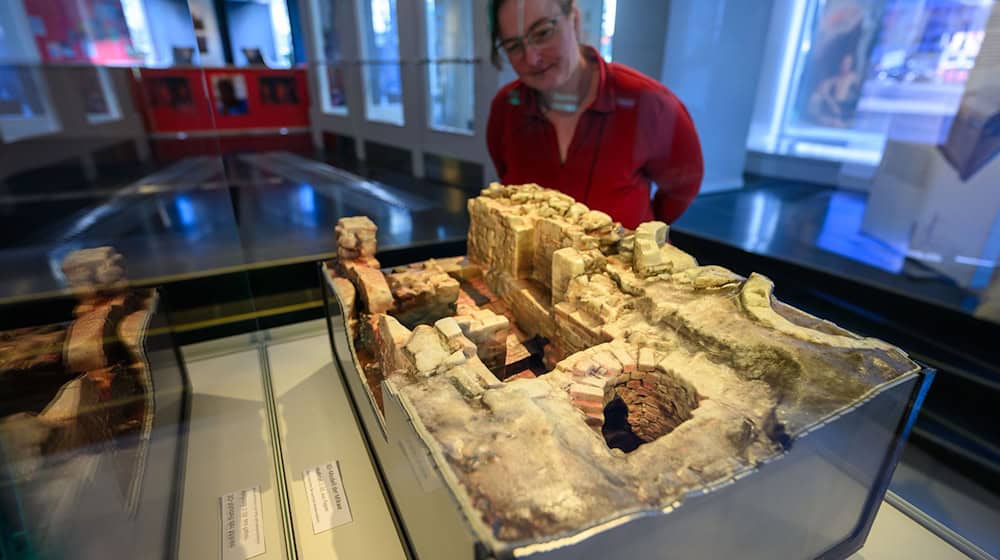
The Chemnitz mikvah, a ritual Jewish bath discovered during excavations in 2022, is once again carefully preserved in the basement of a new commercial building in the city center. However, the State Museum of Archaeology is now bringing the sensational find back to life in an exhibition for interested visitors. At the heart of the show is a colorized 3D model of the mikvah, which is said to have been used from the late 17th to the 18th century. "It is the only preserved Jewish archaeological monument that we have in Saxony," explains Rebecca Wegener from the State Office for Archaeology. The experts were amazed by the find, as it was forbidden for Jews to settle in this country at the time. In 1349, the entire Jewish population in Saxony was murdered and expelled during pogroms. According to the experts, it was only from 1868 onwards that Jews were able to live in Saxony again and practice their faith openly. But why was there a mikvah in Chemnitz in the first place? Wegener explains that the city was a toll station for traders on their way from Bohemia to the trade fair in Leipzig. Jewish traders were allowed to spend the night here. The hypothesis goes like this: an enterprising innkeeper set up the mikvah as a kind of service for these guests. Wegener: "I think that is very likely." The mikvah itself is not open to the public. On the one hand, there were already finished construction plans for the new building, including rental contracts, explains Wegener. On the other hand, the remains of the monument are very fragile. With an archaeological window, for example, light would turn the sensitive masonry into a breeding ground for algae and fungi. The archaeological monument was elaborately documented using 3D scanning and specially packaged on site. In addition to a wealth of information about the mikvah, the exhibition also shows further evidence of Jewish life in Saxony between the 15th and 19th centuries. These include replicas of two tombstones from Meissen from the late Middle Ages, old Hebrew dictionaries, souvenir coins from pilgrims at the replica of the Holy Sepulchre in Görlitz and a facsimile of the Leipzig Machzor, a collection of prayers for the high Jewish holidays. The exhibition in the foyer is on display until March 8 and admission is free. It is the museum's contribution to the Year of Jewish Culture in Saxony. Copyright 2025, dpa (www.dpa.de). All rights reservedMikvah as an offer for Jewish travelers
Exhibition shows further evidence of Jewish life in Saxony


