

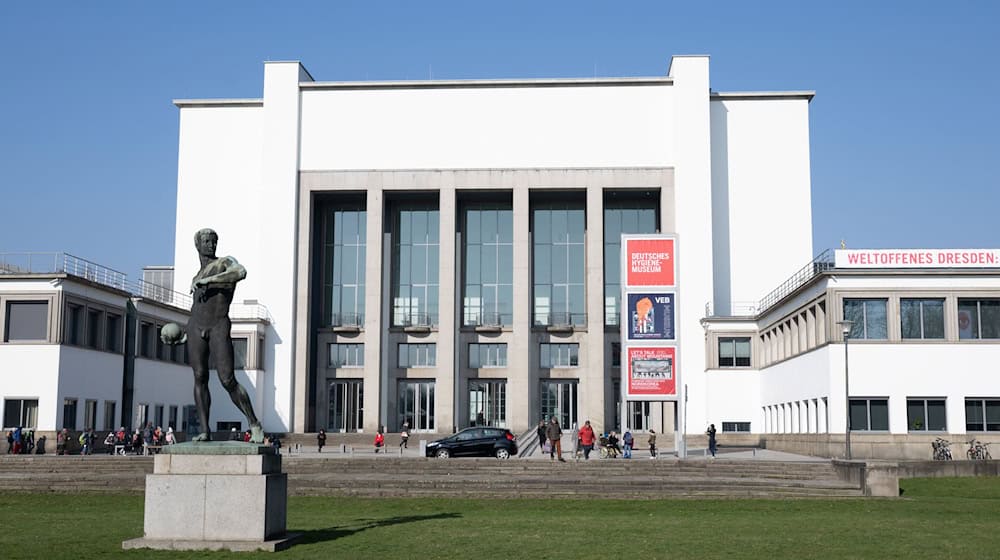
The Deutsches Hygiene-Museum Dresden is making air an important topic. Under the title "Air. One for all", a special exhibition is dedicated to an elixir of human life. For a long time, airspace was considered a "no man's land" into which pollutants could be carelessly emitted, the museum announced. "Today, there is a growing awareness that the air is to be understood as a global common good, for the use of which binding rules and responsibilities must be agreed." The aim of the exhibition is to show visitors how life in and with the air is characterized by complex interrelationships and mutual dependencies, it said. The physical nature of the air shows the drastic influence of its use by humans. "The pollution and warming of planetary airspace affect all living beings today. In many places on Earth, it is now almost impossible to breathe - and for some creatures it is more difficult than for others," the press release states. According to the museum, the exhibition aims to address the pressing question of what can and must be done to preserve air as a vital resource for everyone in the future. In addition to natural and cultural science approaches, air is to be made tangible at numerous interactive stations and in "atmospheric experiments". The show begins with an "air archive". More than 200 people have captured air samples for this - including air from the Arctic Circle and air from grandma's kitchen. Other sections of the exhibition are entitled "Invisible - Air as a connection", "Measured - Air under control" and "Controversial - Air as a common good". Exhibits include a model of a vertical wind turbine and a bird cage with an oxygen cylinder. From the 19th century, canaries warned miners of harmful gas mixtures in the mine. If a bird stopped singing, this was an alarm signal. The miners immediately fled to safety. The special exhibition is accompanied by workshops, artistic works and a podcast called "The Castle in the Air". It aims to get to the bottom of the topic of air in four episodes, it was said. A turbine is installed in the "Fresh wind?" installation. Visitors can turn up the wind speed to hurricane force with a control, take a selfie and upload the photo to the digital guestbook. The show opens on Saturday and will be on display until August 10, 2025. Copyright 2024, dpa (www.dpa.de). All rights reservedIn many places on earth, it is barely possible to breathe
Air archive also contains air from the Arctic Circle
Canaries were once an indicator of good air in mines
Podcast "The Castle in the Air" accompanies the exhibition


