


Power for Chip Factories: Dresden Is Upgrading Its Grid
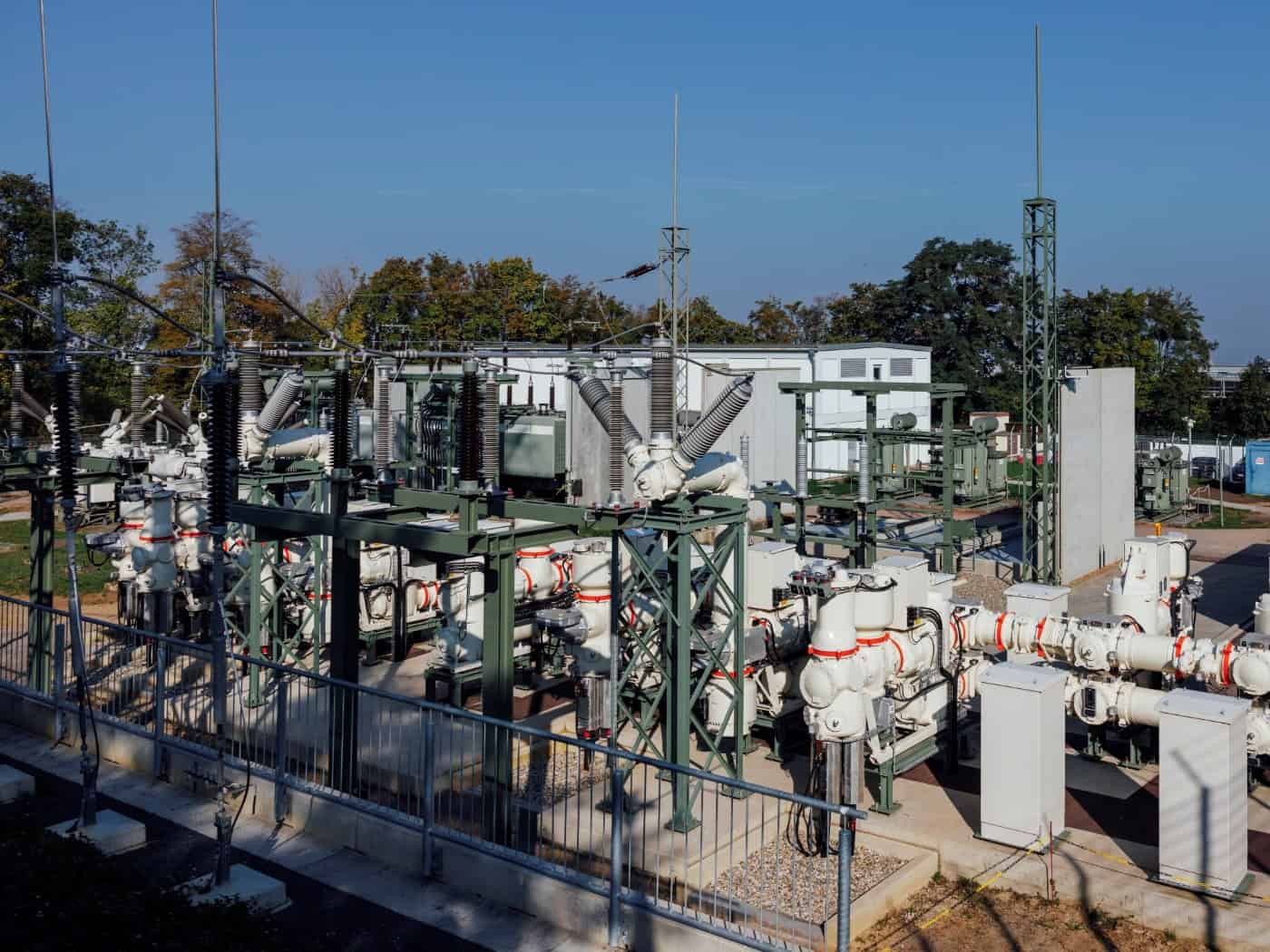
Dresden. Dresden is upgrading its power grid for the semiconductor industry. Across the city, from south to north, the grid operator SachsenNetze has connected new high-voltage cables to the grid—another step in a massive undertaking costing hundreds of millions of euros. The new cables connect the expanded Räcknitz substation in the south with the Klotzsche and Dresden-Nord substations. Jan Pratzka, the city’s mayor for economic affairs, toured the construction site on Monday and called a high-performance grid a prerequisite for the city’s status as a business hub.
Why Dresden Needs More and More Electricity
Behind the expansion is a rapidly growing demand. According to SachsenNetze, electricity consumption in Dresden is expected to triple by 2030, among both residential and industrial users. The main driver is the semiconductor industry in northern Dresden. The city is one of Europe’s largest microelectronics hubs, and the new chip factories being built there consume enormous amounts of energy, around the clock and without interruption. Added to this is the energy transition, which—with heat pumps and electric cars—is placing an additional load on the grid, even in households.

A grid designed for current consumption levels is reaching its limits under these conditions. SachsenNetze is therefore reinforcing it at several points simultaneously and creating new connections between the city’s major substations.
What exactly has gone into operation
At the heart of this latest phase is the Räcknitz substation. The high-voltage overhead line from the Dresden-Süd substation, between the Nöthnitz and Räcknitz branches, has been reinforced. The substation itself was equipped with a new, more powerful switchgear system to control the power supply, as well as new power lines and transformers. The facility is already designed so that a third transformer can be connected should demand continue to rise.
New high-voltage connections were established from Räcknitz across the city. Initially, empty conduit routes were laid to the Nossener Brücke gas turbine combined heat and power plant and on to the Klotzsche and Dresden-Nord substations. Cables were then pulled through these conduits and are now live. According to the company, many of the firms involved are based in the region.
50 kilometers of new cable and a connection to the extra-high-voltage grid
The route now in operation is part of a larger project. By 2028, SachsenNetze plans to lay approximately 50 kilometers of new high-voltage cables in Dresden, including two new underground cable routes on the right bank of the Elbe. According to the company, the work is proceeding on schedule.
At the same time, Dresden is being more closely connected to the supraregional 380-kilovolt extra-high-voltage grid. To this end, the transmission system operator 50Hertz and SachsenNetze are jointly constructing the new Altwilschdorf substation as part of the so-called Elbe-Oberlausitz transmission line. Only once this substation goes online will the new transmission lines reach their full potential and provide the necessary capacity to meet the increased demand.
From Open Trench to Construction During Operation
Grid expansion for Dresden’s industrial sector is not a new issue. According to the company, it began as early as the 1990s. Back then, the first high-voltage cables were still being laid in open trenches over several kilometers, recalls Steffen Klinger, head of the Electricity Asset Management department at SachsenNetze. Today, the expansion is significantly more complex and involves smaller-scale work, using more modern methods and taking place in the midst of ongoing urban operations. He calls the completion of the reinforcement around Räcknitz a significant step.
300 Million Euros in Dresden, Billions in Saxony
The expansion is expensive. According to its own figures, SachsenNetze will invest around 300 million euros in the new transmission lines and the Altwilschdorf substation by 2030. Across Saxony, approximately 4.1 billion euros are earmarked for grid expansion by 2045.
Pratzka emphasized that Dresden, as a hub for industry, technology, and research, relies on a reliable energy supply, and that demand will continue to rise due to new developments in the north. SachsenNetze Managing Director Steffen Heine pointed out that electricity is needed everywhere and at all times—at home as well as in schools, hospitals, and businesses. The grids must be adapted to the growing demands of a dynamic region.

