


Expert government in Saxony: political compromise or danger to democracy?
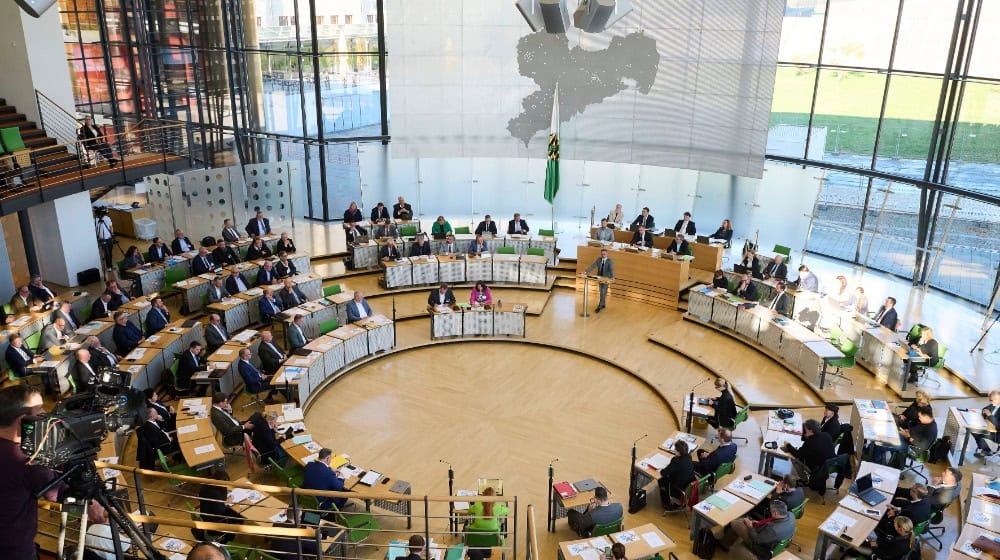
The political situation in Saxony is tense: Minister President Michael Kretschmer (CDU) has to rely on a minority government with the Saxon SPD, which lacks decisive majorities, after the end of the desired Brombeer coalition. At the same time, alternatives are being discussed in political circles, including the option of an expert government, as put forward by the former mayor of Grimma, Matthias Berger. But what is behind this idea and is it a realistic alternative?
Initial situation: shaky majorities and new challenges
The future state government of Saxony that is currently emerging is in a difficult political situation. The CDU has 41 MPs, the SPD supports Kretschmer with a further 10 votes - at least 10 votes are missing for an absolute majority in the state parliament. The AfD, with its 40 seats, is left out, as Kretschmer rejects any cooperation with it. In this mixed situation, scenarios such as the candidacy of an AfD challenger or even a cross-party government of experts are being voiced.
Matthias Berger, who sits in the state parliament as an independent member of parliament for the Free Voters, has positioned himself as an advocate of such a government of experts. His proposal envisages a body made up of experts that puts party political interests to one side. The idea is not new: Sahra Wagenknecht and former Left Party parliamentary group leader Rico Gebhardt have also put forward similar proposals. (Source)
Expert government: advantages and possible implementation
In the current situation, an expert government could bring stability by relying exclusively on professional expertise and not on political power struggles. Experts from science, business and society - such as university professors, business leaders or representatives of non-profit organizations - could develop solutions for pressing issues such as structural change, education policy and energy supply.
The advantage: decisions would be made on the basis of expertise and not party political interests. Such a government could regain trust in the short term and break the deadlock in the state parliament.
However, the question remains: Where do these experts come from and how is their independence guaranteed? Critics warn that experts are often closely networked with political players or business interests. In addition, a government of experts would have to be elected or at least legitimized by parliament - a difficult undertaking given the current majority situation.
Democratic risks and political realities
However, a government of experts poses considerable risks for democracy. It would not be directly legitimized by elections, which could represent a democratic deficit. Citizens could feel alienated from such a government, as it would not represent political will, but merely professional expertise.
The political reality in Saxony also speaks against the feasibility of an expert government. Parties such as the CDU and SPD are reluctant to relinquish their power and freedom of action. The AfD, in turn, could use the discussion to further strengthen its position as the largest opposition force without having any realistic chance of participating in government itself.
Where do the experts in a government come from and what do they cost?
Experts in a government are often recruited from various areas of society, including science, business and administration. For example, university professors, business executives or experienced civil servants can be appointed to ministries. These experts are usually selected by the head of state or head of government, often in consultation with political parties or other relevant stakeholders. The cost of an expert government can vary, depending on the salaries of the appointed experts and the administrative expenses. However, specific data on the costs of such governments is rarely available. However, it is known that the federal government spent at least €344.3 million on consultants in the first three quarters of 2020, which may give an indication of the potential cost of external expertise. (Source)
Historical examples of expert governments
Historical examples of expert governments can be found in Italy, among others. In 2011, Mario Monti, a former EU commissioner and economist, took over the leadership of a technocrat government to guide the country through the euro crisis. Another example is Greece, where in 2011 the former Vice President of the European Central Bank, Lucas Papademos, led a government of experts to implement economic reforms. Such governments are often used in times of political or economic crisis, when traditional political structures are seen as ineffective. (Source)
A theoretical option with limited practical relevance
The discussion about an expert government shows one thing above all: the uncertainty in Saxon politics. While Michael Kretschmer's minority government is struggling for majorities, the expert government remains a theoretical model. It could bring stability in the short term, but would weaken democratic principles in the long term.
In the current situation, the solution lies less in unusual government models than in constructive cooperation across party lines. This is the only way to strengthen Saxony's political capacity to act - in the interests of its citizens and democratic culture.

