


Moss paradise Saxon Switzerland in the focus of research
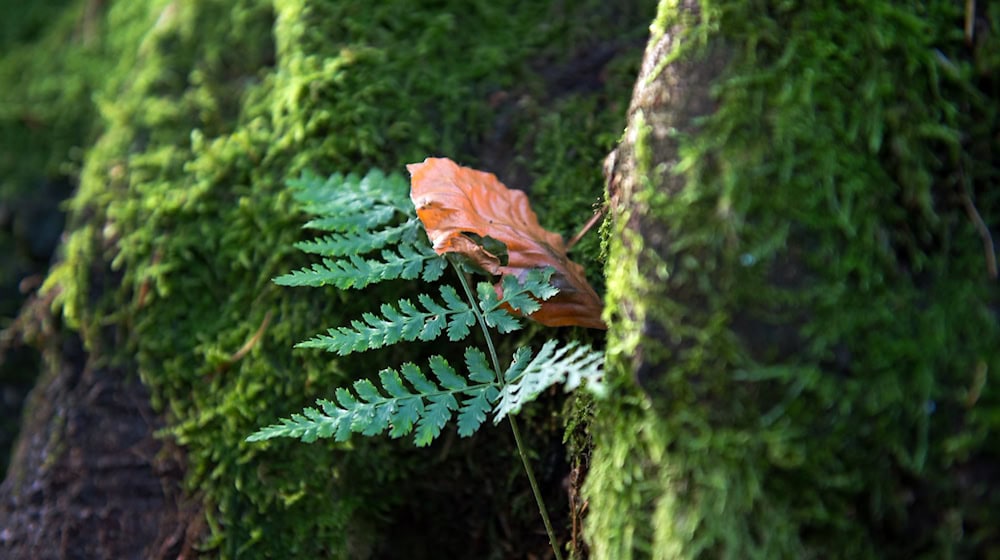
The Elbe Sandstone Mountains are also attracting the attention of scientists as a paradise for mosses. According to the Saxon Switzerland National Park Authority, around 500 species of moss grow here in a very small area - more than anywhere else in Germany. The shady, cool gorges offer good conditions for the moisture-loving plants. The Uttewalder Grund, a popular hiking trail, was cited as an example. Frank Müller, a botanist at the Technical University of Dresden, is considered a moss expert and studies the so-called luminous moss, among other things. According to him, it is not so rare in nature, but is difficult to discover. In contrast to other species, it forms a hair-thin pre-germ in which spherical cells collect the available ambient light like a prism and emit it in a bundled form - onto those parts of the plant with which the moss carries out photosynthesis. "It makes its own light, so to speak. Thanks to this trick, illuminated moss has created niches for itself in the darkest corners, where other plants never penetrate," said the national park administration, describing the phenomenon. But real rarities such as the liverwort can also be found in the Uttewalder Grund. It can only be found here in Germany - and then only again in the Austrian Alps, Scandinavia and the British Isles. The Uttewalder Grund is considered an ideal habitat for mosses. They need a lot of humidity because they do not develop roots but absorb water over their entire leaf surface. "Because of this characteristic, they are also regarded as pioneers of nature, colonizing rocks, stones and barren soils and creating a basis for other species to exist there. They collect nutrients from the air and make them usable for the entire ecosystem," it continued. Their mats and cushions provide a home for numerous micro-organisms. However, according to the national park administration, the moss is on the retreat. It is possible that it reacts extremely sensitively to even minor changes in its habitat - such as global warming. However, discarded paper tissues and other garbage deposited in rocky niches are also a problem for the moss. Copyright 2025, dpa (www.dpa.de). All rights reservedLuminous moss makes its own light
Mosses are regarded as pioneers of nature

