


How to protect fawns during mowing
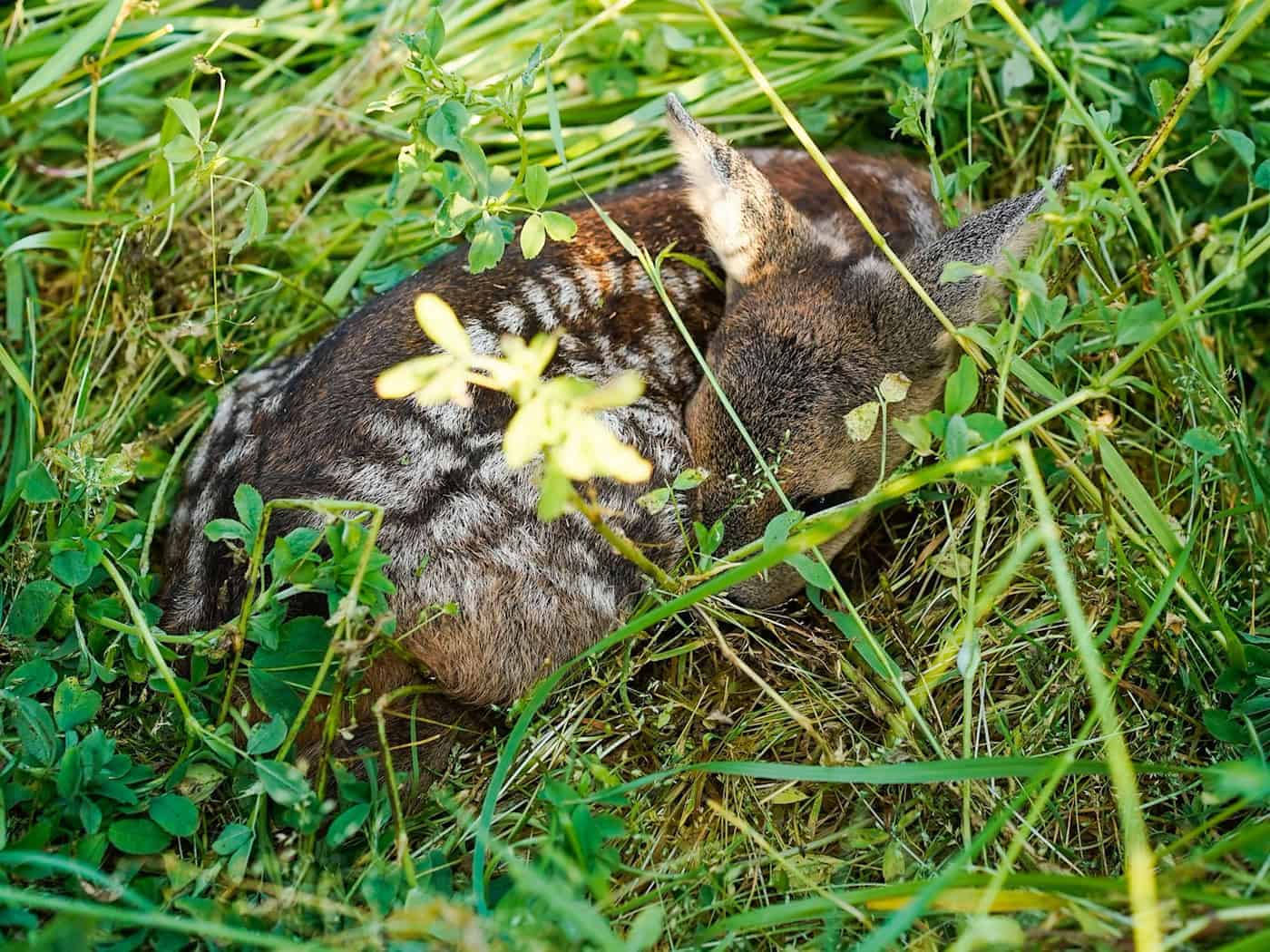
Caution is advised when mowing at the moment - young fawns could hide in the tall grass. The animals are particularly at risk in May and June, explained Jenifer Calvi, spokesperson for the German Wildlife Foundation, when asked by the German Press Agency. In the first two to three weeks after birth, fawns instinctively remain lying down and duck into the grass in case of danger. This could seriously injure or kill the animals, especially during mowing work. It is therefore important to take measures to protect the animals. On Whit Monday, eleven fawns died during mowing work in the municipality of Lichtenau in the district of Central Saxony. According to the police, local residents discovered the dead animals and informed the police. The company responsible is now being investigated on suspicion of violating the Animal Welfare Act, among other things, it said. According to Jenifer Calvi, it is up to the farmers to protect the animals. The safest thing to do is to search the fields shortly before mowing with the help of a thermal imaging drone and search teams. Farmers could receive support from a fawn rescue group. These volunteer groups exist throughout Germany. According to the information provided, the local forester could be asked to make contact. Later mowing, around mid-June, could also protect the animals, as fawns that may have been overlooked are usually already old enough to run away from the combine harvesters. According to Calvi from the German Wildlife Foundation, deterrence measures are also a way of protecting fawns, such as flashing lights, fluttering barrier tape or beeping sounds. According to the spokesperson, however, amateurs should never set out on their own to rescue fawns, but should always work together with a fawn rescue group or a forester. According to the information provided, fawns must not be touched with bare hands, as the mothers may then reject their young. During fawn rescues, gloves and tufts of grass are therefore used to carry the animals from the fields. Copyright 2026, dpa (www.dpa.de). All rights reservedLater mowing could also help

