

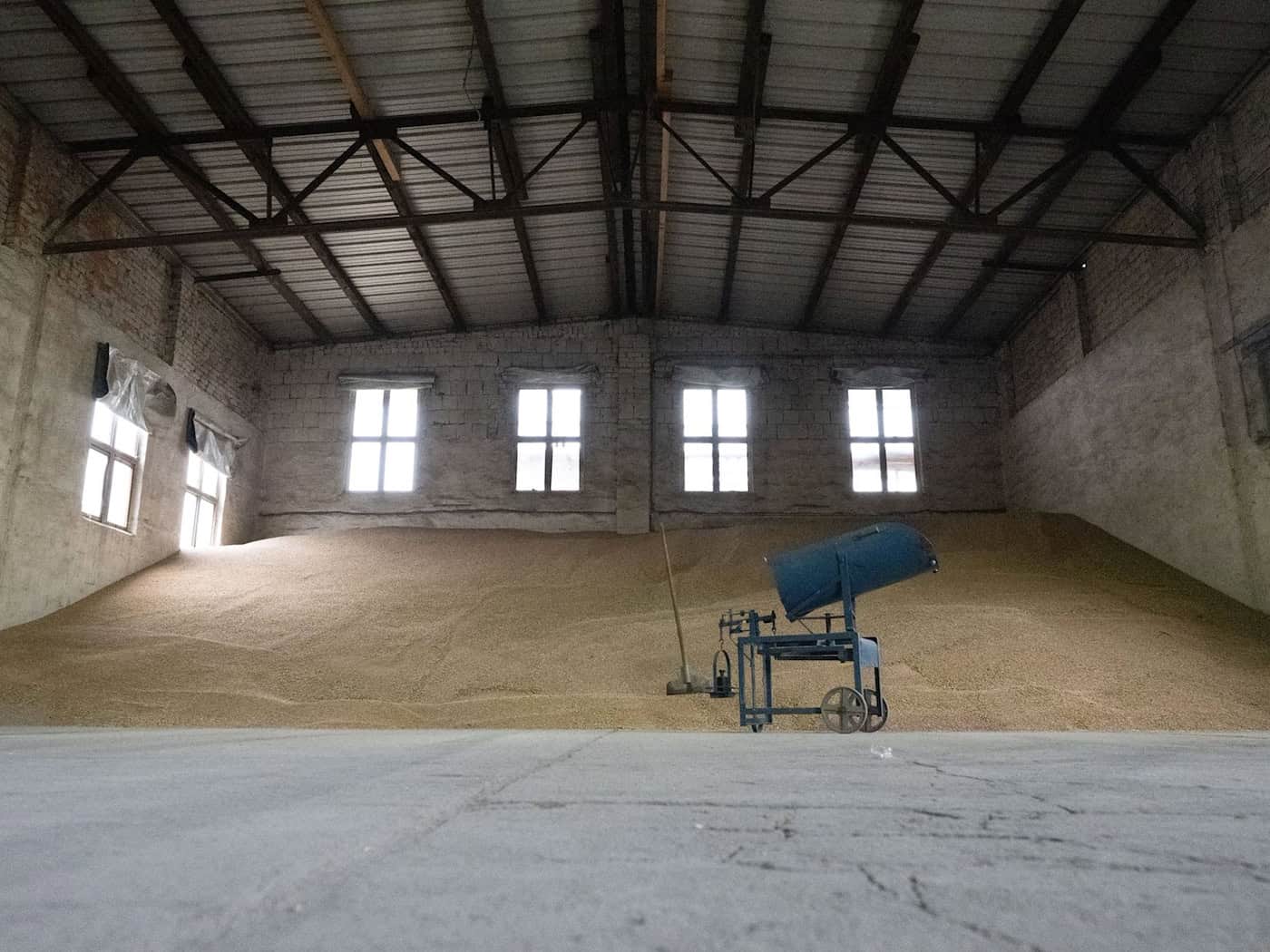
This year’s harvest is taking a heavy toll on Saxon farmers, as heat and drought are reducing both yield and quality. “For many grain crops, as well as for rapeseed, temperatures exceeding 35 degrees over a period of more than a week led to an abrupt end to the grain-filling phase,” the State Farmers’ Association reported. This brought the yield increase to a halt, and in some regions, the grain entered a state of so-called “emergency ripening.” Even the rain in July contributed little to further yield growth. According to Farmers’ Association President Torsten Krawczyk, grain quality has deteriorated significantly during the heat wave. “Depending on the location and weather conditions, crude protein content, hectoliter weight, and falling number vary greatly. It was virtually impossible to produce high-quality wheat under this year’s conditions.” According to the Farmers’ Association, this is reflected in the prices Saxony’s farmers were able to achieve for their products. To make matters worse, the costs of fertilizer, diesel, seed, crop protection, logistics, and wages have only risen in recent years. “The gap between revenue and costs is widening ever further. Even the best yields are no longer enough. We lack the financial resources for urgently needed investments in our farms,” Krawczyk emphasized. They are far from being able to build up reserves for future challenges. “Our agriculture is not failing because of change; what is weighing us down is the discrepancy between political demands and economic reality. This hypocrisy in the framework conditions is jeopardizing the future of agriculture,” the association president clarified. We expect politicians to take decisive and swift action at all levels of the entire value chain—to ensure fair economic conditions rather than imposing further one-sided burdens. The State Farmers’ Association presented its report at the Polenztal Agricultural Cooperative in Stolpen (Saxon Switzerland–Eastern Ore Mountains). Farmers cultivated approximately 702,000 hectares of arable land during this fiscal year. Of this, about 384,400 hectares were used for grain cultivation, including grain corn. Winter rapeseed is the second most important crop after grain, covering just under 103,000 hectares. Copyright 2026, dpa (www.dpa.de). All rights reservedMassive Deterioration in Grain Quality
The gap between revenue and costs continues to widen
The Discrepancy Between Political Demands and Reality


