

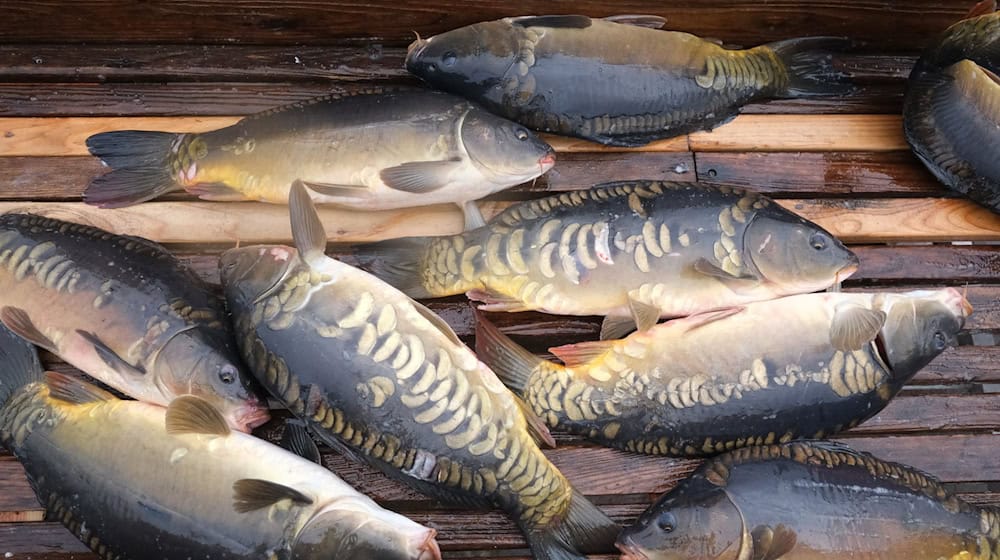
The Saxon State Fishing Association is expecting an average yield in the current carp season. Managing Director Richard Kuntzsch puts it at 1500 to 1600 tons of edible carp. In addition, there are between 100 and 300 tons of secondary or by-catch fish - species such as pike, zander or catfish that grow together with carp in a pond. Compared to the carp harvest in GDR times, the quantities are now meagre. Back then, around 8,000 tons of carp were produced, compared to around 3,000 in the mid-1990s. The industry is plagued by regulations from the authorities and large losses due to predators - fish predators such as the cormorant or otter. The beaver, which does not feed on fish, is also causing problems for fish farmers. It repeatedly causes damage to the ponds through its pronounced "building activity". Carp is considered a healthy fish. It is rich in omega-3 fatty acids, its meat is rich in vitamins and has easily digestible proteins. Retailers are increasingly offering carp fillets because many consumers are worried about bones. Smoked carp and carp ham are also increasingly available. According to the state fishing association, buyers must be prepared for higher prices, as feed prices, personnel costs and energy costs have also risen. Carp and trout now cost around ten euros per kilo. However, no fisherman can earn "silly money" with this. "The fishermen are simply passing on the increased costs to the product," said Managing Director Kuntzsch. Copyright 2024, dpa (www.dpa.de). All rights reserved


