


Stork "Gustav" causes headaches for electricity suppliers
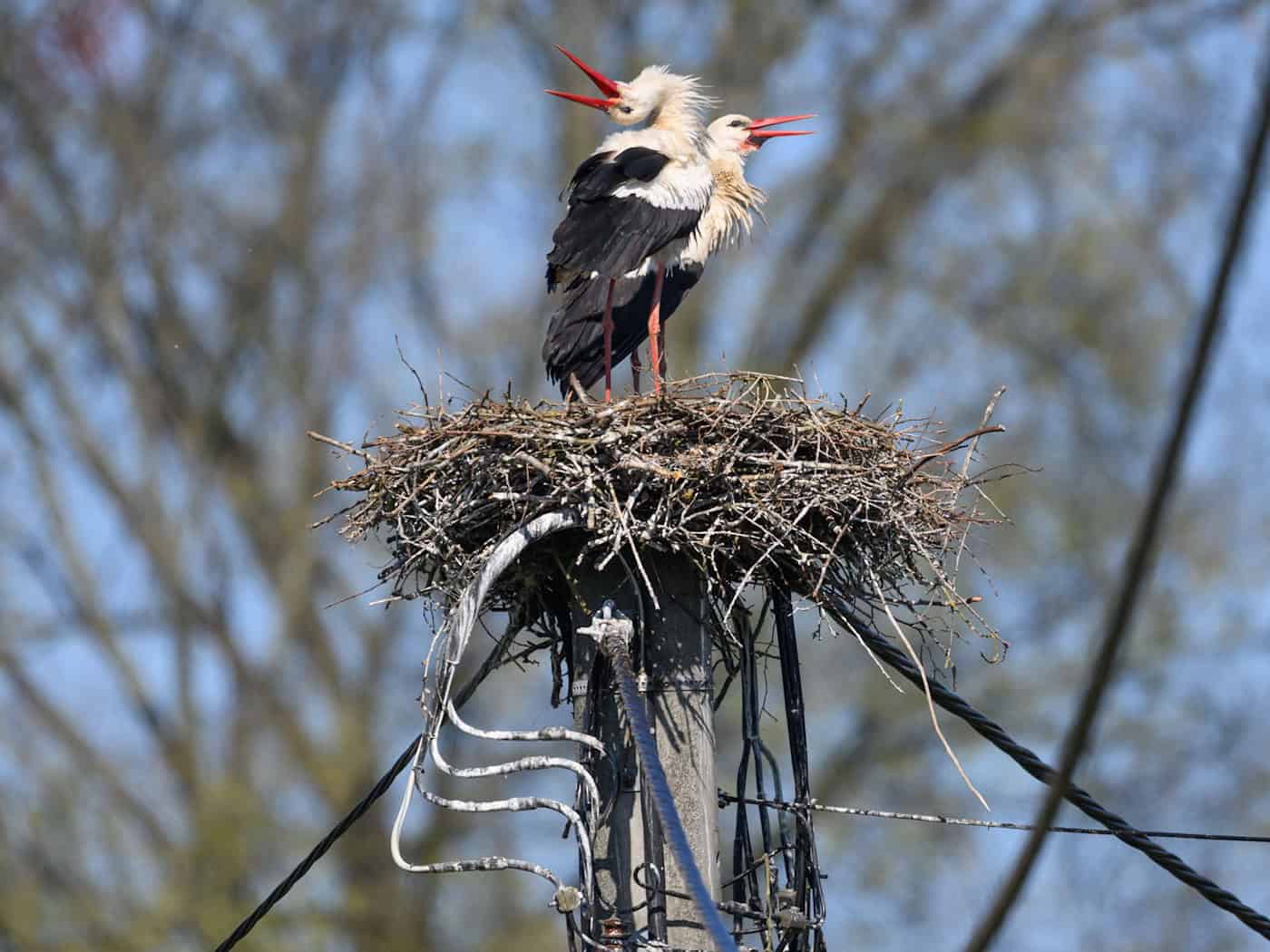
A particularly stubborn stork in the small Kamenz district of Döbra (Bautzen district) is currently causing headaches for energy supplier Sachsen Energie and is causing both joy and amusement among local residents. The animal, which was given the name "Gustav", had chosen a low-voltage pylon, along which several overhead lines run, as the ideal place to start a family. Energy suppliers and experts from the nature conservation authority then moved the nest to a so-called nesting aid, a type of pylon with a crown-like top, to protect the animal and power lines. However, "Gustav" spurned this and quickly sought out the nearest electricity pylon. "Tag24" had previously reported. In the meantime, the unruly stork has also found a partner, so nothing seems to be standing in the way of starting a family. The animal should now stay where it is, Sachsen-Energie spokeswoman Nora Weinhold told the German Press Agency. As they are already breeding, the storks should no longer be disturbed. Storks occupying masts is a common occurrence. In the district of Bautzen alone, there are currently 22 stork nests on electricity pylons, according to the energy supplier. In each case, it is decided individually whether the animals can safely remain on the installations. The nesting site can be dangerous under certain circumstances because the bird droppings can attack the insulation of the lines and lead to faults and outages in the grid. There is also a risk of the animals injuring themselves or nests catching fire, the spokesperson said. In addition to Döbra, Sachsen Energie has therefore already erected three more masts with nesting aids in the Bautzen district during the current breeding season. Another one is being planned. If Gustav's chosen breeding site is disturbed, experts from the nature conservation authority will have to relocate the nest and animals before the energy supplier can react, said Weinhold. Volunteer NABU ornithologist Rolf Schulze explains that storks "have a mind of their own" and do not always accept nesting aids offered to them. He is not aware of any examples of breeding storks being directly harmed by electricity pylons in his region north of Leipzig. Once the animals have found a suitable breeding site, they usually return there year after year. According to him, the storks' breeding season lasts until August, when the young leave the eyrie. Copyright 2026, dpa (www.dpa.de). All rights reservedStork nests on electricity pylons are more common
Electricity supplier: Nesting site on pylons can be dangerous for animals

