

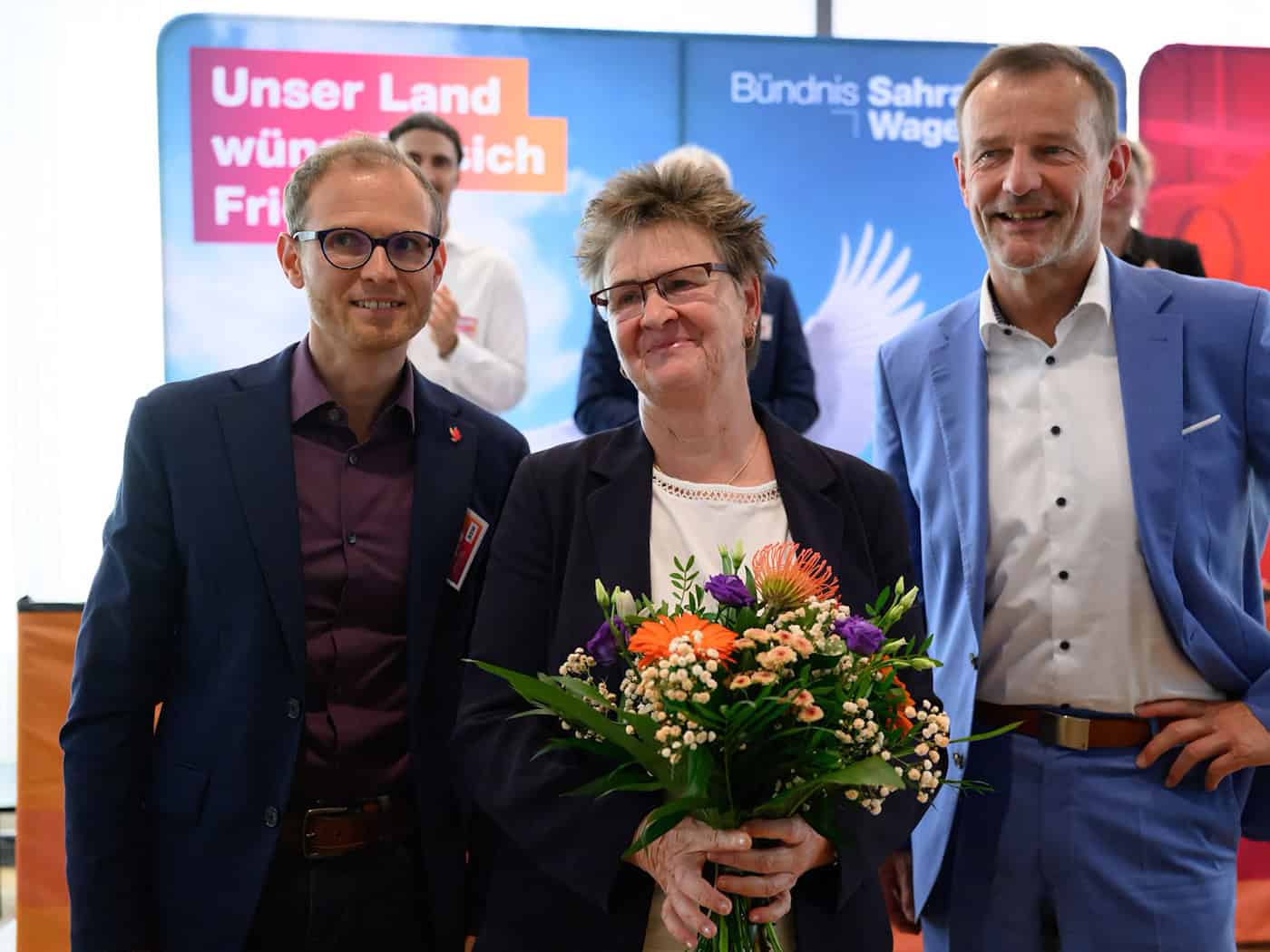
Conscription, the formation of a government, and the party’s own role in state politics: Saxony’s BSW gathered in Leipzig on Saturday for a party convention. There, the former party and parliamentary group chair, Sabine Zimmermann, took the floor. She called on her party to take a more active role. “Where is our resolve? Where is our political bite?” Zimmermann asked the delegates at the BSW state party convention in Leipzig. “We’re too quiet. That worries me when I look at the situation in Saxony.” The party was not founded to tag along as quietly as possible in parliament and settle into a comfortable routine, criticized the founding chairwoman of the state association. With an eye toward the negotiations on Saxony’s 2027–2028 biennial budget, Zimmermann called on the BSW not to approve the draft budget proposed by the CDU-SPD minority government without first putting forward its own substantive demands. About a year ago, Zimmermann had scaled back her involvement for health reasons. After stepping down as state party chair and parliamentary group leader, she also relinquished her state parliament seat in January. Among the substantive resolutions passed at the party convention was an exemption from military conscription for conscientious objectors. “Anyone who refuses military service on grounds of conscience must not be forced against their will to undergo a military aptitude assessment,” said state chair Ronny Kupke. The party intends to advocate for a system where simply filing an application for conscientious objection would exempt an individual from the mandatory physical examination. The formation of a government in the neighboring state of Saxony-Anhalt also played a role in Leipzig. There, the BSW is holding talks with the AfD but has repeatedly ruled out a coalition. According to previous statements, the BSW intends to abstain in the election of the Minister-President. In Leipzig, the federal party leadership once again advocated for cooperation based on substantive criteria. “We are fighting to secure majorities for our policies and our political platform. And we do not distinguish based on party affiliation when deciding who to work with,” said Federal Chair Amira Mohamed Ali. She added that the infighting and social division must come to an end. Claudia Wittig, deputy leader of the BSW parliamentary group in Saxony-Anhalt, criticized the parties involved in the current exploratory talks for being unwilling to compromise. The political camps in the Magdeburg state parliament are so divided that, in principle, they are no longer able to function, she said during a panel discussion. In the state election, the AfD emerged as the clear winner but, with 39 votes, does not hold a majority in the state parliament. A majority would require 42 votes. The BSW holds 5 seats. Copyright 2026, dpa (www.dpa.de). All rights reservedZimmermann: Getting Involved in the Budget
BSW Discusses Government Formation in Saxony-Anhalt


