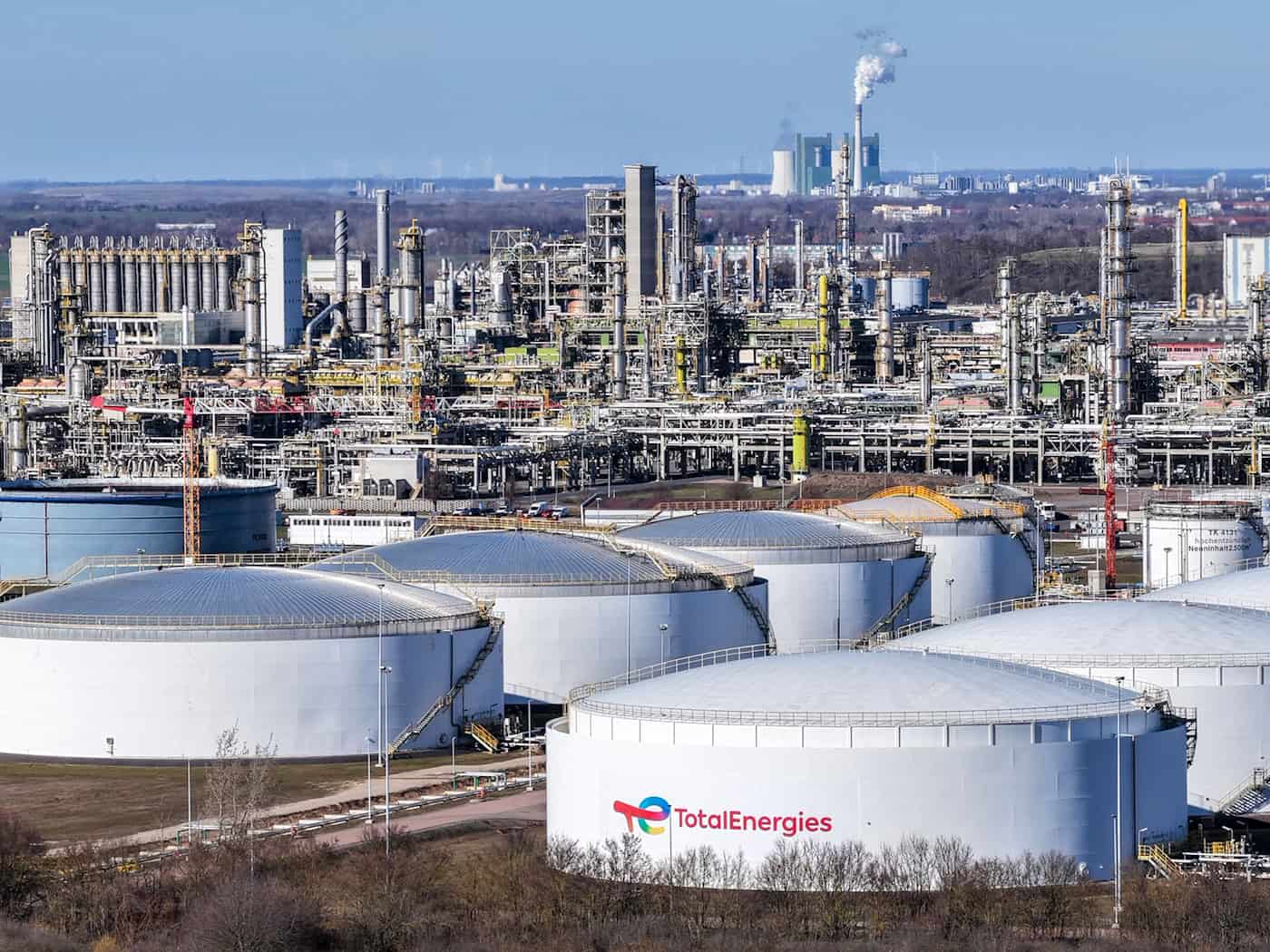
Construction is currently underway at the Leuna refinery on a new heating system designed to harness previously unused waste heat for Leipzig’s district heating network. The internal system comprises approximately 15 kilometers of piping and numerous heat exchangers, the French oil and gas company TotalEnergies stated in response to an inquiry. According to Stadtwerke Leipzig, the project is on schedule. Installation of the heat exchangers is scheduled to begin in the first quarter of 2027. The final integration into the refinery and the connection to Stadtwerke Leipzig’s transfer station are scheduled to take place during a planned temporary refinery shutdown in the fall of 2027. Testing and commissioning are to follow. According to TotalEnergies, the first heat is expected to flow in early 2028. The municipal utility plans to begin receiving the supply in the first half of the year. To date, a large portion of Leipzig’s district heating has come from the Lippendorf lignite-fired power plant. Its decommissioning is scheduled for 2035. Waste heat from Leuna is intended to take over part of the heat supply. According to earlier statements by the municipal utility, it could cover around 40 percent of the current district heating demand—enough, theoretically, for about 100,000 households. The total cost of the project was estimated in September 2025 at more than 230 million euros. At that time, federal funding of more than 90 million euros was announced. The municipal utility estimates its investments in the current planning phase at around 200 million euros. It is unclear whether the waste heat will lower heating costs for consumers in Leipzig. The Saxony Consumer Advice Center points to nationwide studies indicating that district heating with very high proportions of waste heat and renewable energy could be slightly cheaper for customers. For Leipzig, however, it estimates the potential savings to be minimal. With the waste heat from Leuna, a 38 percent share of renewable energy will be achieved. Potential cost benefits would only reach customers if the municipal utility adjusted its pricing formulas. These are currently based primarily on gas prices. Leipzig’s municipal utility, on the other hand, expects that the new energy mix will reduce dependence on volatile fossil fuel markets and help offset rising CO2 costs on a pro-rata basis. The municipal utility plans to announce the district heating prices, which will take effect on January 1, 2027, in early November. The first heat from Leuna is then scheduled to be delivered one year later. Copyright 2026, dpa (www.dpa.de). All rights reservedHeat from Leuna to Replace Coal
Heating costs remain uncertain