

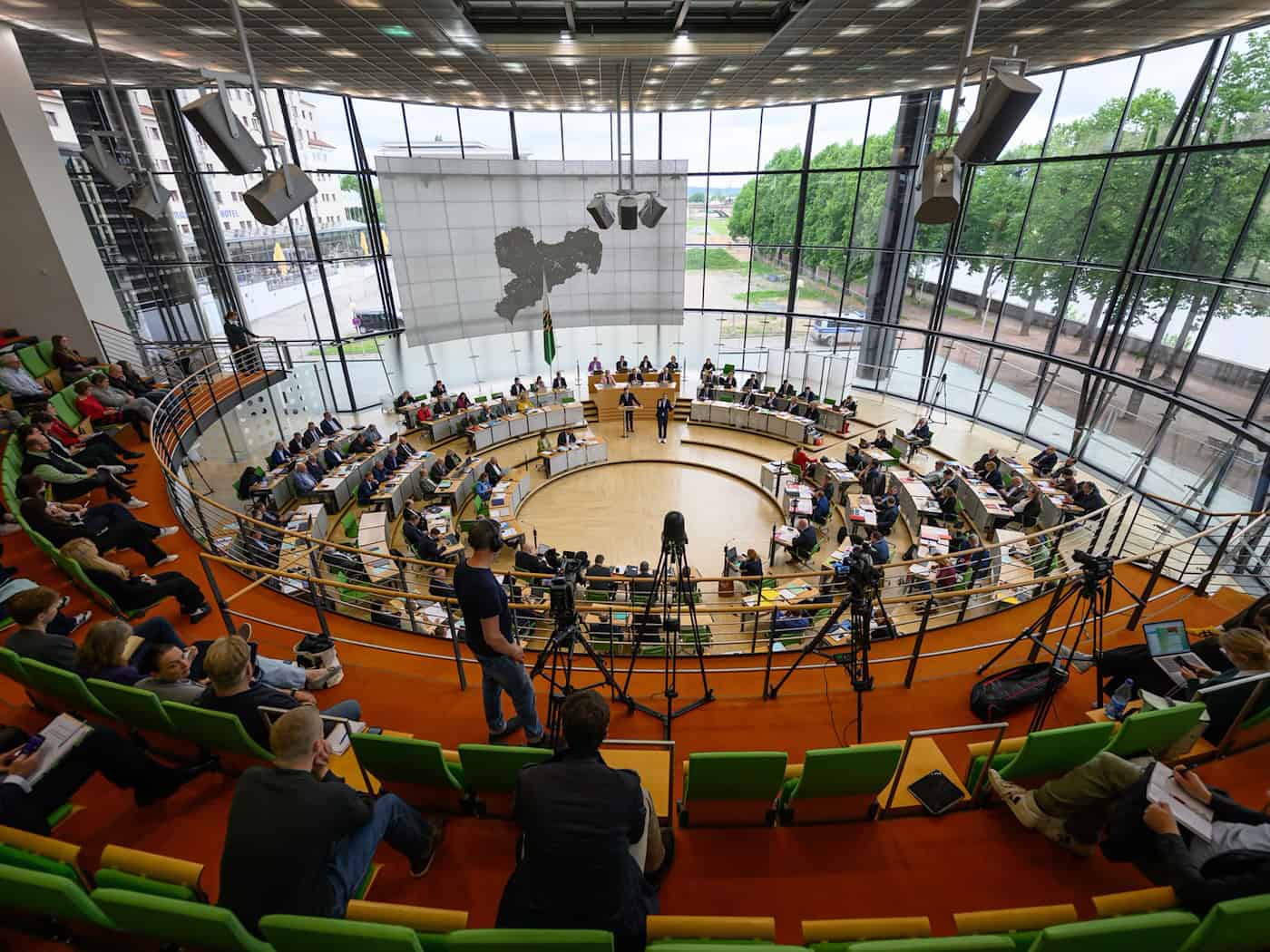
Saxony’s minority government, composed of the CDU and SPD, can brace itself for complicated budget negotiations. Before deliberations on the biennial budget for 2027–2028 begin in the state parliament on Wednesday, representatives from all parliamentary groups outlined their positions. The coalition partners’ goal is to finalize the budget by December 22, as made clear by the parliamentary leaders of both parties, Laura Stellbrink (SPD) and Sören Voigt (CDU). However, they left open which political groups they intend to form a coalition with. They stated that there is no set order for talks with the BSW, the Greens, and the Left Party. In the previous two-year budget, the Greens and the Left served as the majority-providing parties and, in return, were able to push through changes to the government’s draft. The Left Party leader, Susanne Schaper, acknowledged that there is still “room for improvement” this time around. She said they had “let themselves be taken advantage of a bit” last time. “To be completely honest, we made some technical mistakes.” She said she has stopped focusing on problems and would rather tackle tasks head-on. The Left Party will stay committed to its pet projects, Schaper said, referring, for example, to social issues. The CDU and SPD are ten votes short of a majority on their own. Since the AfD does not participate in the consultation mechanism and is also excluded as a partner, only the BSW (15 seats), the Greens (7), and the Left Party (6) are in the running to form a majority. Green Party caucus leader Franziska Schubert was asked whether she would be willing to work with the BSW on a budget and made her position clear. “Given the tradition of Alliance ’90, we really can’t work with this neo-Stalinist bunch,” she stated, describing the BSW as a “bunch of clowns.” According to BSW parliamentary group leader Ronny Kupke, the governing coalition has so far not offered his party any talks on the budget. They intend to develop their own proposals within the parliamentary group. “There is a plan, and there is a strategy. And if someone asks us, we’ll present it, but as far as we’re concerned, there’s no need right now to reach out to the Union government.” CDU politician Voigt called the government’s draft of the two-year budget a “viable and solid foundation.” However, it is clear that the budget will leave the parliament in a different form than it entered. However, the point is not to hand out gifts now, but to set clear priorities. “Unrealistic wish lists are out of the question at this stage.” The temporary borrowing of just under 1.5 billion euros was not an easy decision for the CDU. “But we consider this borrowing justifiable in the current situation because it will finance necessary investments (...) and half of the money will go to the local level.” The AfD, on the other hand, intends to make criticism of the new debt the central message of Wednesday’s debate in the state parliament. Given record tax revenues and funds from the federal government’s additional special fund, the AfD argues this is the wrong approach. Caucus leader Jörg Urban identified job cuts, among other measures, as a potential source of savings. He noted that if the government intends to cut 523 positions over the next two years, the scale of the reduction is ridiculous. The AfD sees further potential for savings in migration policy and in more effective structures within the state administration, as well as in funding programs for climate policy, the energy transition, and democracy. The Saxon government plans to spend around 53.5 billion euros over the next two years. This makes the total budget larger than ever before. However, Finance Minister Christian Piwarz (CDU) is deliberately avoiding referring to it as a record budget. He explained that despite the large figures, this budget will also include cuts and reductions. Copyright 2026, dpa (www.dpa.de). All rights reservedThe Left Sees “Room for Improvement” in Negotiation Tactics
Greens attack the BSW
Unrealistic wish lists are out of the question.
The AfD is strictly opposed to debt and is calling for further staff cuts


