

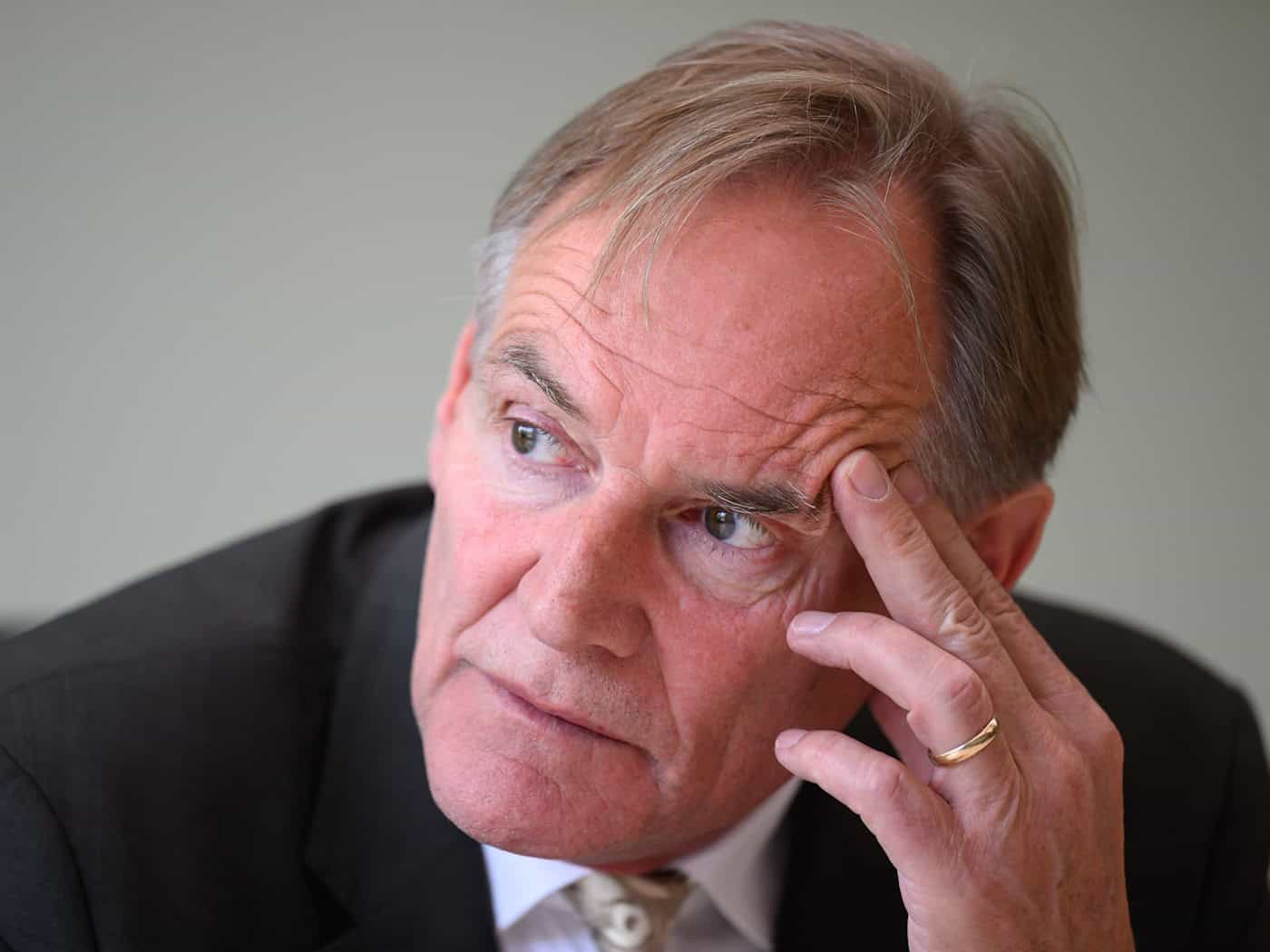
After 21 years, Burkhard Jung will not seek re-election as mayor of Leipzig next year. Shortly before the end of his term, he went through a particularly difficult time following the rampage in the trade fair district that left two people dead and many injured. “That caught me off guard. You can’t really be prepared for something like that,” says the 68-year-old SPD politician. In an interview with the German Press Agency, he talks about his time in office and his plans for the future. Question: What were your first thoughts when you heard about the rampage in Leipzig? It caught me off guard. You can’t really be prepared for something like that. I had previously spoken with counterparts from other affected cities, such as Trier and Magdeburg. You can prepare for a lot of things: making sure the emergency response team functions properly, ensuring the fire department is well-prepared. But you’re not prepared for the emotional impact the situation has on you. Question: Have you been walking through the city center with greater concern since then? Answer: I’d like to answer you honestly. My naivety in public spaces has been gone since the major refugee crisis of 2015. Back then, my stance was very clear: openness, diversity, hospitality. We have a humanitarian responsibility. And very quickly, there was backlash. There were death threats, and a picture of a gallows painted on a container used as refugee housing with the unambiguous message: “The guy has to go.” Then I had personal security for a short time, and that changed a lot for me. Since then, I’ve had a sort of 360-degree awareness. I no longer walk past shop windows with my child completely unconcerned; instead, I also look to see who else is there. Question: How safe can our city centers be? Answer: Our cities are safe. But we won’t be able to make our cities so secure that nothing can ever happen. If you turn the city center into a fortress to protect against rampaging drivers, then something like that can still happen at a bus stop, an outdoor seating area, or a busy street. There will never be 100 percent safety in public spaces. Such an event makes us aware of the thin social ice on which we all tread. Nevertheless, that shouldn’t stop us from treating one another with a basic sense of trust. Question: What are your fondest memories from your term in office? Answer: There were so many wonderful moments. One of the most beautiful moments for me was the first major Festival of Lights on October 9, 2009. The idea was to bring people back together on Augustusplatz and then have them walk around the Ring, holding candles in their hands. And I still remember standing on the first floor of the opera house and being overwhelmed by how Augustusplatz was not just half-full, but completely packed. And then there was that calm on the square, that sense of focus, and the almost reverent atmosphere. It was a special moment. What holds a city together? What is its DNA? Deep in the memory of the Peaceful Revolution of 1989, that incredible power of the streets. That it’s still so alive, that the old and the young come together, telling each other stories, walking into the night. There’s an incredible power in a moment like that, which makes Leipzig truly special. Question: What were the challenges during your term in office? Answer: The lost referendum in 2008 was a valuable lesson for me. At the time, I wanted to sell off 49 percent of the municipal utilities and use the money to trigger a major investment push. With 500 million euros on the table, we could have accomplished a great deal. That was the big goal I had. And then to see how a large majority of the population said: no, the municipal utilities should not be sold; they should remain in city hands. Today, in hindsight, I say: it’s good that it turned out this way. But at the time, I was very disappointed. But I did notice how the people of Leipzig feel about their municipal enterprises. It was civic pride—a sense of connection to the municipal utilities, the hospital, and cultural institutions—a strong sense of identification. And as it turned out, that was a good thing. Question: What advice do you have for your successors? Answer: One shouldn’t give advice to one’s successors. But the situation of a divided city—which we’ve also been experiencing in Leipzig for years—is something I have to take very, very seriously. And I must keep trying to build bridges. People want someone to try to hold the city together. Yes, perhaps that’s the most important thing in a time of rootlessness, anonymity, and global threats. Question: What are your plans for after your term in office? Answer: I haven’t had any time to think about that yet. I haven’t given it nearly enough thought. The only thing that’s certain is that I’ll finally have time for my family. My wife is right when she says: Now it’s time for the family. Many people tell me I shouldn’t do anything at all for the first six months. And that I should turn down any offers that come my way. We’ll see. ABOUT THE PERSON: Burkhard Jung (68) was born in Siegen, North Rhine-Westphalia, and has been mayor of Leipzig since 2006. He will not be running for re-election in February 2027. From 2019 to 2021, the SPD politician served as president of the German Association of Cities and has held that position again since 2025. Copyright 2026, dpa (www.dpa.de). All rights reserved


