


Funding freeze threatens 41 democracy projects in the East
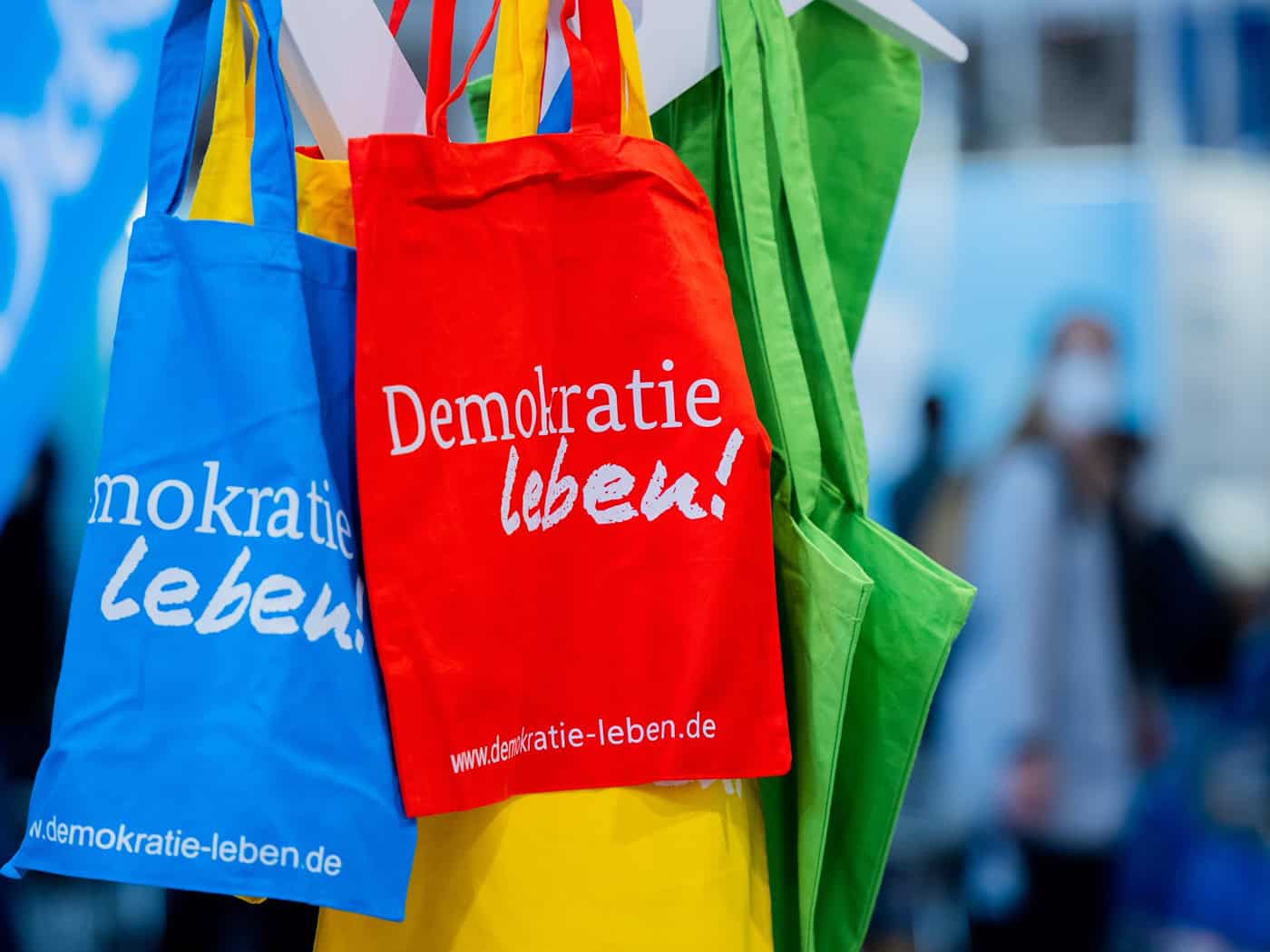
The restructuring of democracy funding planned by Federal Minister for Family Affairs Karin Prien (CDU) threatens a total of 41 projects in Saxony, Saxony-Anhalt and Thuringia. Specifically, funding of around eleven million euros in the three states is in question, according to a list from the Federal Ministry for Family Affairs. In Saxony alone, the funding amount of around 6.3 million euros for 24 projects is at stake. In Thuringia, eleven projects and a sum of around three million euros are affected. In Saxony-Anhalt, just under two million euros and six projects are on the line. In view of the uncertain future, Cathleen Bochmann, Head of the "Competence Center Crises Dialogue Future" at the Saxon association "Aktion Zivilcourage", warns of a "brain drain" among sponsors and projects. "If good employees don't have job security, they will leave these jobs very quickly - even if they might even continue to work," she said. The loss of skilled workers weakens democracy work in the long term. Aktion Zivilcourage e.V., based in Pirna, was founded in 1998. The association advises municipalities, authorities and volunteers - particularly in Saxony and eastern Germany, but also nationwide - on local conflicts, explains project manager Phillip Koller. These range from threats against mayors and social tensions surrounding wind power projects to dialog between the police and civil society groups. Funding for the "Kooperationsverbund Demokratische Konfliktbearbeitung" (Cooperation Network for Democratic Conflict Management) project, which is responsible for this, will expire at the end of 2026, as will many other grants. "We must not leave the municipalities alone, we must not leave the young people alone, we must not leave those involved alone," demands Koller. This could lead to "many people giving up and withdrawing". And from Koller's point of view, that would be fatal "in a situation where extremist forces smell the morning air and are very self-confident". In Thuringia, the association "Drudel11", which aims to arm young people against conspiracy ideologies with its "Trust Hub" project, fears for the continuation of the project. Project employees may have to be made redundant if it is not possible to replace the money previously provided by the federal government with funds from other sources, CEO Sebastian Jende told the German Press Agency. "Such a short-term termination would of course have a catastrophic impact on educational work and trust in the funding policy," he said. In March, Federal Minister for Family Affairs Prien announced that funding for around 200 of the "Demokratie leben!" projects would be discontinued at the end of the year. The program has been funding projects against extremism, racism and anti-Semitism since 2014; this year, around 190 million euros are available for this purpose. New funding guidelines should be available by the end of June. On this basis, all projects can reapply, the Ministry of Family Affairs announced in response to a dpa inquiry. The aim is to start funding on January 1, 2027. The Federal Government Commissioner for Eastern Europe, Elisabeth Kaiser (SPD), warned of the consequences of the funding freeze. "Once the structures that were created with the help of taxpayers' money and a lot of voluntary work are gone, it will be difficult to rebuild them," Kaiser told the Leipziger Volkszeitung newspaper and the Sächsische Zeitung newspaper. "We cannot afford this in the current situation." In East Germany, civil society structures are in any case "significantly weaker" than in the West. Copyright 2026, dpa (www.dpa.de). All rights reserved"Local authorities must not be left alone"
Federal Ministry for Family Affairs: projects can reapply

