

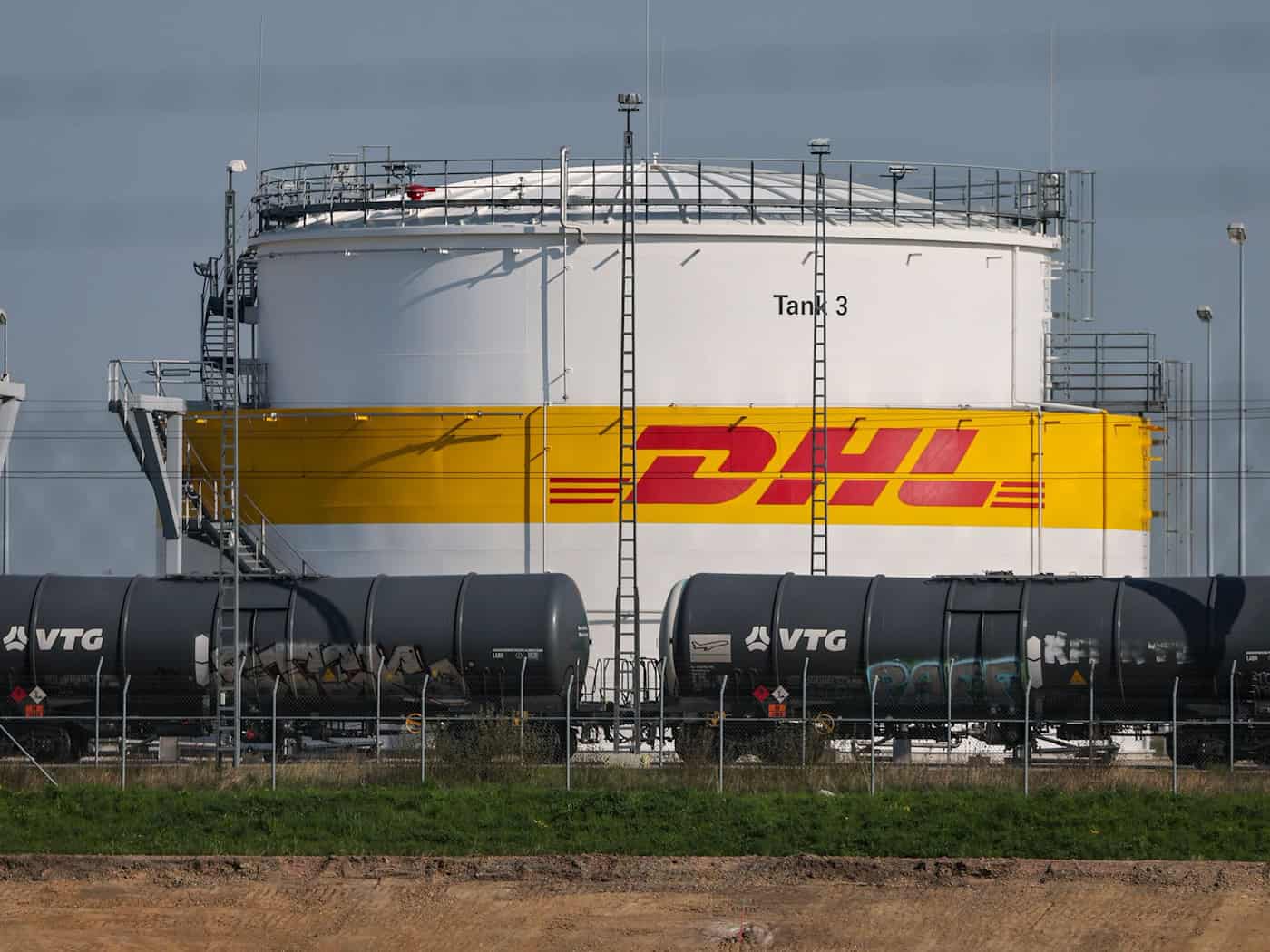
Despite growing concerns about possible shortages of aviation fuel, the DHL Group does not currently see any immediate impact on its business. "So far, the situation is manageable," the company said. Although stocks at individual locations are lower than usual, DHL does not currently anticipate any disruption to operations. Mitteldeutscher Rundfunk had previously reported on possible bottlenecks and rising prices. The logistics group is continuously monitoring the global fuel supply and is in close contact with airports and suppliers. However, rising energy and fuel costs could be passed on to customers via surcharges, if contractually possible. This is common practice in the industry, it said. This is due to fears that the supply of aviation fuel could deteriorate as a result of the Iran conflict. The Strait of Hormuz, a central route for global oil transportation, plays an important role in this. Restrictions in shipping traffic could affect the supply of crude oil and therefore also the production of kerosene. Industry representatives and airport associations are already warning of potential bottlenecks. The European airport association ACI Europe even sees the risk of a "systemic fuel shortage" within a few weeks if disruptions continue. The background to this is the restricted shipping through the Strait of Hormuz, through which a significant proportion of the crude oil produced worldwide is transported. The air freight hub at Leipzig/Halle Airport, one of the most important locations for European air freight, is also particularly in the spotlight. Copyright 2026, dpa (www.dpa.de). All rights reservedDHL is monitoring the situation closely
Iran conflict as a factor of uncertainty
Experts warn of shortages
Focus on Leipzig/Halle hub


