

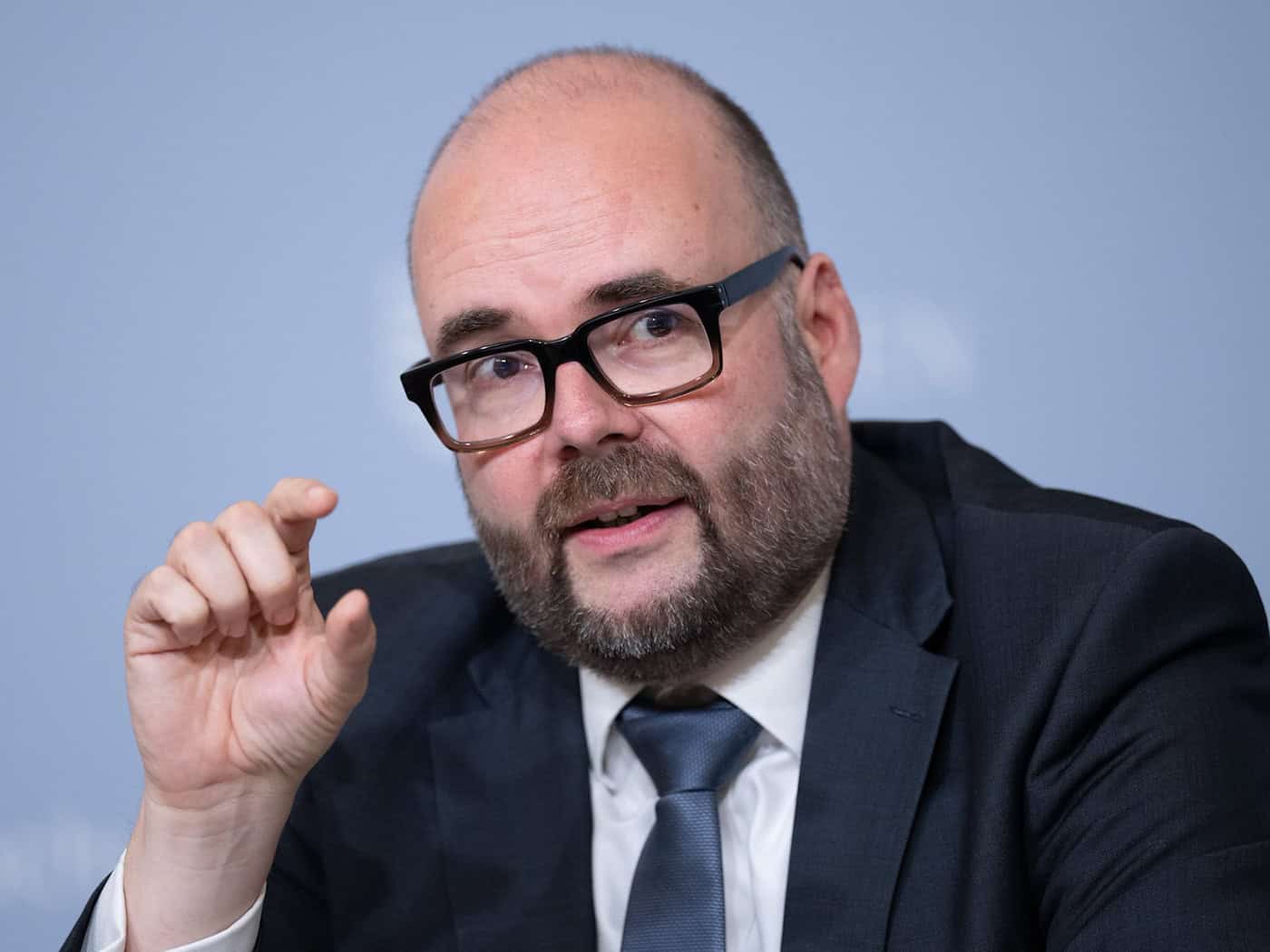
Saxony believes it is on the right track in the fight against financial crime. At noon, the Bundesrat’s Finance Committee is set to vote on a draft bill from the federal government that would grant customs authorities greater powers. However, the reversal of the burden of proof in asset forfeiture—which was called for by Saxony and North Rhine-Westphalia and supported by all federal states—is not included. “So far, there has been a significant discrepancy between what the state can deliver and what citizens expect from it. The rule of law must be capable of acting and able to effectively combat organized crime structures,” Finance Minister Christian Piwarz (CDU) told the German Press Agency. Until now, prosecutors have had to prove to suspected criminals that their assets were financed with money from illegal activities—such as drug trafficking. Under a reversal of the burden of proof, however, the individuals in question would have to prove that their money comes from legal sources. According to Piwarz, it is no longer acceptable to the public that even people who receive government benefits own luxury cars or mansions. He was referring primarily to criminal clans. If there is a glaring disparity between alleged financial need and substantial assets, the individuals in question should bear the burden of proof. Saxony and North Rhine-Westphalia launched the Bundesrat initiative in the fall of 2025. All federal states have since joined the initiative. In July, Federal Finance Minister Lars Klingbeil and Federal Justice Minister Stefanie Hubig (both SPD) presented an action plan against tax crime. A draft of the so-called Customs and Financial Justice Act is now available. It will first be debated by the Bundesrat’s Finance Committee and then by the Bundesrat itself on September 25. Since this is a law requiring the Bundesrat’s approval, the federal government must take the Bundesrat’s vote into account. Piwarz criticizes the fact that the draft bill makes no mention of the reversal of the burden of proof. For this reason, the Free State of Saxony believes the draft does not go far enough. “The burden of proof still lies with the state. That’s not enough for us. Under the federal government’s draft bill, organized crime could still conceal the origin of assets, even though objective evidence suggests they were not acquired legally,” the minister explained. That is why Saxony is introducing three amendments. “If the burden of proof is to remain with the state, then in our view at least two basic conditions should suffice to forfeit the assets: There must be a gross disparity between assets and income. Furthermore, there should be a link to criminal structures.” With another amendment, Saxony aims to ensure that the federal states, through their state tax authorities, are also permitted to conduct independent proceedings to investigate, secure, and forfeit suspicious assets. “This should not be possible solely for Customs. The states should have the same powers and authority to intervene as Customs,” Piwarz demanded. “It is also absolutely essential that Customs be able to automatically retrieve tax office data from the states. The draft bill only provides for this upon request. However, Customs should be able to access all the data it needs without major, time-consuming hurdles,” argued the finance minister. The third amendment addresses this concern. Money laundering is a form of financial crime. It is considered a lifeline of organized crime, as gangs use the illegal money to finance their livelihoods and often their lavish lifestyles. “Legal economic structures are being infiltrated, and parallel societies are emerging that evade the rule of law,” said Piwarz. In Germany, an estimated 100 billion euros in “dirty money” is laundered annually. Copyright 2026, dpa (www.dpa.de). All rights reservedFederal States Want Reversal of the Burden of Proof
Bundesrat Initiative by Saxony and North Rhine-Westphalia
Saxony intends to introduce several amendments
Federal states should be able to conduct independent proceedings


