

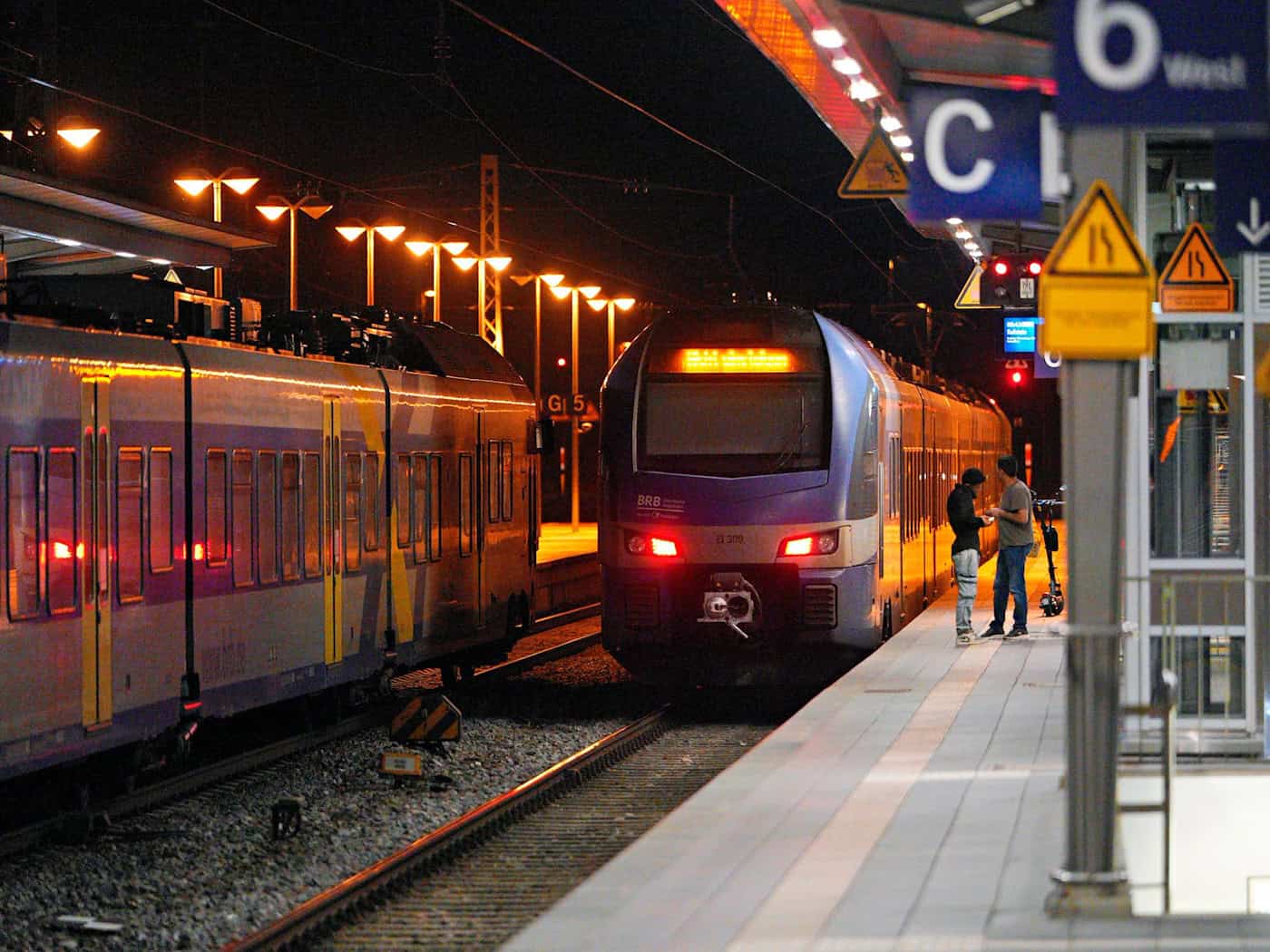
Stranded travelers and very long lines at the station information desks: A Germany-wide disruption at Deutsche Bahn (DB) brought service to a standstill for about two hours late Tuesday evening. Numerous travelers were affected. The first trains began running again around 12:30 a.m. After that, service gradually resumed early in the morning, according to a DB spokesperson. The cause of the disruption was a malfunction in the GSM-R digital rail radio system. In some cases, the problems were expected to persist until the morning rush hour. For example, DB Regio Mitte announced on the X platform that, until rail service returned to normal, passengers should expect significant knock-on delays and last-minute service cancellations at least until 6:00 a.m. today. On DB’s regional page for North Rhine-Westphalia, the following statement appeared after the disruption ended: “However, it will still take some time for rail service to return to normal.” Passengers should expect significant delays and cancellations. Many travelers were stranded due to the service disruption. Although, according to a railway spokesperson, taxi and hotel vouchers were issued—in Frankfurt am Main, for example, people reported that there were no hotel rooms left in the entire city. And: An ICE bound for Mannheim and Stuttgart departed with almost no passengers on board. No one had informed the many people waiting before departure. At Berlin Central Station, among other places, passengers complained that there was no information available. However, they said that the railway employees had been friendly and approachable. DB had identified the cause of the GSM-R rail radio disruption that very night—though without explaining exactly what it was. DB IT experts had worked nonstop to resolve the issue, with success. “The disruption was thus resolved within a short time,” the statement continued. The company thanked all passengers for their patience. DB CEO Evelyn Palla told the “Bild” newspaper that the situation had been stabilized using an emergency system. GSM-R stands for “Global System for Mobile Communications – Railway.” “The GSM-R mobile network replaces nearly all of Deutsche Bahn AG’s analog radio systems,” according to the website of DB InfraGo, the operator of Deutsche Bahn’s infrastructure. According to the website, it offers advantages such as a high level of security in operational communications, the ability to make special group calls, and the option to contact train operators directly. The disruption affected not only long-distance and regional trains, but also suburban trains operated by DB and private railways. In Berlin, for example, service was suspended across the entire S-Bahn network, as it was in Stuttgart. In Hamburg, however, the elevated rail system continued to operate. Freight service, which primarily operates in the evenings and at night, was also halted. The Association of Private Freight Railways therefore called for a thorough investigation into the two-hour outage. The cause of the outage late Tuesday evening “should not be explained solely by a ‘self-report’ from DB InfraGo as the operator,” association managing director Peter Westenberger told dpa. Better monitoring and control of rail infrastructure operations are needed. Copyright 2026, dpa (www.dpa.de). All rights reservedHardly Any Information for Travelers
Suburban trains, private railways, and freight traffic also affected


