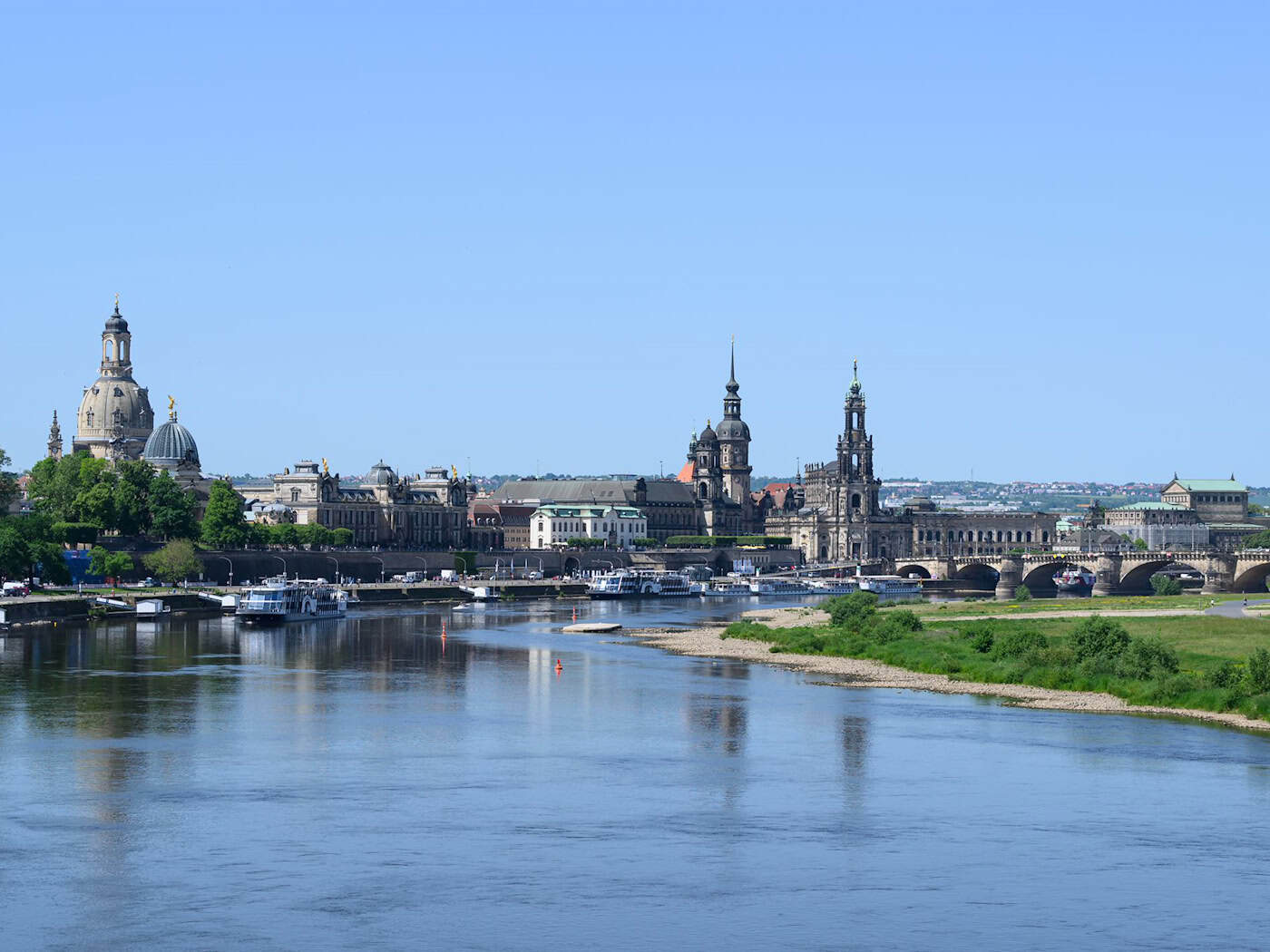
The Elbe River is set to help supply households in Dresden with district heating and replace fossil fuels. To this end, the energy provider Sachsenenergie is moving forward with plans to build a river water heat pump. The investment costs for the 50-megawatt plant are estimated at around 92 million euros. A site below the Marienbrücke is being considered because it is close to both the river and the district heating network, the energy supplier reported. The plant could go into operation in 2031. It is designed to extract heat from the river water and feed it into the district heating network, officials said. To do this, the pump would draw about 2.5 cubic meters of water per second from the river. This water would then flow back into the Elbe about three degrees cooler. This would have no impact on the river’s overall temperature, officials said. This could generate around 300,000 megawatt-hours of heat annually. That would be enough to supply up to 45,000 households. According to the information provided, about half of Dresden’s households currently use district heating and consume 1.7 million megawatt-hours of heat per year. The river water heat pump is intended to help generate more heat without CO2 emissions. A conventional heat pump, such as those now used by many homeowners for their residences, extracts heat from the air. In comparison, the river’s water temperature remains significantly more constant throughout the day, the energy supplier explained. “Except for very cold winter months with very low water temperatures, the river water heat pump can generate heat almost year-round.” Other cities are also turning to this technology. In Cologne, for example, a heat pump with a capacity of 150 megawatts is being built to extract heat from the water of the Rhine. Rheinenergie AG describes it as the largest facility of its kind in Europe. On a smaller scale, Stadtwerke Bamberg plans to use the Regnitz River as an energy source via a heat pump in the future. Copyright 2026, dpa (www.dpa.de). All rights reservedHeating without climate-damaging CO2