

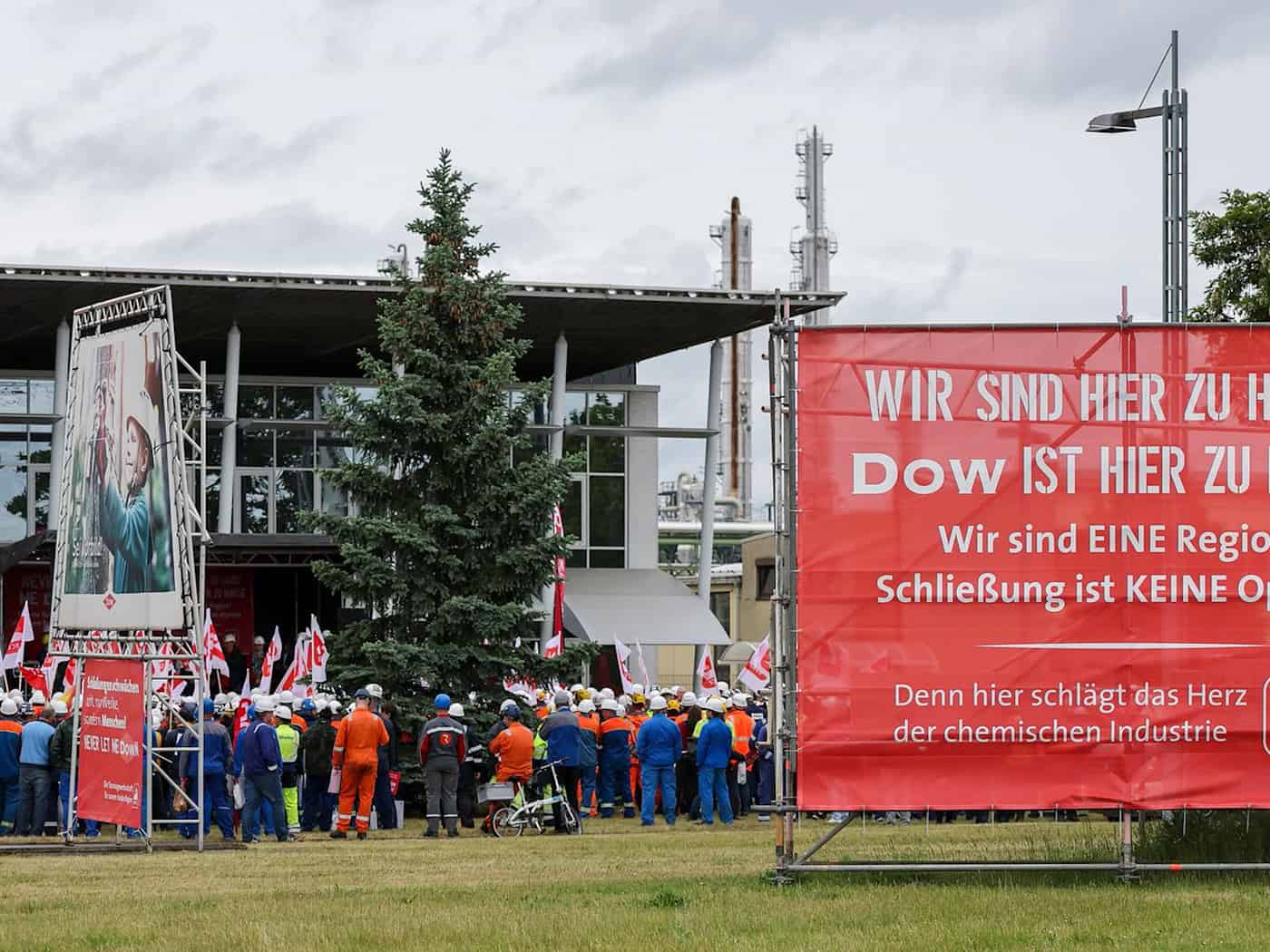
More than three decades after reunification, the East German economy is still lagging behind the West German economy—and the gap has not been narrowing for years. According to calculations by the German Economic Institute (IW), in 2025 the five eastern German states reached just under 79 percent of the western level, up from just over 78 percent the previous year. Since 1991, the East has indeed caught up significantly; at that time, according to the IW, it stood at 51 percent of West Germany’s economic output. For the past five years, however, this convergence has stalled. Since 2020, the figure has fluctuated between 78 and 79 percent; the East has yet to reach the 80 percent mark. For the IW Unification Index, which tracks East Germany’s economic catch-up process since 1990, the institute considers not only economic output per capita but also productivity, capital stock, the proportion of highly qualified individuals in research and development, labor force participation, and the unemployment and self-employment rates. IW experts see deficits primarily in the area of research. According to the report, the number of research and development personnel in the East is only slightly over 46 percent of the level in the West. While the public sector—including universities and research institutes—is in relatively good shape, according to the IW, there is a shortage of researchers in the private sector due to the lack of large companies. But the East is also making little progress in other areas: Labor force participation is declining; measured against the total population, the East reached just under 89 percent of the West’s level in 2010, and according to the IW, will reach only a little over 85 percent by 2025. Investment has stalled. In terms of the value of all machinery, factories, roads, and buildings per capita—that is, the capital stock—the East has made hardly any progress in catching up over the past 15 years. In 2010, it stood at just under 77 percent of the West’s level; by 2025, it will be just over 79 percent. According to the IW forecast, in a scenario without immigration, the population in the East will shrink by more than one-fifth by 2045—significantly more than in the West. The eastern German states are therefore even more dependent on skilled workers from abroad. “The fact that this openness to immigration is now in question following the latest election results clouds the outlook,” the IW experts conclude. The IW considers maintaining the full pension after 45 years of contributions—a measure supported by several East German state premiers—to be counterproductive. Given its demographic structure, the East is particularly dependent on keeping experienced workers in their jobs longer. Copyright 2026, dpa (www.dpa.de). All rights reservedProblems in Research and Development
Aging Population Slows the Catch-up Process


