

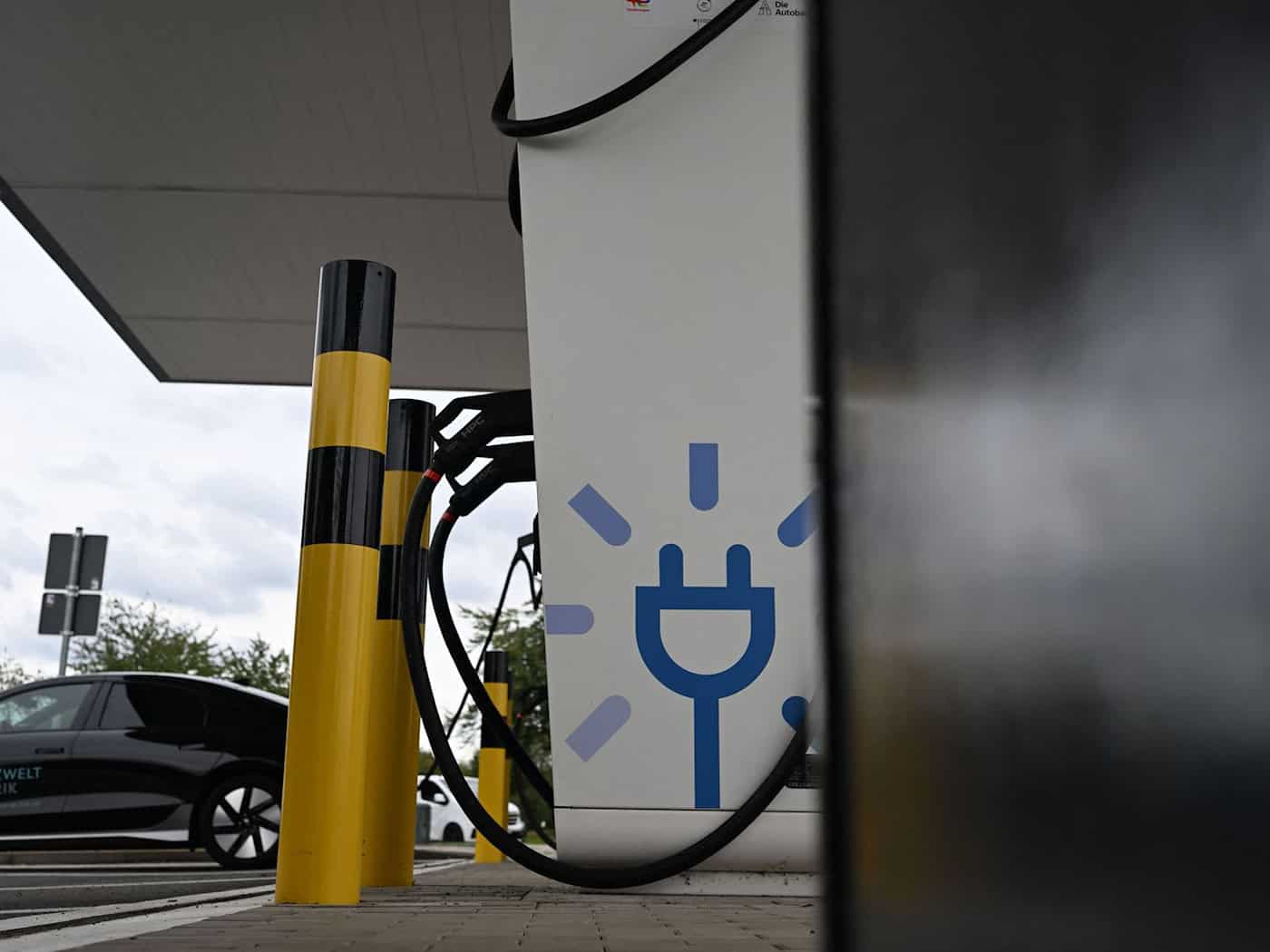
The fast-charging network for electric cars in Saxony is expanding: The first fast-charging stations have opened at unstaffed rest areas along the A13 north of Dresden. At the Wiesenholz East and West parking areas near Schönfeld (Meissen District), electric vehicles can now be fast-charged at six charging points in each direction, as Florian Schaller, project manager at operator TotalEnergies, said at the opening. Construction took about a year. These are the first of a total of eight planned fast-charging stations at unstaffed highway rest areas in Saxony. The remaining six are scheduled to go online by the end of the year, with three locations each featuring one charging station per direction of travel. “These fast-charging stations are equipped with two connectors and allow for up to 200 kilowatts per connector when two cars are charging, or—when only one connector is in use—I can even charge at up to 300 kilowatts,” explained project engineer Andreas Hartge, who oversees the charging locations in Saxony at Autobahn GmbH. They offer particular advantages for drivers traveling long distances who want to continue their journey after a short break: According to the specifications, a mid-size car can be charged within ten minutes with enough power for 300 to 500 kilometers, depending on consumption. Similar to traditional gas stations for gasoline and diesel, however, prices at rest stops are slightly higher than those off the highway. Exactly how long charging takes depends on various factors: “The car’s battery communicates with the charging station, which determines the type of charging,” says Hartge. Environmental conditions also play a role; for example, a warm battery is harder to charge than a cold one. The charging park is part of a Germany-wide network aimed at creating 9,000 additional fast-charging points. In the long term, a total of 4,000 of these are planned along the highways. In the future, charging stations are expected to be accessible every ten minutes of driving. Of the 900 planned locations, 200 will be built at unstaffed highway rest areas. Copyright 2026, dpa (www.dpa.de). All rights reservedTen minutes of charging for a range of 300 to 500 kilometers


