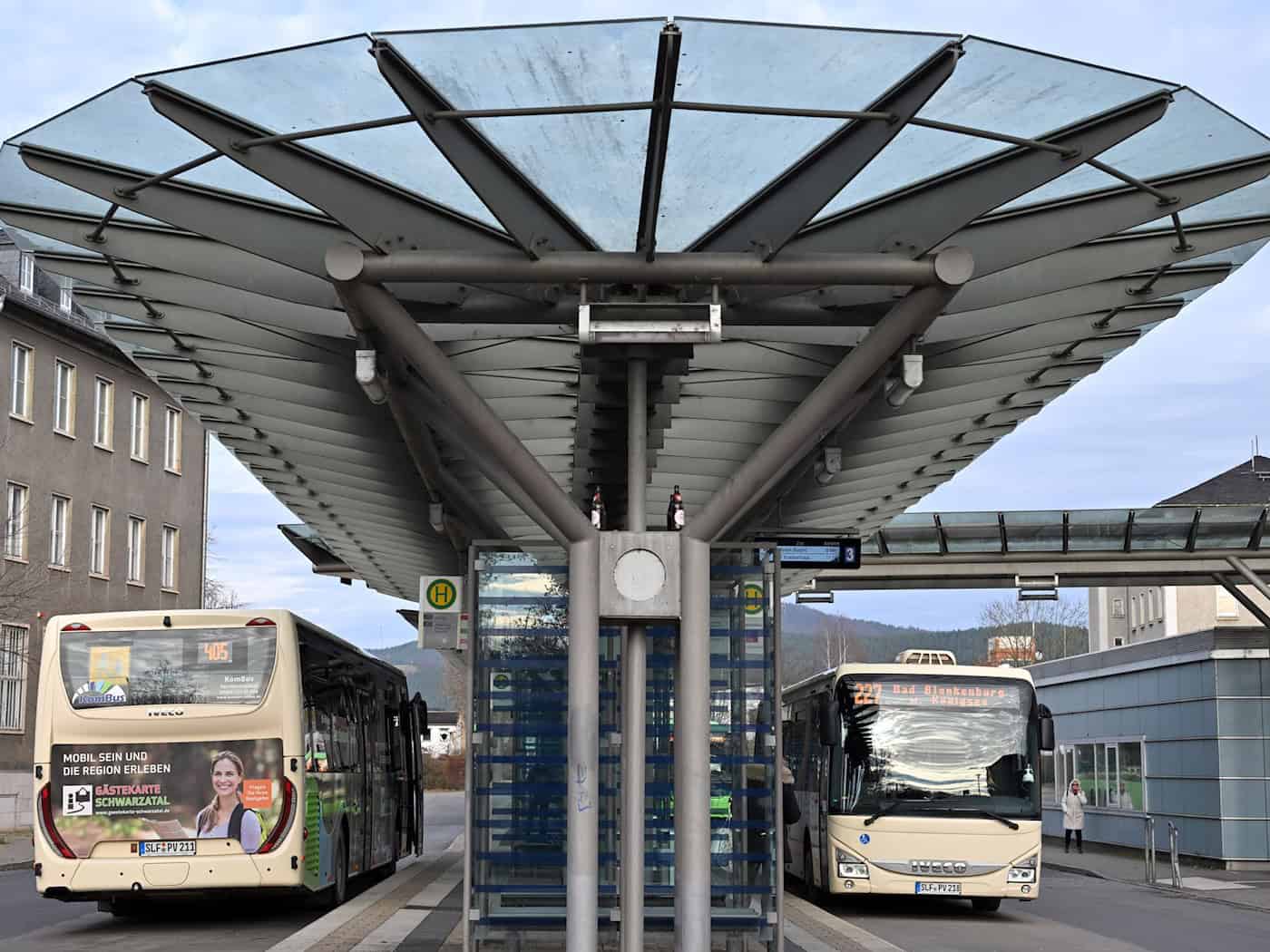
The switch to electric buses and the foreseeable decline in school bus service are causing headaches for bus companies just ahead of an industry conference. “Buying an electric bus today isn’t that difficult anymore, but we need the infrastructure to support it. That’s the biggest challenge,” said Jana Glaser, a bus operator and board member of the Association of Central German Bus Companies, in Erfurt. According to the association’s projections, up to 1.5 billion euros would be needed over the next ten years in Thuringia alone to finance the necessary investments in the electrification of public bus service. This also includes the construction and retrofitting of bus depots, as the association’s managing director, Tilmann Wagenknecht, explained. He also pointed out that the order situation and capacity utilization for bus companies could change in the future in light of the projected decline in student numbers due to falling birth rates. In addition, high diesel prices, increased labor costs, and a shortage of drivers are causing problems for the companies. Reliable political and economic conditions are necessary to ensure a reliable local public transit system using buses, according to Wagenknecht. Publicly awarded service contracts—often long-term agreements—cannot offset rising operating costs. In Thuringia, for example, the state must provide more funding, as the regionalization funds allocated by the federal government for local rail passenger transport are insufficient. On November 4 and 5, bus operators, manufacturers, and suppliers from the industry will gather near Halle for the 21st Central German Bus Day. Copyright 2026, dpa (www.dpa.de). All rights reservedFewer students will be taking buses to school