

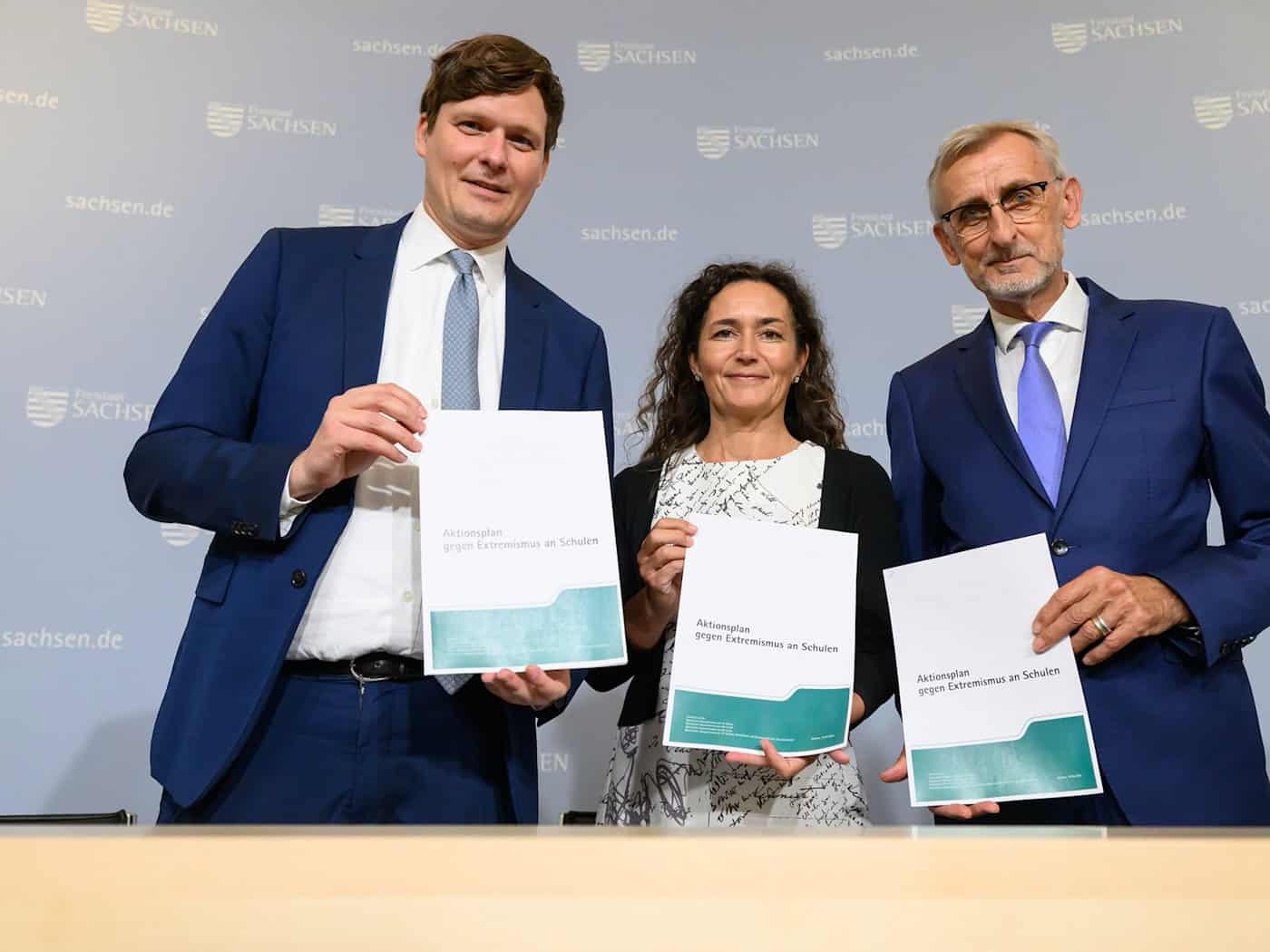
Saxony plans to combat extremist tendencies among students with an action plan. Minister of Education Conrad Clemens (CDU) cited a sharp rise in such cases as the reason. In 2014, there were 55 so-called “special incidents” at schools in the Free State; by 2024, that number had risen to 1,644. The number of far-right incidents stood at 91 in 2019 and rose to 245 in 2025. Police crime statistics recorded exactly 100 politically motivated crimes with schools as the scene of the crime in 2021; by 2025, that number had risen to 335. “We don’t want to leave schools to deal with this trend on their own,” Clemens said. The interagency “Action Plan Against Extremism in Schools” builds on and supplements existing programs. “The goal is to protect children and young people through preventive measures and to build their resilience against extremism and radicalization,” the statement said. The 15 measures are primarily focused on prevention. For example, teacher training is to be expanded. Schools are to receive guidance on safety plans. In addition, the subject “Social Studies” is to be a required course in 10th grade as well. Another key area is media literacy. Democratic education is viewed as a mandatory component of all subjects. With the gradual introduction of a class session starting in the 2028–2029 school year, democratic coexistence is to be tested in practice starting in first grade, officials said. “With this action plan, we are pooling the resources of all relevant agencies and improving coordination between schools, the police, the judiciary, and counseling networks. Furthermore, by providing students with more education on democracy and media literacy, we are helping them to specifically recognize propaganda and disinformation. Extremism, in whatever form, has no place in our schools,” Clemens emphasized. Justice Minister Constanze Geiert (CDU) views the fight against extremism as a mission for society as a whole. “Our common goal is clear: to protect schools from extremism, raise awareness about extremist crimes, and respond decisively when criminal boundaries are crossed.” That is why cooperation between the justice system and schools is being strengthened—with designated contact persons at all district attorney’s offices and legal expertise in dealing with extremism in schools. “School is the place where political issues are addressed in an educational context and where prevention against extremism can therefore be particularly effective,” said Interior Minister Armin Schuster (CDU). The action plan is also a response to the rise in violent crime and politically motivated offenses among children and adolescents. Copyright 2026, dpa (www.dpa.de). All rights reservedSchools Should Not Be Left to Cope with This Trend Alone
Democratic coexistence is to be tested in class sessions
The Fight Against Extremism as a Mission for Society as a Whole


