

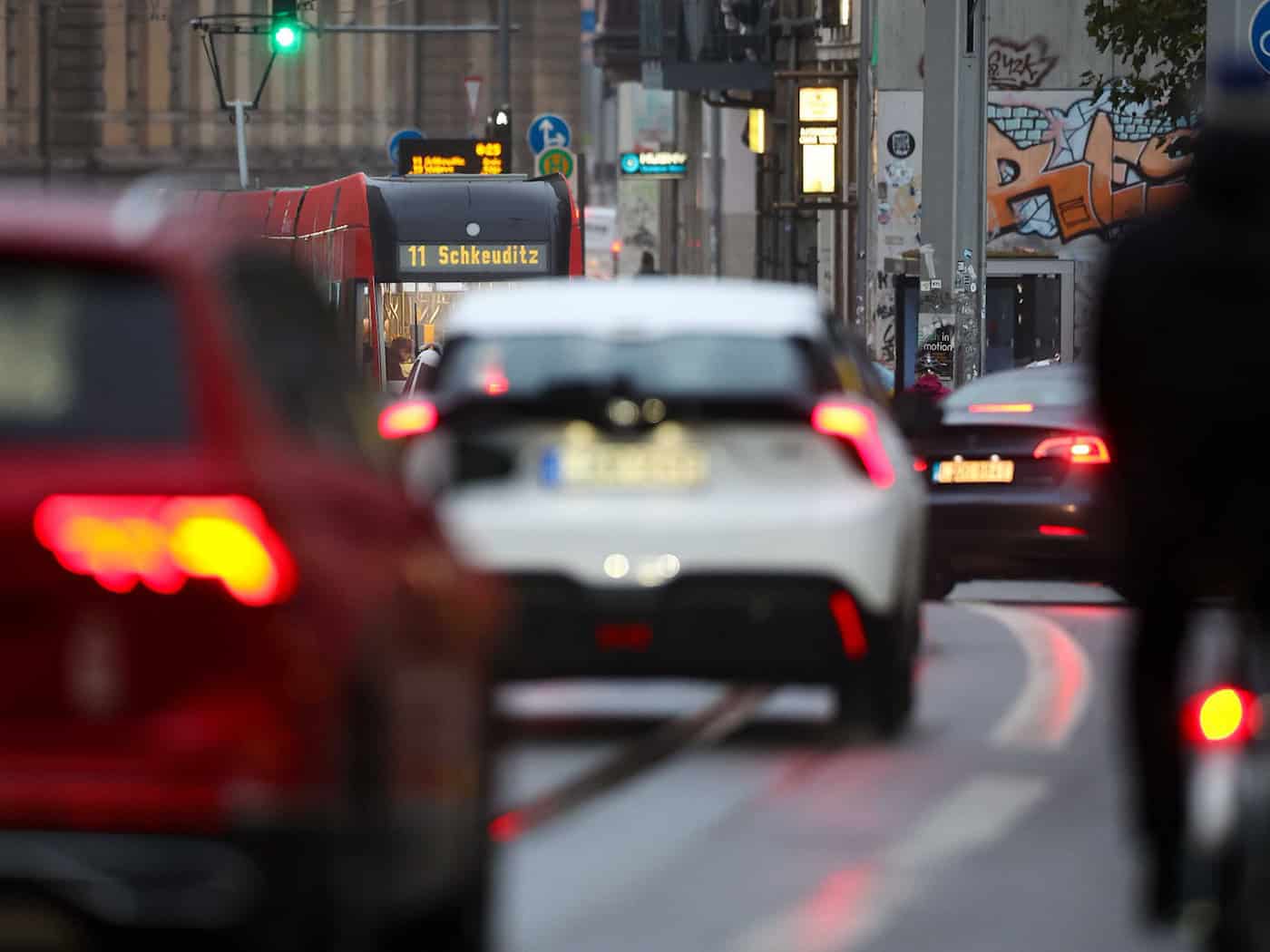
Leipzig remains Saxony’s commuting hub: In 2025, 105,600 employees subject to social insurance contributions commuted from other locations to work in the trade fair city, according to the Federal Institute for Research on Building, Urban Affairs, and Spatial Development (BBSR). That was about 300 more than a year earlier. The institute used data from the Federal Employment Agency for its analysis. About 96,000 workers commute to Dresden. In Saxony’s two largest cities, a good one in three employees commutes from outside the city limits to work. The proportion is even higher in Chemnitz, at 44 percent. There, the number of commuters stands at 50,600. In a comparison of major German cities, Leipzig ranks 16th and Dresden 18th. Chemnitz ranks 47th, placing it in the lower middle of the pack. Munich leads the list unchallenged with 461,400 commuters. Bottrop comes in last at 80th place with 18,600 commuters. According to the analysis, the number of commuters has risen nationwide. In 2025, 20.6 million workers commuted outside their place of residence—about 50,000 more than the previous year. This represented 60 percent of the total workforce. The average one-way commute was 17.3 kilometers. In Saxony, residents in the vicinity of Leipzig travel the greatest distances to work. In Northern Saxony District, the average commute is 20.8 kilometers; in Leipzig District, it is 20.5 kilometers. By contrast, Dresden residents live closest to their workplace, traveling an average of 11.4 kilometers. However, the Federal Institute does not analyze how often these employees commute to the office or factory, nor does it track which modes of transportation they use for this purpose. Given the possibility of working from home, the number of people who actually commute to work daily may therefore be lower. Copyright 2026, dpa (www.dpa.de). All rights reservedMunich with nearly 500,000 commuters
Northern Saxony and Leipzig District Have the Longest Commutes in Saxony


