

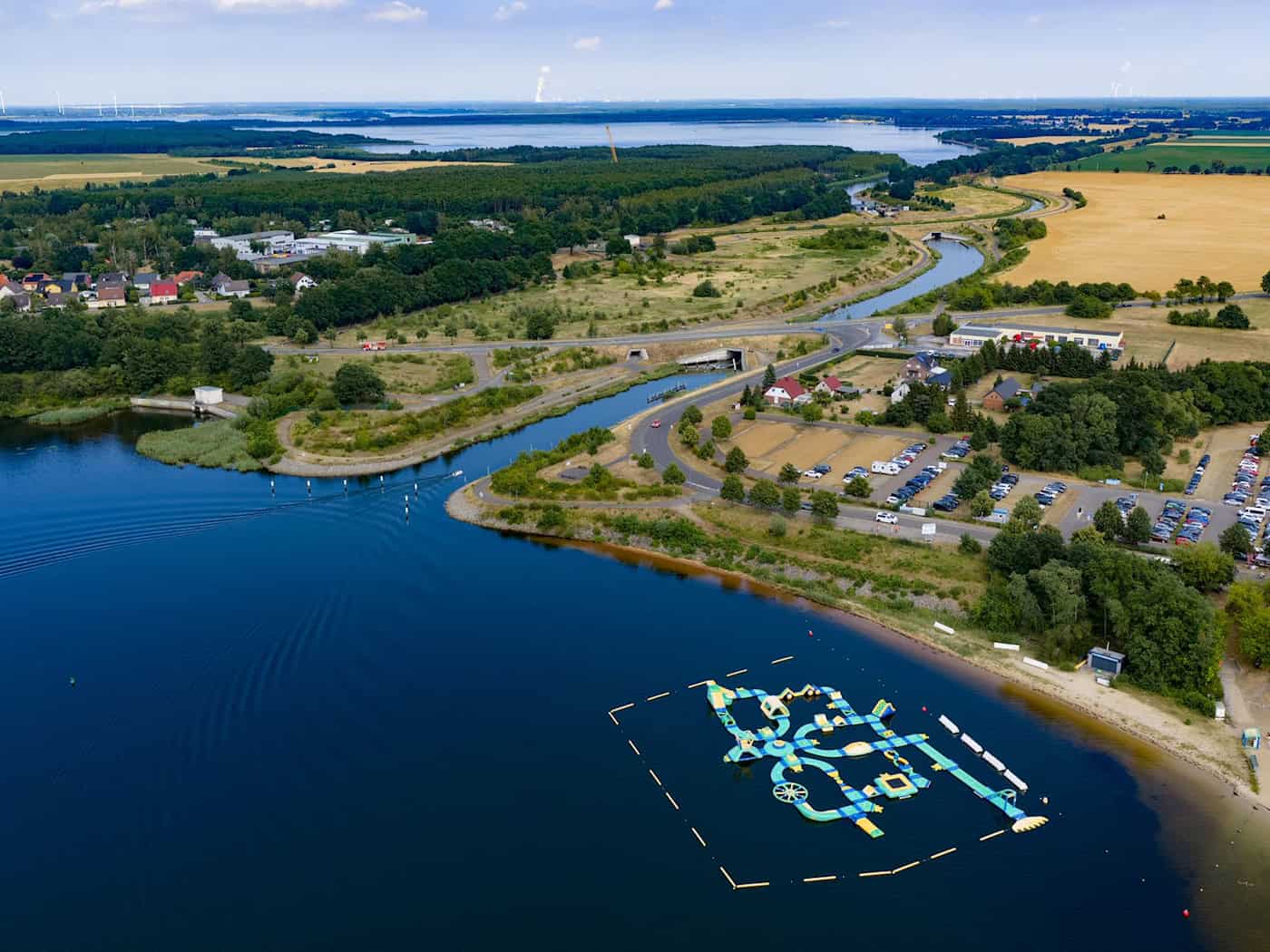
Lignite mining has led to a massive water shortage in the Saxon part of Lusatia alone. According to calculations presented by The Left in the state parliament in response to a parliamentary inquiry, that amount would have been enough to supply Saxony’s population with drinking water for about 40 years. State Representative Stefan Hartmann had asked how high the cumulative water demand would be by the time of the planned coal phase-out in 2038. According to the Ministry of the Environment, 300 million cubic meters each still need to be replenished in the post-mining lakes managed by the Lusatian and Central German Mining Administration Company (LMBV) and in the aquifers. Added to this is a water requirement of approximately 1.9 billion cubic meters for flooding the post-mining lakes and 3.2 billion cubic meters for replenishing the so-called pore space in the groundwater drawdown cone—for a total of 5.7 billion cubic meters. “That is how much has been and continues to be pumped out for an energy source that is both energy-inefficient and harmful to the climate,” Hartmann criticized. Several studies and model calculations are currently underway to address how this deficit should be resolved. However, the water shortage is already being felt and will remain so for decades. “From our perspective, however, we must ensure that the Nochten and Reichwalde open-pit mining pits are kept as small as necessary to minimize evaporation areas. These areas contribute to a further negative water balance,” Hartmann emphasized. Furthermore, priority must be given to water retention across the region through the removal of impervious surfaces, particularly on industrial brownfields. “This also includes reforestation and forest protection, the rewetting of bogs, and the restoration of natural floodplain landscapes.” In its response, the Ministry of the Environment stated that, once post-mining remediation is complete, there will be a total of approximately 9,000 hectares of open water in the Saxon part of the Lusatian Lake District. Copyright 2026, dpa (www.dpa.de). All rights reservedMinistry Calculates Requirements
The Left: Water retention must be a priority


