


VCD Sounds the Alarm: If Dresden Shuts Down the Tram, Constant Traffic Jams Are Inevitable
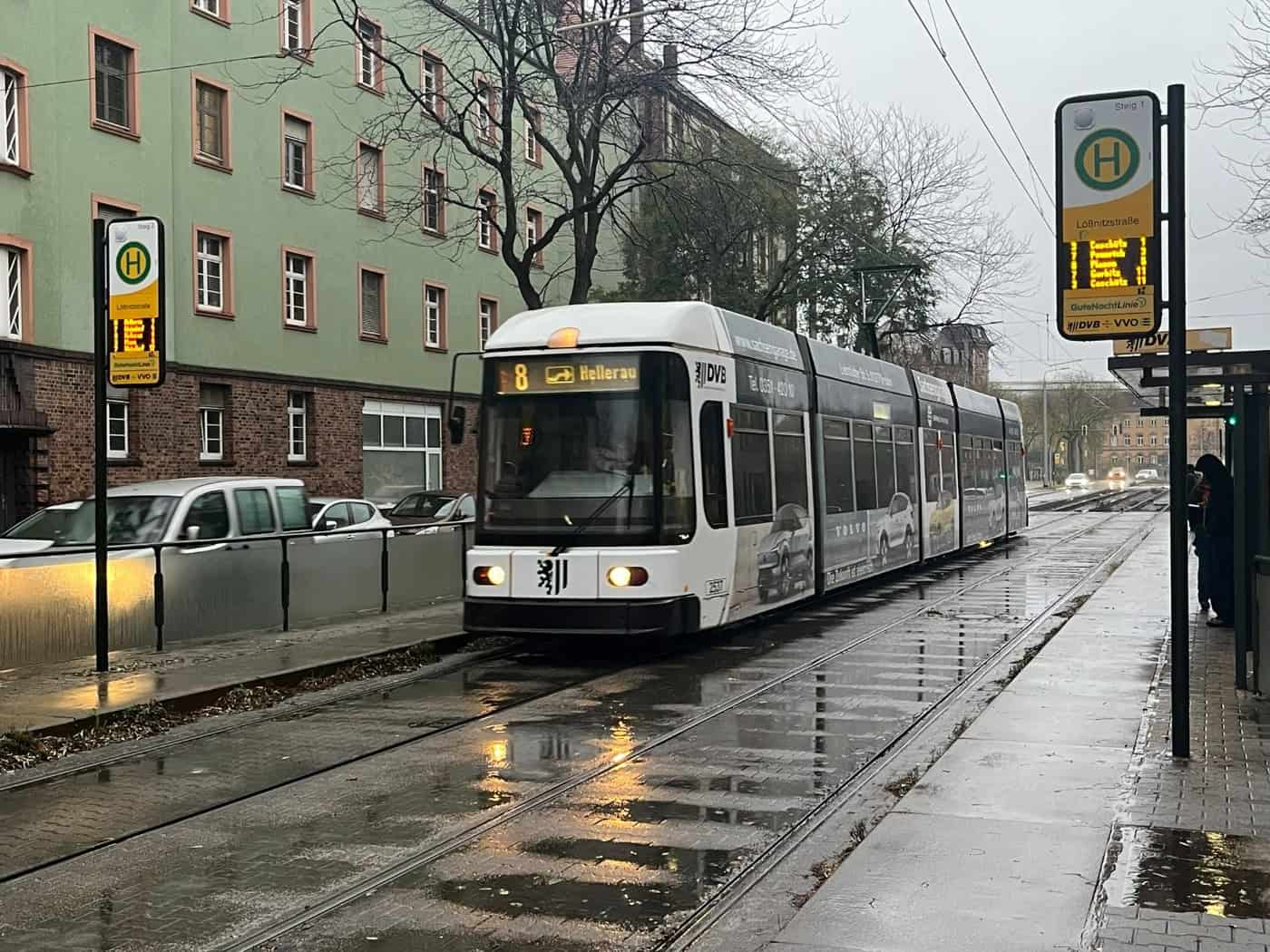
Dresden. Billions are being poured into the new chip factories in northern Dresden, billions are being poured into the project. How thousands of employees will get there every day depends on a much smaller decision. On November 26, the city council will vote on whether Tram Line 8 should continue to be planned to the Airportpark industrial park (Proposal V0924/26). The German Transport Club (VCD) warns against backing out now.
A amendment proposed by the CDU parliamentary group calls for halting the planning and initially handling traffic with buses. The VCD considers this a mistake. The association warns that halting planning would delay the project indefinitely. If there is no efficient alternative when traffic increases due to the new plants, there is a risk of more traffic jams and longer travel times—including for businesses and delivery traffic.
Line 8: Trams or Buses in Northern Dresden
Buses could not significantly expand the limited road capacity, the VCD argues. They would be stuck in the same traffic jams as cars and delivery vehicles. Trams, on the other hand, run on their own tracks and, with longer vehicles, carry significantly more people per trip.
“The tram is not just an investment in transportation, but an investment in the economic vitality of northern Dresden,” says Fabian Schmiedt of the VCD. The construction costs for the extension are low relative to public investment in the area and could be largely subsidized by the federal government. In operation, the tram is also more efficient than the bus, which incurs permanently higher personnel and vehicle costs.
How much the extension of Line 8 is expected to cost
Mayor Dirk Hilbert’s proposal calls for a shortened route that ends at Knappsdorfer Straße, about 650 meters before the ESMC plant. The costs amount to approximately 54 million euros, of which the city, together with the DVB, will cover about 16.2 million euros. Up to 85 percent could be covered by subsidies. The city expects 900 to 1,200 additional passengers per day.
According to the VCD, further planning of the preferred option also leaves open the possibility of extensions to ESMC, on to GlobalFoundries, or to Boxdorf. If planning were halted now, any progress would be delayed by years, while construction costs would rise and funding conditions could change. The association is calling on the political parties to finance the preferred option and to keep the route open for all extensions.
Connectivity Also Key for Attracting Skilled Workers
The VCD emphasizes that reliable connectivity is also crucial for attracting skilled workers. The semiconductor industry needs qualified employees who, in addition to jobs, expect above all reliable commute times. “The region wants to become a leading semiconductor hub in Europe. Transportation problems must not become an obstacle in this endeavor,” says Lucas Meißner, a VCD member and electrical engineer.
The Construction and Transportation Committee had already discussed the project on November 4. According to the city, Stephan Kühn, the mayor in charge of transportation, does not expect construction to begin this decade anyway.

