

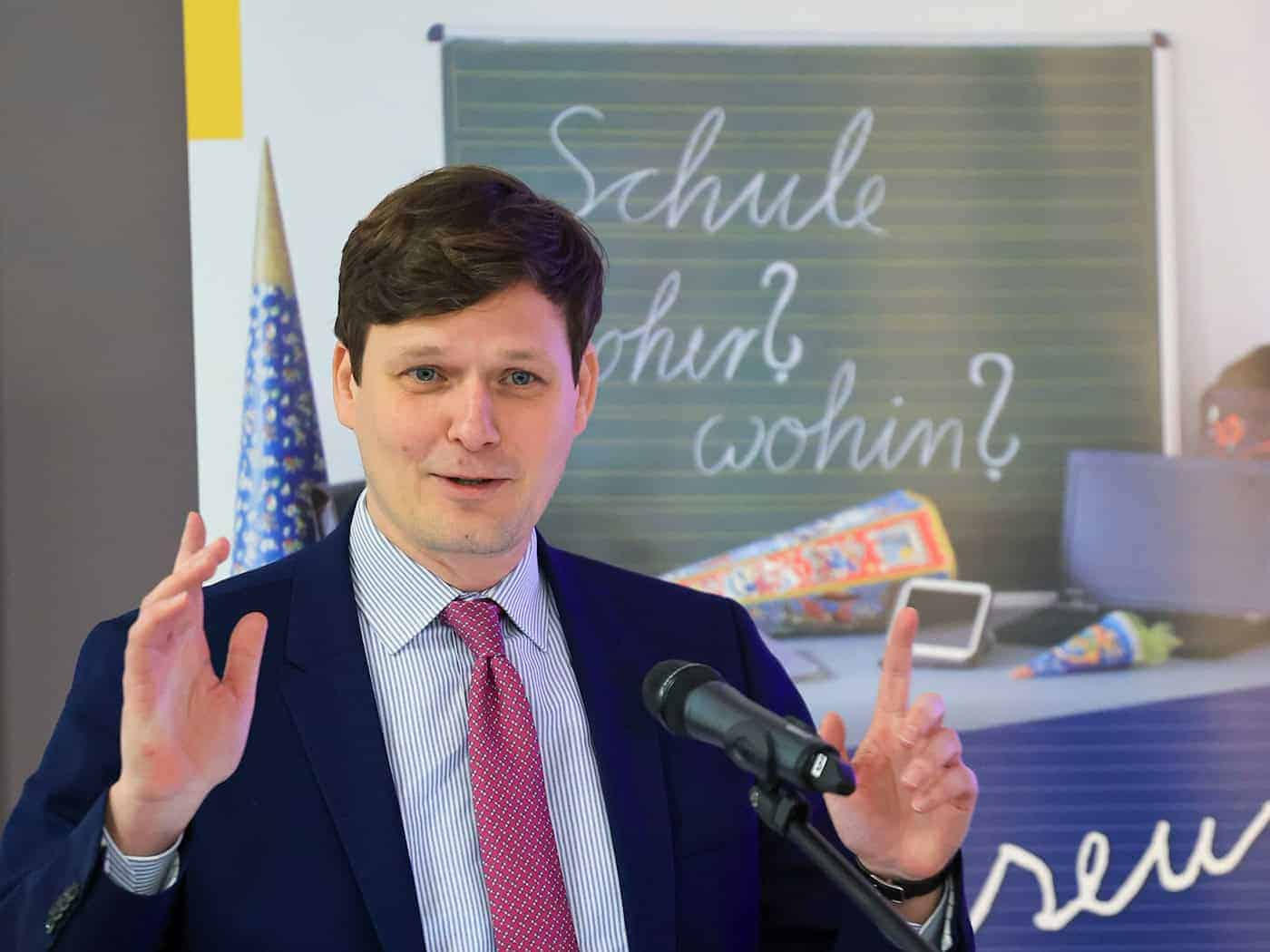
In light of significant performance shortfalls, Minister of Education Conrad Clemens (CDU) is questioning the efficiency of Saxony’s education system. “If we are to remain number one in the German education system, we must change. We can’t stand still,” he told the German Press Agency in Dresden. Young people’s skills are also declining in Saxony. “Instruction must change. It must become more modern, but remain performance-oriented,” Clemens emphasized. Instruction should be interdisciplinary and could also become more self-directed: “Less lecture-based, not focused exclusively on knowledge transfer, but more on personal development and skills.” According to Clemens, the goal is to strengthen independent, critical thinking among students. “If we can achieve that, we can also defend our leading position. Educational development goes beyond existing structures.” Countries like Canada are better at teaching skills. “We need more educational diagnostics and assessments of competencies. And not just in preschool, but as longitudinal assessments over the course of several years.” Only in this way can we assess how a child develops over the years. “That would be a revolution. Right now, the situation is this: With the PISA test, a new sample is taken every three years, and everyone is shocked,” said Clemens. He favors a nationwide solution for a so-called student ID. This idea is enshrined in the coalition agreement between the CDU and SPD at the federal level and is intended to serve as a registry of educational progress. Proponents of such an assessment system praise the student ID for enabling the statistical analysis of educational pathways, dropout rates, and school transfers across states, as well as more targeted support for students. Critics, such as the Education and Science Union (GEW) and data protection advocates, oppose the idea. “If we were able to conduct ongoing assessments from early childhood education through graduation, we could see what has worked and what hasn’t,” Clemens argued. This would make it relatively easy to shed light on how skills are taught. “Why do some schools with more canceled classes still achieve better results than schools with few cancellations? What makes them better? Maybe they have a fantastic biology teacher who does a lot of experiments? Or maybe they excel with traditional teaching methods,” Clemens offered as an example. At the moment, he said, there is too much “perceived truth.” According to Clemens, Saxony still lags quite far behind when it comes to so-called evidence-based instructional development. This is also linked to the very strict data protection provisions in the Free State’s school law. Unlike in Hamburg, for example, individual student data cannot be used for such analyses in Saxony. “I want to modernize the school law,” the minister emphasized. He also commented on the academic performance of today’s generation of students. “It’s a phenomenon that this generation has far more opportunities than its predecessors, far more resources—and yet often performs worse. I find that alarming.” Clemens noted that about 30 percent of first-graders have language difficulties. Physical education teachers can no longer work with the performance charts of the past because children and adolescents no longer meet the standards for the long jump, sprint, or high jump. “Of course, they’re better at other things, such as computer science or English. Nevertheless, they’re worse at math and physical education,” Clemens emphasized. For many, the ability to concentrate has declined. Some 14-year-olds can’t read a 300-page book. “Classrooms are equipped with digital whiteboards; schools are well-equipped. And yet something must have happened to cause today’s students to remember less and be less able to solve problems,” said Clemens. Perhaps in some areas, simply too much is being done. According to the minister, students’ need for support is growing. The number of cases in child and adolescent psychiatry is rising, and diagnoses such as ADHD, anxiety disorders, or autism in a wide variety of forms are on the increase. If teaching positions are cut due to declining student enrollment, the resources freed up should also be used to deploy multidisciplinary teams. Copyright 2026, dpa (www.dpa.de). All rights reservedFocusing instruction more on personality and skills
Minister for Long-Term Diagnostic Assessment
Assessments are intended to demonstrate how skills are taught
Clemens Wants to Modernize School Law
Minister Points to Shortcomings in Academic Performance
“Perhaps in some areas, we’re simply doing too much”


