


Keeping big cats is bound by clear rules
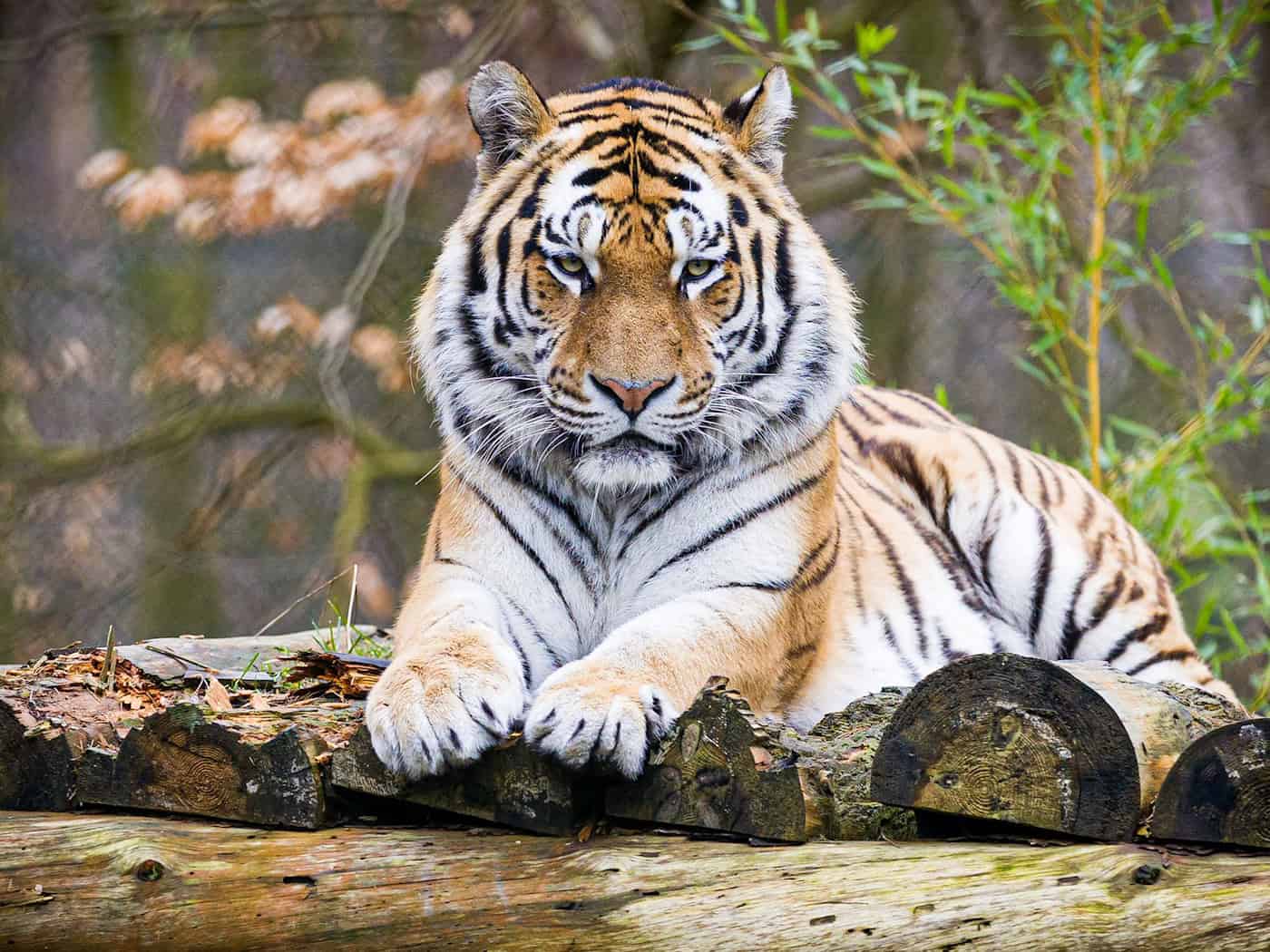
The keeping of big cats is subject to regulations in Germany. Compliance with these must be monitored by the responsible authorities. Following the escape of a tiger in Dölzig near Leipzig, the question arises as to whether all requirements have been met. According to the Saxony State Directorate, these were regularly checked by the food monitoring and veterinary office of the district of North Saxony in the case in question. The animal rights organization Peta points out that the private keeping of big cats is permitted in most EU countries if the animals do not come from the wild but from breeding - as is the case in Germany. However, the nationwide minimum requirements for keeping big cats are only guidelines that can be interpreted differently by authorities, federal states and municipalities. Officially, private owners must obtain a permit from the relevant authorities to keep tigers privately. According to the organization, private keeping is permitted in 7 out of 16 German federal states. Peta, however, does not think this is a good idea. It has been scientifically proven that large wild animals in particular suffer in cramped captivity and often develop behavioral disorders. "No enclosure can offer the animals what they need for a species-appropriate life", argue the animal rights activists. Minimum requirements for the keeping of mammals were formulated by the then Federal Ministry of Food and Agriculture in a 2014 report. There is also a section on big cats, including pumas and cheetahs. They need an outdoor enclosure. "Indoor enclosures are required for non-hardy species as a place of retreat, accommodation during night and grooming times and in unfavorable weather conditions." For lions and tigers, the outdoor enclosure must be at least 200 square meters for one animal or a pair. For each additional animal, 100 square meters must be added. Larger enclosures allow some species to be kept in small groups as long as there are sufficient separation options, according to the requirements. "It must be possible to separate females for birth and during the rearing of the young." In the indoor enclosure, a minimum area of 20 square meters with a height of 2.5 meters is prescribed. Indoor enclosures are not required for Siberian tigers. Peta considers this to be insufficient. The organization points out that tigers in the wild roam through large territories in search of food. The Siberian tiger, for example, has an area of up to 1,000 square kilometers, while even the smaller Bengal tigers roam between 40 and 150 square kilometers. This makes it impossible to keep them in a species-appropriate private home with sufficient space. Unlike domestic cats, tigers are not domesticated. "They are often separated from their mother at a very early age and are therefore misinformed about humans. But even if they are raised by hand, grow up in captivity and are therefore trusting towards their owners, dangerous situations can arise at any time," explains Peta. Under animal welfare legislation, the food monitoring and veterinary offices of the lower authorities at district and city level are responsible for monitoring the keeping of animals such as tigers. The lower nature conservation authorities are responsible for ensuring compliance with species protection. In the case of Dölzig, the public order office of the town of Schkeuditz and the public order office of the district of North Saxony are responsible for monitoring hazard prevention. The State Directorate of Saxony exercises technical supervision in each case. Copyright 2026, dpa (www.dpa.de). All rights reservedCan big cats be kept privately in Germany?
What requirements apply to the keeping of big cats?
What dimensions must an enclosure for big cats have?
Why the tiger is not a cuddly cat
Who controls the keeping of animals such as big cats?

