

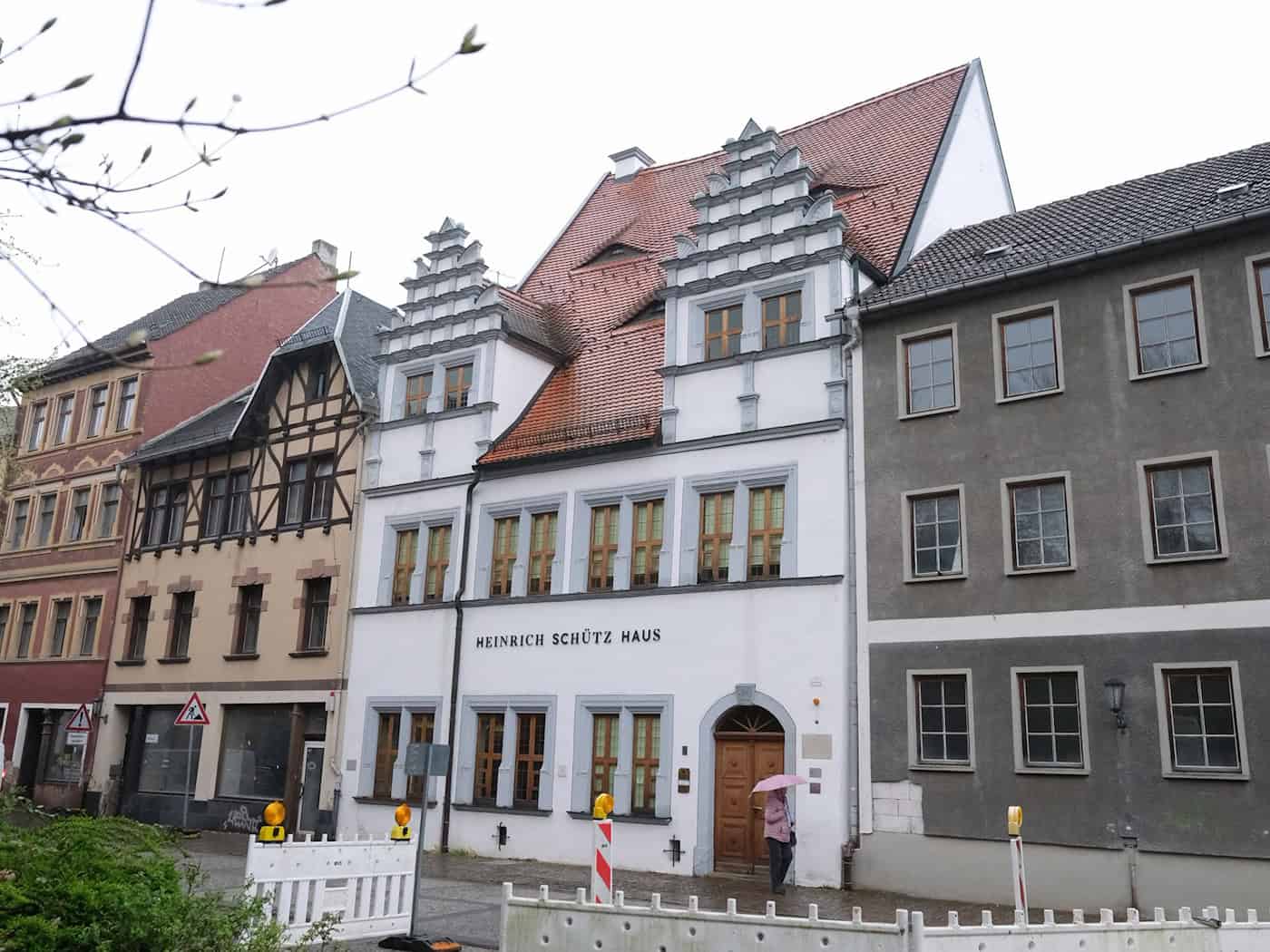
Heinrich Schütz (1585–1672) continues to set the tone in central Germany. Under the title “In Search of Traces. Inspiration and New Beginnings,” the music festival honoring the Baroque composer will offer numerous live performances blending early and contemporary music from October 2 through 11, according to the organizer, the Association for Central German Baroque Music in Saxony, Saxony-Anhalt, and Thuringia (MBM). Concert venues include Dresden, Bad Köstritz, Gera, Weißenfels, and Zeitz. Around 40 events are planned to present Schütz’s music not as a museum piece, but as a living universe. The program includes concerts, lectures, exhibitions, and guided tours, as well as musical church services and vespers, organizers said. “The starting point for designing the program was the concept of ‘reception,’” said harpsichordist and interim artistic director of the festival, Gerd Amelung. “What legacy does a person ultimately leave behind? How does posterity deal with what he or she created during their lifetime?” The music festival aims to explore the question of how “contemporary” Heinrich Schütz is. Amelung has chosen four thematic focuses for the 28th edition of the music festival. “‘Traces’ follows Schütz as a teacher and colleague, ‘Export’ traces his music’s journey to neighboring European countries. ‘Renaissance’ traces his rediscovery in the 19th and 20th centuries, and ‘Experiment’ explores how Schütz’s legacy is being reimagined today,” the festival announced. The programs will also include two world premieres—at the opening concert in Dresden and the closing concert in Bad Köstritz. The Berlin-based soloist ensemble The Present will serve as Artists in Residence. “Some concerts are already selling well, while for others we’re hoping for more interest. As of now, tickets are still available for all concerts at the 2026 Heinrich Schütz Music Festival—either through advance sales or at the respective box offices on the day of the event or in the evening,” said project director Hanna Viehöfer-Jürgens in response to an inquiry. Schütz was born in Bad Köstritz in 1585. In 1590, the family moved to Weißenfels. Today, these two towns in Thuringia and Saxony-Anhalt are pilgrimage sites for Schütz fans from all over the world. Schütz served for many years as court Kapellmeister in Dresden. According to experts, he created a connection between words and music in his works like no other. Famous works include his “Schwanengesang” and the “Psalms of David.” Copyright 2026, dpa (www.dpa.de). All rights reservedWhat legacy did Heinrich Schütz leave behind?
The festival has four thematic focuses—including two world premieres
The Present, a Berlin-based soloist ensemble, as Artists in Residence
Schütz is considered the first German composer of European stature


