

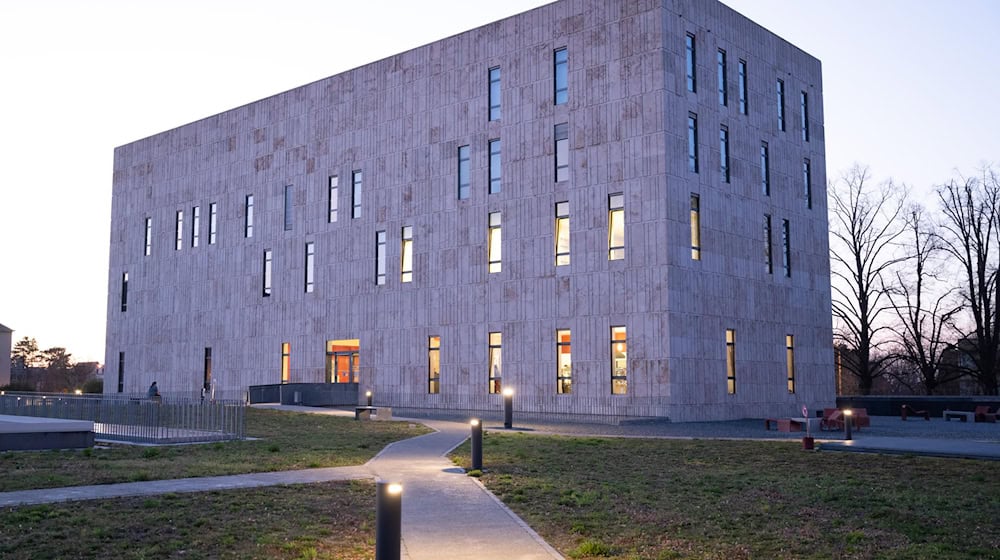
The tuning fork and the composer's manuscripts: Carl Maria von Weber (1786-1826) will be duly honored this year at his former place of work, Dresden. Many events are planned 200 years after the death (July 5) of the former court conductor. The Saxon State and University Library (SLUB) is now making a start. The exhibition "No Freischütz for Dresden. Carl Maria von Weber and German Opera" also shows original documents of the musician, who is regarded as a pioneer of opera in Germany. The show can be seen from Wednesday at the SLUB Book Museum and is open until 6 June. The accompanying program offers guided tours as well as concerts and lectures. One highlight is the performance of Weber's musical comedy "Abu Hassan" as a puppet show on February 26. "The SLUB Dresden preserves the historical music archive of the Saxon State Opera and thus central evidence of Dresden's reception of Weber for future generations," explained Katrin Stump, Director General of the SLUB. This collection is constantly being expanded through targeted acquisitions. Dresden's Mayor of Culture Annekatrin Klepsch (Left Party) said: "The 200th anniversary of Carl Maria von Weber's death provides an opportunity to discover his musical legacy in Dresden from new perspectives." The SLUB exhibition goes beyond 'Der Freischütz' to focus on Weber as a pioneer of German opera and uses unique original exhibits to make his Dresden period directly tangible. Semperoper director Nora Schmid described the exhibition as a "unique window into Dresden's musical history". "Carl Maria von Weber had such a lasting influence on Dresden opera as a composer, conductor, initiator of romantic opera and cultural manager that his work can still be felt in Dresden today." Weber joined the Dresden Court Theatre as Kapellmeister in 1817 and worked there until his death. "Parallel to his work as a conductor, Weber pursued the development of a new type of opera concept. 'Der Freischütz' is ultimately regarded as the first 'German national opera'," explained curator Andrea Hammes. The fact that Weber did not premiere an opera in Dresden was partly due to the insufficient quality of the local singers. "Der Freischütz" was first staged in Berlin in 1821 and in Dresden the following year. Manuel Gervink, First Chairman of the International Carl Maria von Weber Society, reminded the audience that it was not only "Der Freischütz" that was premiered elsewhere. "The 'Euryanthe' was for Vienna, the 'Oberon' for London, where Weber also died - and only Richard Wagner was able to have his mortal remains transferred to Dresden 18 years after Weber's death." Nevertheless, Dresden can still call itself a "Weber city". The original program sheet for the first Dresden performance of "Der Freischütz" in 1822 can be seen in the exhibition, as can the handwritten score of the opera "Euryanthe" and Weber's conducting scores. Costume designs and letters from Weber, for example to the publisher Carl Friedrich Peters, will also allow visitors to the exhibition to immerse themselves in the Dresden music world of the 19th century. Dresden is paying tribute to Weber with a whole year of celebrations under the motto "Discover Romanticism". The city is taking the anniversary as an opportunity to renovate the composer's former summer residence in the Hosterwitz district. The listed building - a former winegrower's house - serves as a Weber museum. It is to be renovated from March with federal funding and reopened in fall 2028. Copyright 2026, dpa (www.dpa.de). All rights reservedDocuments of Weber's work are preserved in Dresden
Weber is considered a pioneer of German opera
Weber operas were not premiered in Dresden
Visitors should immerse themselves in the musical world of the 19th century
Weber shaped musical life in Dresden at the time like no other


