

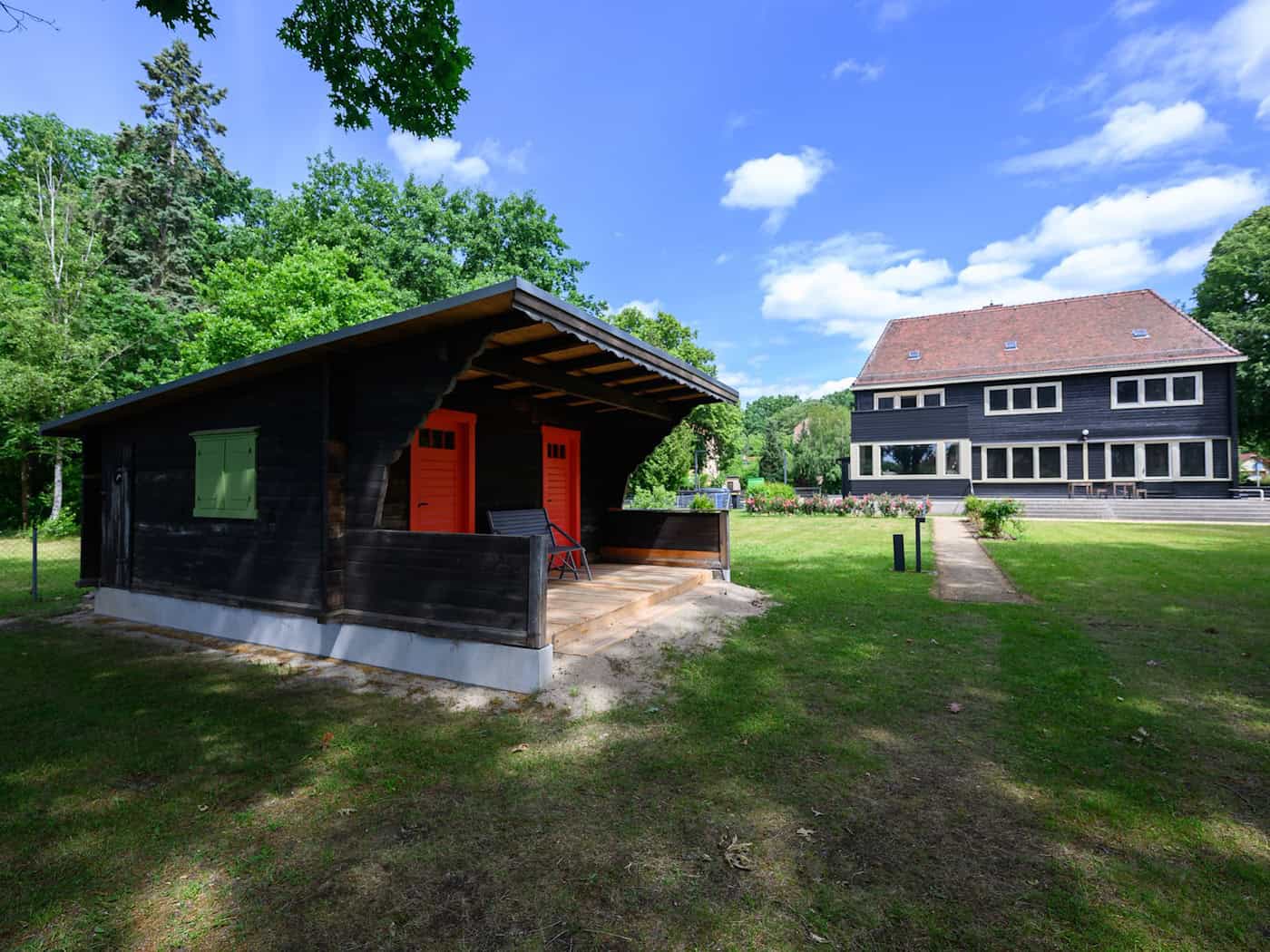
Konrad Wachsmann (1901 - 1980) is considered a pioneer of industrial construction. A traveling exhibition is now set to make the architect, who designed the summer house for the physicist Albert Einstein in Caputh near Potsdam in 1929, better known throughout Germany. On Friday (June 12), the new presentation of the Konrad Wachsmann House will open in Niesky in eastern Saxony. It will be on display there until July 5 before the compact show on Wachsmann's life and work goes on tour. "We want to use it to promote our institution beyond Germany's borders in the coming years," said museum director Jan Bergmann-Ahlswede. The next stop for the "Konrad Wachsmann Exhibition" will be the castle in Caputh in September. According to Bergmann-Ahlswede, the exhibition was creatively fitted into three large yellow wooden crates so that it can be used in as many places as possible. A Wachsmann exhibition has already been "safely transported around the globe" in these eye-catching boxes. The historic crates now function as both a shell and an exhibit. They were part of an exhibition that the renowned architect himself helped to design during his lifetime. This traveling exhibition was first shown in 1972. Wachsmann began his professional career at Christoph & Unmack AG in Niesky in 1926. At the time, the company was the largest manufacturer of industrially prefabricated timber constructions in Europe. The young architect designed a residential building for a member of the company's board of directors, which is considered an important building of classical modernism. It is now open to the public as a museum named after him. Wachsmann had gained international renown thanks to the commission from Nobel Prize-winning physicist Einstein. Due to his Jewish origins, he emigrated to the USA in 1941. Together with Bauhaus founder Walter Gropius, he set up a company there that produced prefabricated wooden houses for the American market. Copyright 2026, dpa (www.dpa.de). All rights reservedYellow wooden crates for the exhibition


