

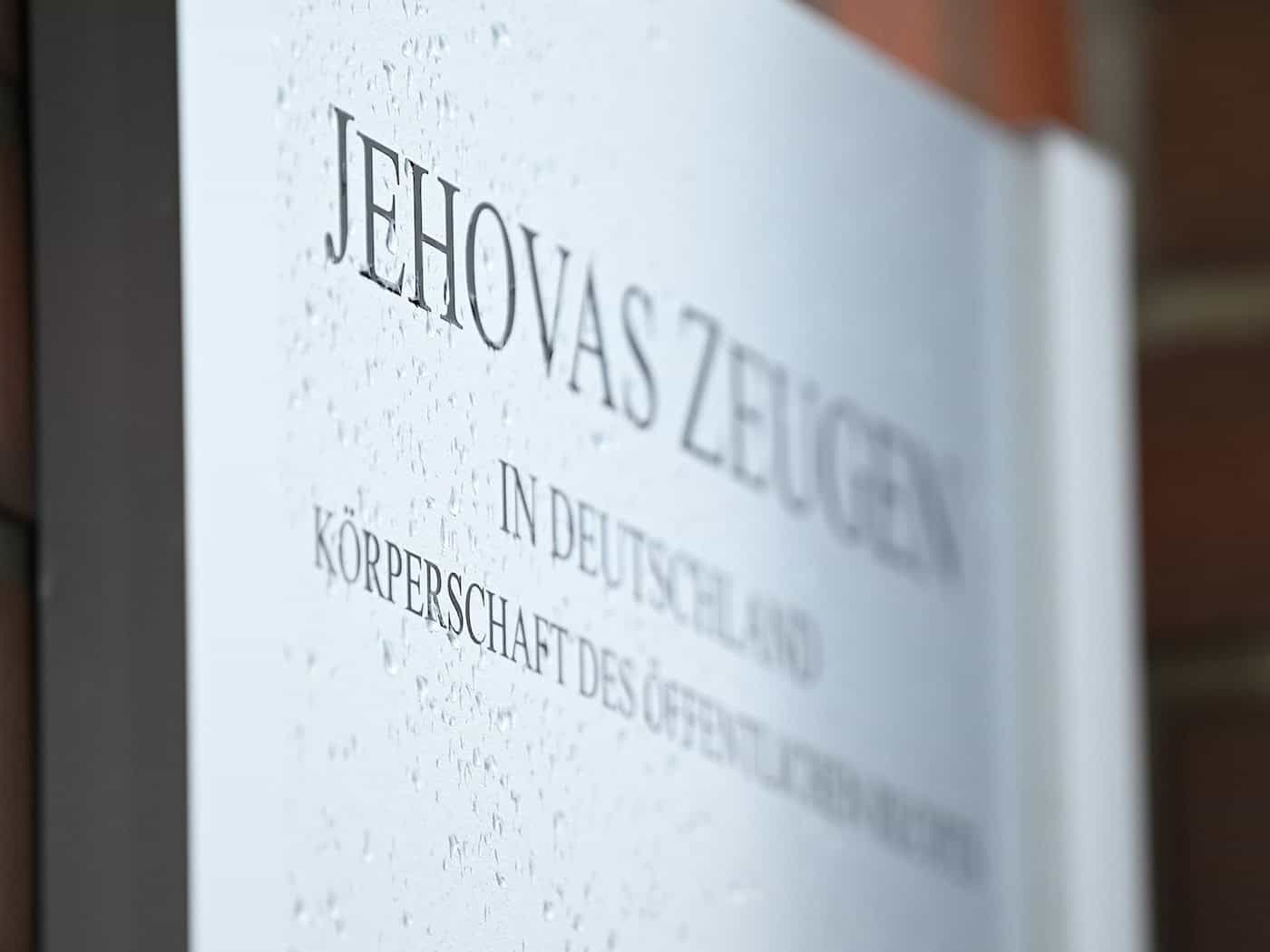
For years, Jehovah's Witnesses have been in a dispute with the German government over an extensive family archive from the Nazi era. The more than 1,000 documents tell the story of the Kusserow family from Bad Lippspringe in North Rhine-Westphalia, who were persecuted by the Nazis for being Jehovah’s Witnesses. The archive is currently housed at the Bundeswehr Military History Museum in Dresden. Following a ruling by the Federal Court of Justice (BGH) in Karlsruhe, the religious community has reason to hope that its lawsuit seeking the return of the archive might yet be successful. Germany’s highest civil court overturned a ruling by the Higher Regional Court (OLG) in Cologne, which had dismissed the lawsuit. The Cologne court must now rehear the case and issue a new ruling. (Case No. V ZR 92/25) The eldest daughter, Annemarie Kusserow, had documented the persecution of her family of 13—from the Nazis’ rise to power until her own arrest in October 1944—through photographs, letters, arrest warrants, and death sentences. Two of her brothers were executed by the Nazis because they refused military service on grounds of conscience. Other family members died as a result of the cruel conditions of imprisonment. After the death of Annemarie Kusserow, who was over 90 years old, in 2005, one of her brothers sold the extensive archive to the museum in Dresden. In fact, Kusserow had bequeathed her estate to the Jehovah’s Witnesses. According to the Federal Court of Justice (BGH), it remains unclear how the archive ended up with her brother. “What is certain is that the archive was unlawfully sold to the museum,” says Sebastian Stock, spokesperson for the Jehovah’s Witnesses. The religious community has been suing the Federal Republic of Germany for years to have the Kusserow Archive returned—but so far without success. The fact that only six of more than 1,000 items are on display shows “that most of the documents are of no interest to the museum,” says Stock. For Jehovah’s Witnesses, however, they are of “immense value.” When asked, the museum declined to comment on the Federal Court of Justice ruling. The main issue before the Federal Court of Justice was whether the Federal Republic of Germany had “acquired the Kusserow Archive in good faith.” In such cases, the buyer of an item is considered the lawful owner even if the item did not previously belong to the person from whom it was purchased. A prerequisite for such a purchase “in good faith” is that the buyer did not know—and could not have known—that the item did not belong to the seller. Furthermore, according to the law, the item must not have been “stolen, lost, or otherwise gone missing.” The Higher Regional Court of Cologne held that the Jehovah’s Witnesses had tolerated the Kusserow brother as the owner of the archive and thus legitimized him. This assessment did not stand up to scrutiny by the Federal Court of Justice (BGH). The Senate held that an item is considered “lost” until it is back in the owner’s possession. Even the fact that the owner tolerates the current state of possession does not alter the fact that the item remains missing. Based on the findings to date, it cannot be assumed that the federal government acquired the archive in good faith, the judges in Karlsruhe ruled. In particular, it is possible that, prior to purchasing the archive, the federal government “was required to investigate whether the testator’s brother was in fact the owner of the documents or at least had the right to dispose of them.” A claim by the plaintiffs for the return of the documents could therefore not be ruled out. During the hearing in March, the Federal Court of Justice (BGH) panel had urged the parties to reach an amicable settlement. The presiding judge had explained that the legal dispute would likely end in a non-compromising outcome: one side would win, the other would lose. She therefore asked whether a solution could be found that both sides would agree to. After all, both sides presumably shared the goal of preserving the unique archive for future generations. The Jehovah’s Witnesses subsequently submitted a detailed settlement proposal to the museum, says spokesperson Stock. “This proposal provides for unrestricted scholarly access to the archive and allows for its inclusion in future exhibitions at state museums.” In addition, they offered financial compensation for the costs incurred in acquiring and preserving the archive. However, no agreement could be reached by the time the ruling was handed down in Karlsruhe. Contrary to the court’s wishes, the proceedings will now drag on further, Stock said after the ruling was announced. However, they remain confident that Annemarie Kusserow’s last will and testament will ultimately be honored. During the Nazi era, Jehovah’s Witnesses refused to give the Hitler salute or send their children to the Hitler Youth. Many refused to perform military service. Beginning in 1933, they were persecuted by the Nazis. Thousands were deported, imprisoned, and tortured. At least 1,700 lost their lives. On Wednesday, a memorial was dedicated in Berlin to commemorate the persecution of and resistance by Jehovah’s Witnesses. Copyright 2026, dpa (www.dpa.de). All rights reservedArchive holds “immense value” for Jehovah’s Witnesses
Was the archive acquired in good faith?
The panel had unsuccessfully sought a settlement
Memorial in Berlin Commemorates Persecution


