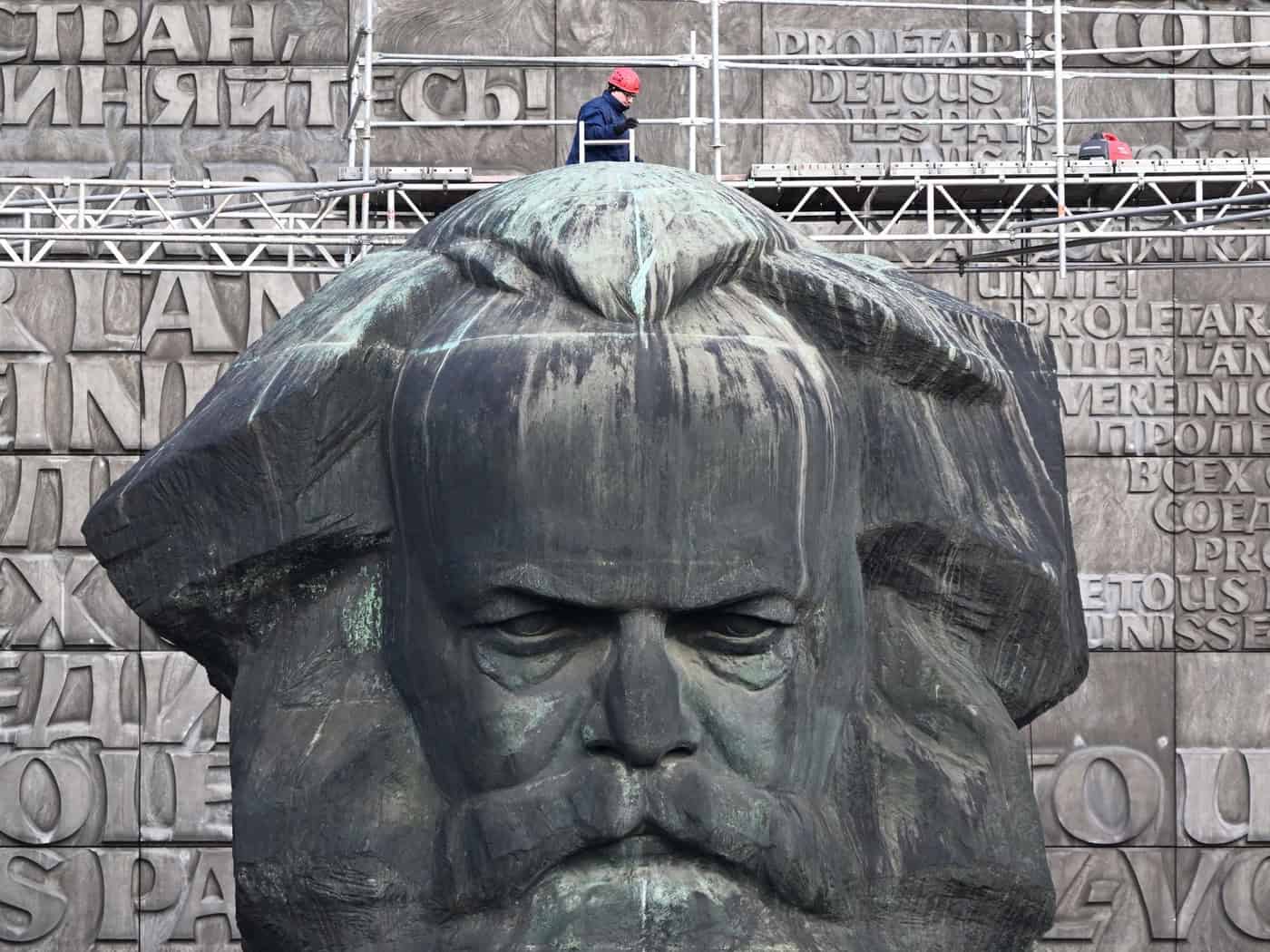
Experts entered the interior of the Karl Marx Monument in Chemnitz through a narrow opening to prepare for its restoration after 55 years on site. The experts spent about four hours inspecting the world’s second-largest portrait bust from the inside and also took material samples, according to Thomas Kütter, the city’s mayor in charge of construction. The samples will now be analyzed in a laboratory before a detailed restoration plan is developed for the monument, which is known far beyond the region. “There does not appear to be any serious damage,” Kütter said after the initial inspection. “What we know today is that the structure is stable; we will likely not have to replace any load-bearing parts.” After nearly six decades, however, the monument is no longer in pristine condition, and the bolts have rusted. The restoration will focus on restoring corrosion protection. In addition, the inspection of the interior will also provide more detailed insights into the construction of the monumental bronze sculpture. While historical documents do exist, Kütter noted, they are often only partially reliable. To gain access, a panel at the top of Marx’s head was sawed out and lifted out by crane. According to the current plan, the restoration is scheduled to begin in the summer of 2027 and last until 2028. The monument, popularly known as “Nischel,” will not need to be completely dismantled for this, Kütter said. The 40-metric-ton bust was once cast in a foundry in what is now St. Petersburg, disassembled into 95 pieces, and then transported to Chemnitz. At that time, the city was still called Karl-Marx-Stadt. The monument was unveiled there in October 1971. It was created by the Russian sculptor Lev Kerbel (1917–2003). Copyright 2026, dpa (www.dpa.de). All rights reservedCity Councilor for Construction: Structural Stability Is Assured
Portrait bust originates from a Russian foundry