


COVID-19, HIV, Ebola, or monkeypox: Viruses can mutate rapidly and continually present researchers with new challenges. A new research consortium aims to help detect them more quickly and understand them better.
The University of Leipzig is also participating in this effort. In the new Collaborative Research Center “VirusREvolution,” researchers are developing digital tools designed to support virus research.
Three departments are collaborating
The Collaborative Research Center is coordinated by the University of Jena. The spokesperson is Prof. Dr. Manja Marz. She once conducted research in the lab of Prof. Dr. Peter Stadler, who now teaches bioinformatics at the University of Leipzig. “Above all, we’re developing computer-based tools to support virologists in their work,” she explains.
That is precisely the goal of the research consortium. Virology, bioinformatics, and photonics – technologies that work with light – are intended to work together to help better understand the genetic material, structure, and development of viruses, as well as their interaction with the body’s cells.
What the Leipzig Teams Are Researching
Peter Stadler is investigating how the genetic material of viruses – known as RNA – interacts with certain proteins in our cells. The goal is to better understand how a part of our immune system recognizes viruses and responds to them.
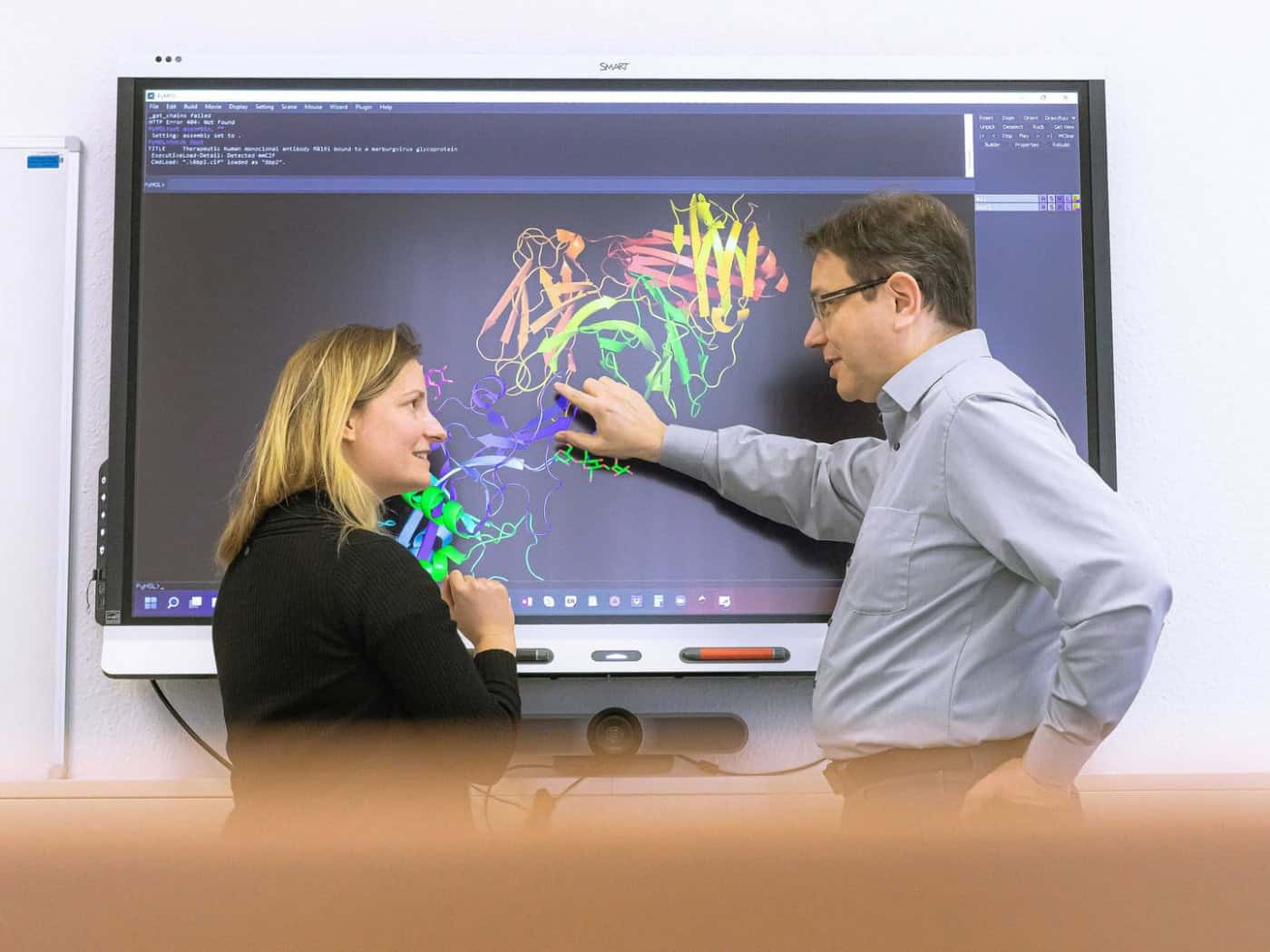
A second project comes from the Institute for Drug Discovery at the University of Leipzig. Over the next four years, Humboldt Professor Jens Meiler and Prof. Dr. Clara Schoeder will investigate how the structure of certain viral proteins changes. To this end, Meiler is developing an algorithm designed to learn how antibodies interact with viral proteins. Based on this, Schoeder’s team is developing new antibodies and potential vaccine candidates. These will then be investigated in collaboration with the research consortium’s partners.
In the long term, the research consortium aims to help better predict the characteristics of certain viruses. This could enable faster and more targeted responses to viral outbreaks in the future.

