


Wood waste is turned into biochar for Saxony's palace parks
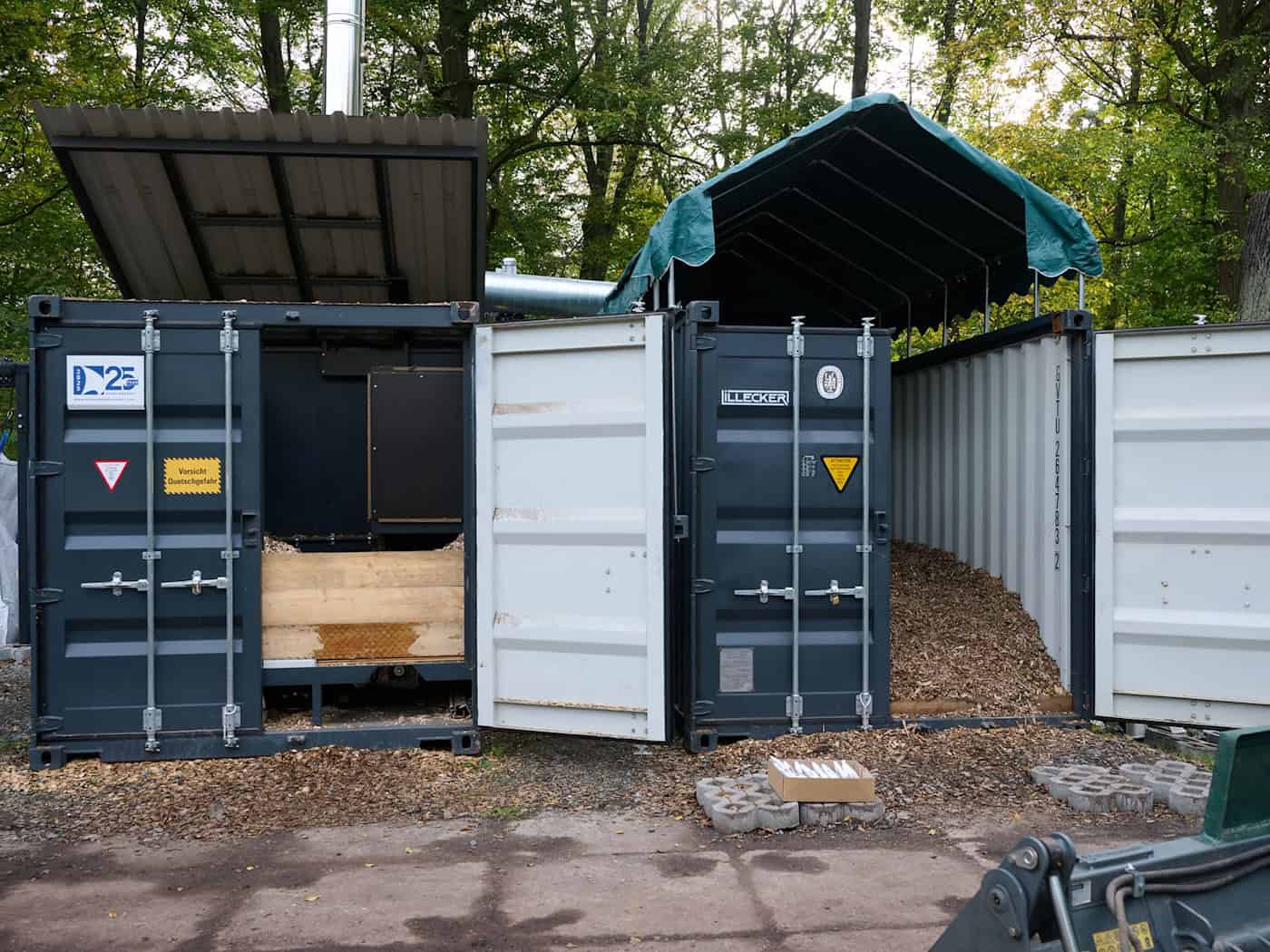
Saxony’s state-owned palaces, castles, and gardens are preparing for climate change and are using wood from their own forests to do so. In Dresden’s Grand Garden, a biochar plant is now going into operation following a test phase, according to Schlösserland. The plant processes wood waste into biochar, which is then incorporated into the soil of park grounds. This enriches the soil with nutrients and improves its ability to retain water. Approximately 80 metric tons of biomass are expected to yield around 19 metric tons of biochar per year. “Enriching the soil in our palace parks with biochar starting now will, in the long term, significantly improve the growing conditions for our tree population,” emphasized Schlösserland Director Christian Striefler. The project, costing approximately 340,000 euros, was 90 percent funded by the Federal Ministry of Housing, Urban Development, and Construction through a program addressing climate change in historic gardens. Annual operating costs are estimated at 15,000 euros. This is offset by savings of approximately 20,000 euros on the purchase of commercially available biochar. The system operates without an electrical connection. A Stirling engine—a heat engine—uses the waste heat generated during pyrolysis to produce electricity. The term “pyrolysis” refers to a thermochemical process in which organic compounds are converted at high temperatures and with oxygen largely excluded. The lack of oxygen prevents complete combustion. As part of the “Climate Change in Historic Gardens” program, the state-owned palaces, castles, and gardens have also been researching the effects of climate change on parklands in recent years. Specifically, the focus was on the Grand Garden in Dresden and the Pillnitz Palace Park. Since 2022, a total of three million euros in funding from the federal government and the Free State of Saxony has been allocated to these projects. “Drought, rising temperatures, prolonged heat, declining precipitation, falling groundwater levels, and increasing extreme weather events are weakening the population of old trees. Without timely countermeasures, these often centuries-old, historically protected sites will be beyond saving,” the state-run enterprise explained in justifying its commitment. The project encompassed several areas. For example, a tree nursery was established in the Großer Garten, and an area for cultivating woody plants was set up in Pillnitz. The biochar project aims to harness the so-called “sponge effect”: Biochar can store many times its own weight in water and nutrients and slowly release them again. In cooperation with scientists from the Technical University of Dresden, a prototype of a semi-autonomous robot was also developed to assist with watering plants in Pillnitz. The State-Owned Palaces, Castles, and Gardens GmbH manages the Free State’s stately properties. Specifically, this includes Albrechtsburg Meissen, the Altzella Monastery Park, Colditz Castle, Gnandstein Castle, the Großsedlitz Baroque Garden, Weesenstein Castle, Kriebstein Castle, Mildenstein Castle, Moritzburg Castle with the Fasanenschlösschen, Nossen Palace, the Baroque Palace of Rammenau, Rochlitz Palace, Stolpen Castle, as well as the palaces and gardens of Dresden, including the Dresden Fortress, the Grand Garden, the Stallhof, the Zwinger, and Pillnitz Palace and Park. Copyright 2026, dpa (www.dpa.de). All rights reservedThe federal government provided the majority of the project’s funding
The system operates without an electrical connection
“Climate Change in Historic Gardens” Program
Old trees are suffering from climate change
The project was divided into several modules