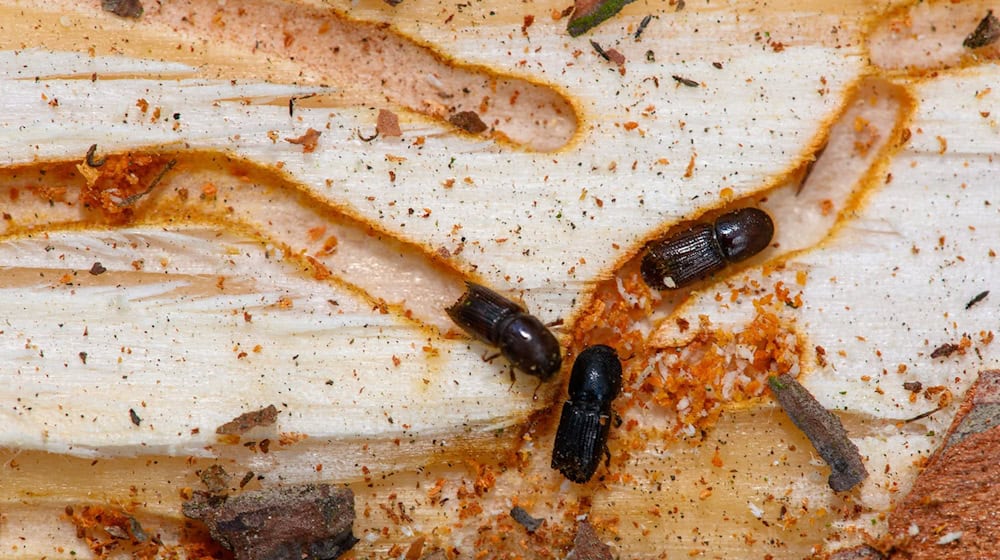
The bark beetle has caused less damage in Saxony's forests this year than in previous years. "In general, we are observing a decline in bark beetle activity, which is also reflected in the bark beetle monitoring carried out using traps," Marco Horn from the Sachsenforst state enterprise told the German Press Agency. For the first time, the level of damaged wood has reached the same level as before the last mass propagation. A downward trend has been visible since 2020.



Experts suspect a combination of factors for the decline
According to Horn, there is currently no clear explanation for the causes of the decline. "It is probably a combination of several factors that are unfavorable for the beetle, but these cannot be fully identified and vary from region to region."
In general, a general decline in vitality in the population of the bark beetle - the most important bark beetle - is likely. Over the years, the efficiency of the removal of damaged wood and the search for the beetles has also increased in large parts of the Saxon forest.
Areas without spruce no longer provide breeding habitat
A large part of the previously highly endangered regions are now free of spruce and therefore no longer provide breeding habitat for bark beetle reproduction, Horn emphasized. "Biological antagonists" also have a limited influence on the development. In general, bark beetles have many natural enemies, including other beetles, wasps, birds such as woodpeckers, tits and nuthatches, as well as fungi and mites.
According to information from Sachsenforst, damage caused by bark beetles was first described at the end of the 18th century - under the term "worm dryness". Large-scale damage also occurred after the Second World War. In 2019, the beetles caused 2.1 million cubic meters of damaged wood in forests in the Free State, compared to 825,000 cubic meters in 2018.
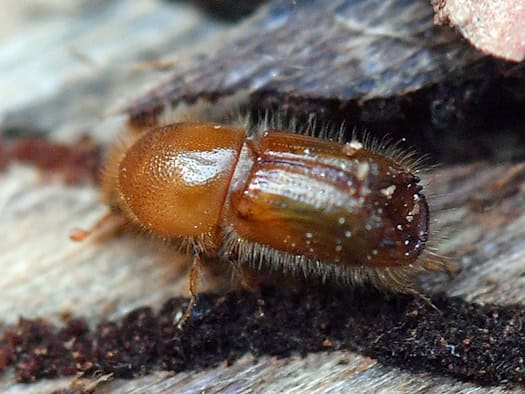
Bark beetles nest in trees between the trunk and bark, where they eat the bast. This interrupts the circulation of nutrients and the tree dies. Trees that have less resistance are a preferred hunting ground. According to experts, bark beetles can smell ailing trees. The beetle can survive temperatures of up to minus 25 degrees because it produces a kind of endogenous antifreeze for the winter months. However, it is susceptible if there are frosts as early as September or as late as April.
Copyright 2025, dpa (www.dpa.de). All rights reserved