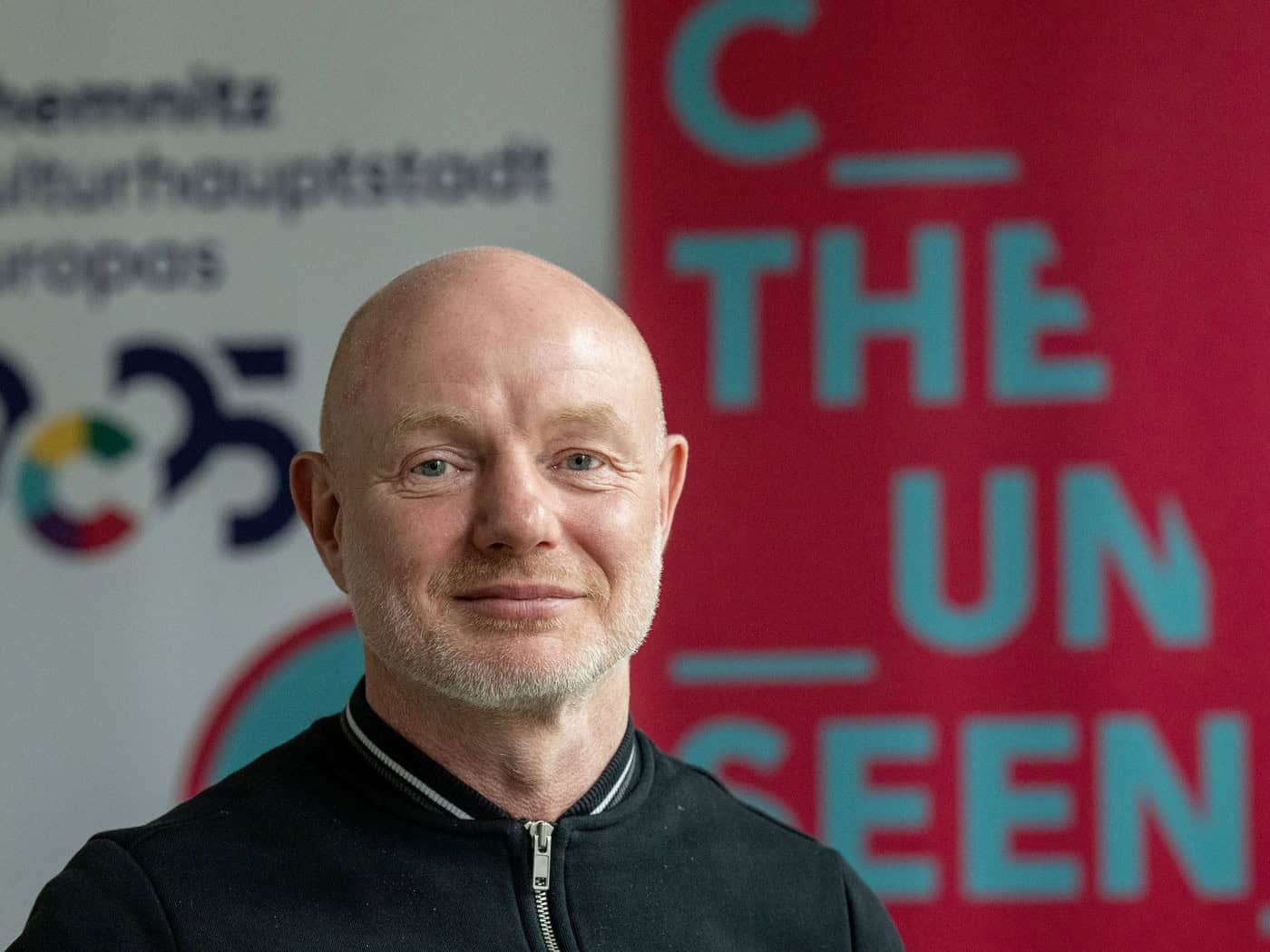
Tourist groups have once again become a rare sight on the streets of Chemnitz. Even the historic factory hall, which served as a visitor center during the 2025 Capital of Culture year, appears deserted on many days. Now, program director Stefan Schmidtke has also packed his bags. “Chemnitz left a lasting impression on many in the cultural scene,” he notes in retrospect. What remains from the European Capital of Culture year, and how he views the current challenges facing the cultural sector in the face of tight budgets. Question: A year ago, Chemnitz passed the baton as European Capital of Culture. Now you, too, are moving on—with relief or rather with a sense of wistfulness? Answer: It’s part of my job that I have to tear myself away time and again. But in this case, it’s harder for me than before. I had the chance to feel the heartbeat of this city for five years. Many close connections have formed, and people constantly greet me when I walk through the streets. That doesn’t happen to me in Berlin. I’ve met many people here who are passionately committed to various causes. Being able to experience something like this is what makes me happiest of all. Question: The European Capital of Culture caravan has moved on; next year, Latvia and Portugal will host the event. How do you think this year has changed Chemnitz? Answer: If you search for Chemnitz online today, you no longer see “Nazis are marching here,” but rather: “We’re a cool city.” That’s absolutely remarkable. In the past, many people were ashamed to say, “I’m from Chemnitz.” That’s over now. I was recently in Düsseldorf, Hamburg, and Prague—everywhere I went, people asked me about the Capital of Culture year. Chemnitz has left a lasting impression on many in the cultural scene. This is also evident in the awards given to individual projects, such as the world premiere of the opera “Rummelplatz” and the Maker Advent. And it’s continuing: Initiatives and groups have emerged that are carrying on the work—such as the Tanzende Nachbarn—as well as new venues. And quite a few things remain, such as the “Purple Path” art and sculpture trail. I keep hearing from people who say: “I didn’t manage to come to Chemnitz in 2025, but I’ll make up for it.” Question: Nevertheless, the appeal seems to have faded. The number of tourists has dropped again, and a large hotel in the city center has closed. For tourism, the Capital of Culture year seems to have been a flash in the pan. Answer: Chemnitz and the region have continued to benefit this year from the infrastructure we’ve built up. Think of the major “Theater der Welt” festival and the “Purple Path” weekend, with well over 100 program items. The Capital of Culture title is limited to one year, and now it’s all about reorientation and continuity. That’s what the “C the Unseen Biennale,” which launches in 2027, stands for. It’s not meant to be a mausoleum for the Capital of Culture, but rather to carry forward the spirit of 2025. Question: It’s meant to carry on the legacy of the Capital of Culture year. Answer: The “C the Unseen Biennale” is an umbrella brand. It brings together various events and projects, thereby achieving much greater visibility. If individual initiatives communicate only independently of one another, a great deal of potential is lost. But if you bring them all together under one umbrella, everyone involved can benefit much more. Question: Tight budgets at the federal, state, and local levels are currently affecting the cultural sector. What is the status of funding for the Capital of Culture legacy? Answer: We’re fortunate that this so-called “legacy” was secured well in advance. This was addressed much earlier in Chemnitz than in other Capitals of Culture. If everything goes through as planned in the state legislature and the city council, there will be a high degree of planning certainty for 2027 and 2028. The Kulturhauptstadt gGmbH will also continue to operate as a company, albeit with significantly fewer staff. But there is continuity. Question: Given the financial difficulties faced by many cultural institutions, how concerned are you about the cultural landscape, particularly in eastern Germany? Answer: Once again, everyone is cutting back on culture. This is particularly evident in the fact that project funding has all but dried up and the scope for larger projects is becoming much more limited. Ultimately, this means that public funds are being concentrated on securing existing institutions of high culture, such as museums and theaters. And even there, cuts are being made. For everything else—festivals, individual projects, and so on—it’s a free-for-all right now. We’ll go through a phase like this for seven to ten years. Then, hopefully, better times will return, like they did in the late 2000s. Question: To what extent does this particularly affect culture in the East, given that municipalities and states here are generally in a weaker financial position? Answer: What I’ve learned is this: When you’re doing outreach-based cultural work or community-based cultural work, the pool of people who can participate is far from exhausted. I’m referring to the 1,000 euros you might be able to get from the company around the corner if you collaborate with them. But that’s more difficult in the East. Here, people always look to the public sector first. In West Germany, my experience was different. There are also amazing entrepreneurs in the East who are committed to culture. But there are too few of them. Especially in eastern Germany, people need to understand more deeply that a certain degree of generosity unleashes entirely different kinds of energy. Question: You were born in Saxony and have now been working in Chemnitz for five years. Has that changed you in any way? Answer: I’ve become a bit more pragmatic. Chemnitz pragmatism is obviously contagious. I’ve realized: Not everything has to work out exactly the way I imagined it. Instead of dictating where the arts should go, as executive director of the European Capital of Culture, I was more responsible for seeing how others could successfully bring their ideas to fruition. You just have to let things happen and trust people. Question: Your colleague Andrea Pier, who is in charge of business operations, is moving to the Vereinigte Bühnen Wien. What’s next for you professionally? Answer: My contract in Chemnitz runs until the end of the year; right now, I’m taking my full annual leave. My new job starts in January 2028. The most important negotiations are coming up in December, with endless lists, proposals, documents, and discussions. If all goes well, the newspapers will report in February on what’s next for me. Question: Will you stay in Saxony? Answer: No. But I won’t reveal any more than that—not even half a sentence. I’m far too superstitious for that. ABOUT THE PERSON: Stefan Schmidtke (58) was born in Döbeln and studied directing in Moscow. He was program director of the Theater der Welt festival in Düsseldorf, head of drama at the Vienna Festival, and established the programming department for Tallinn, the 2011 European Capital of Culture. In 2021, the cultural manager was appointed executive director of the 2025 European Capital of Culture in Chemnitz. In 2025, the city became Germany’s fourth European Capital of Culture, following West Berlin, Weimar, and Essen in the Ruhr region. Copyright 2026, dpa (www.dpa.de). All rights reserved