

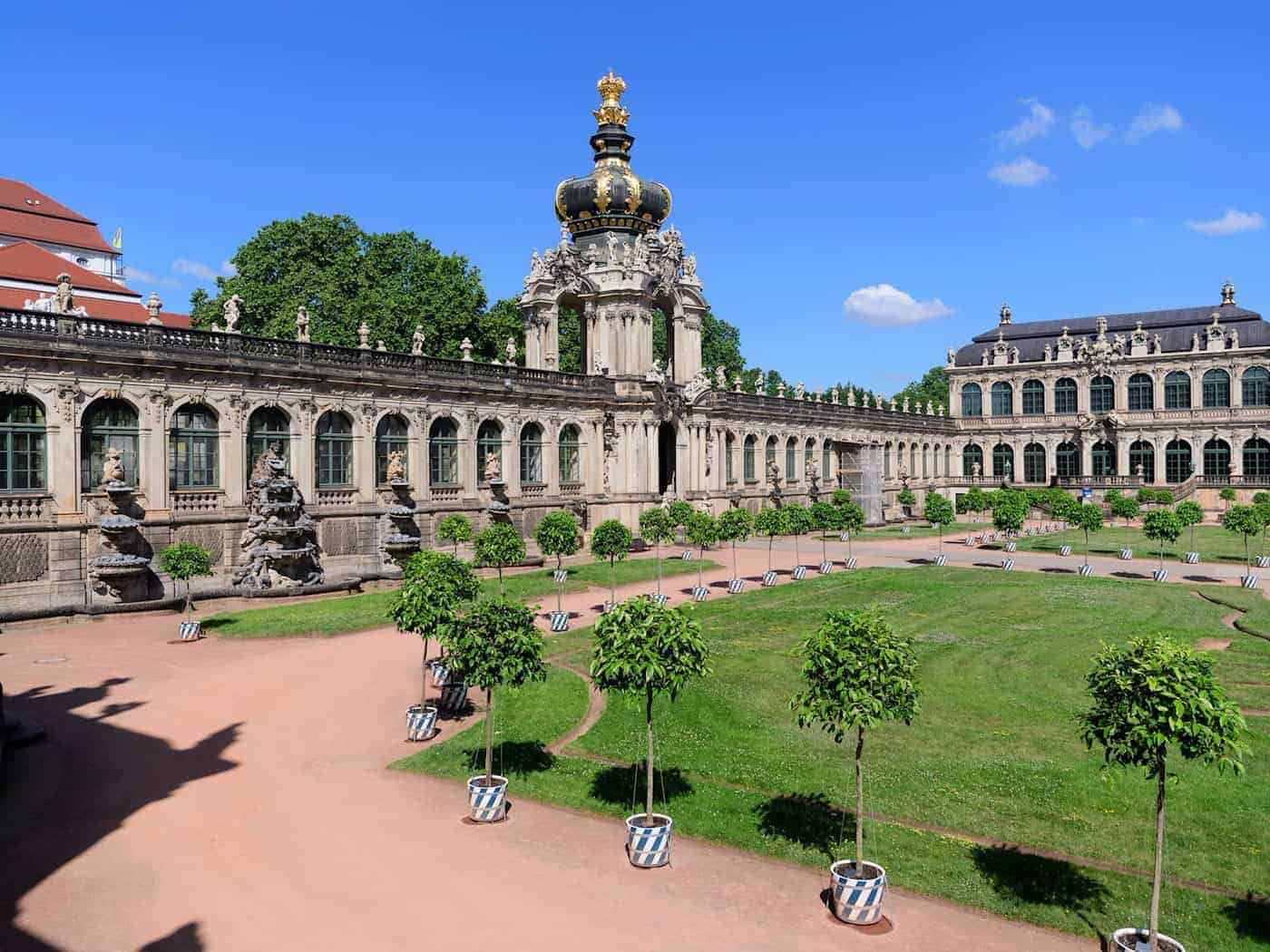
After the renovation of the Dresden Zwingerhof, the orange trees are returning. The bitter oranges, which originate from Italy, have been housed in their tubs in the Grosssedlitz Baroque Garden since 2021. This week, the State Palaces, Castles and Gardens announced that 52 bitter orange trees will return to their original location and be placed along the main paths in the Zwinger. They will remain outdoors throughout the summer before returning to their winter quarters in the Grosssedlitz Orangery. According to Schlösserland, the relocation requires dexterity and strength. The bitter orange trees, which are now more than 3.5 meters high and weigh around 120 kilograms, are loaded onto a specially manufactured trailer with a windbreak to protect the treetops during the journey. There are 80 kennel bitter orange plants in total. The remaining plants were given new containers in April and will not be subjected to the stress of moving this summer. The trees have been in the Zwinger since 2017 and are intended to commemorate its history as an orangery. Under Elector Augustus the Strong, there were once 1,700 orange trees here. The Zwinger's arched galleries served as winter quarters. "At that time, it was considered a sign of power and wealth to be able to cultivate the sensitive plants north of the Alps," it said. Specialized gardeners - known as orangeurs - look after the plants in the state-owned company. Sponsors are still being sought to finance the care of the trees. Copyright 2026, dpa (www.dpa.de). All rights reservedTrees now more than 3.5 meters high
Orange trees as a symbol of power and wealth


