

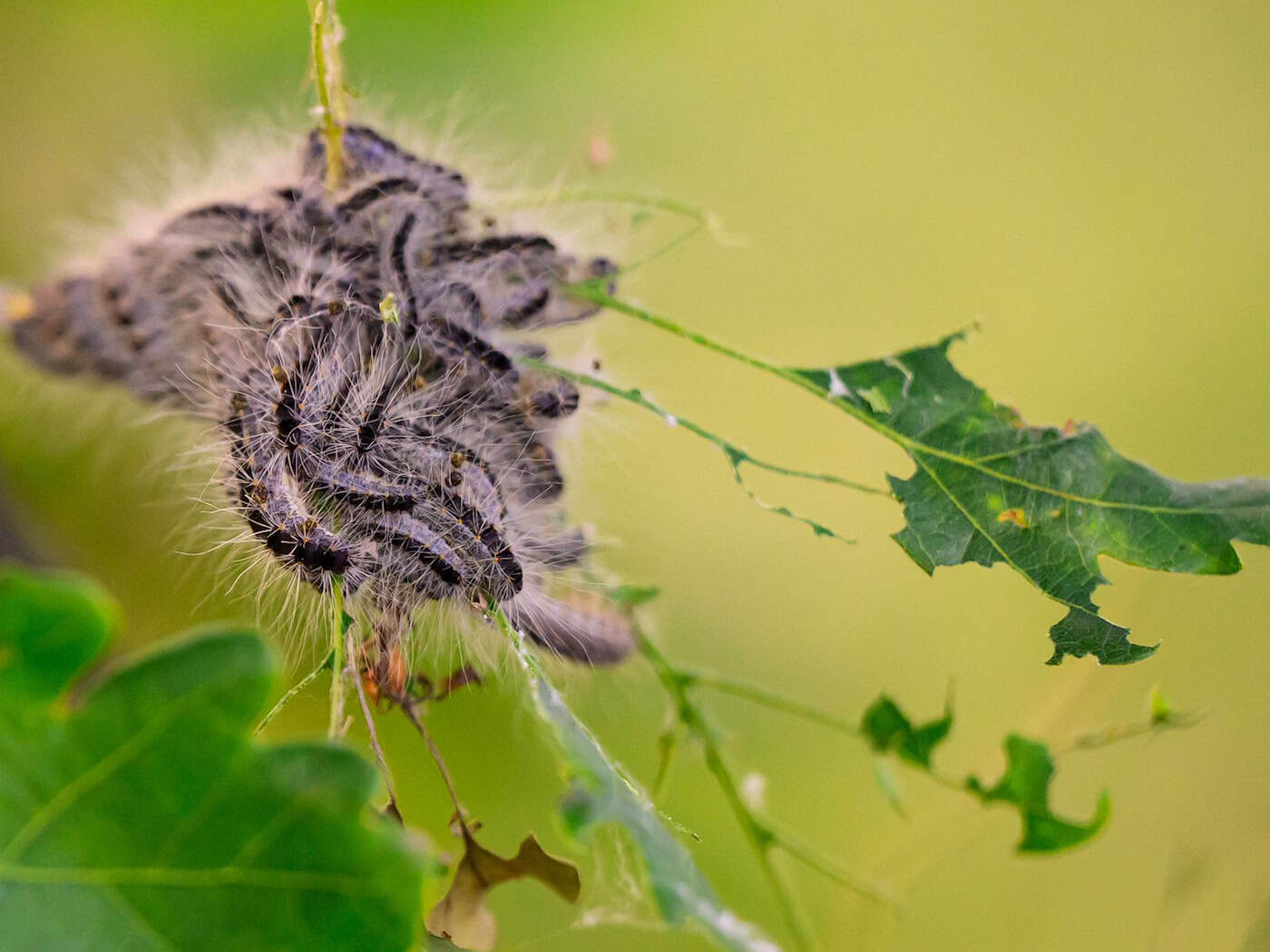
Nests of the oak processionary moth have been discovered in the baroque park Großer Garten in Dresden. The State Palaces, Castles and Gardens of Saxony announced that work is to begin on Friday. According to the statement, employees from a specialist company will climb into the trees with protective equipment and vacuum the nests. "So far, nests have been discovered at the gatehouses, near the Botanical Gardens and the Carolaschlösschen. Further occurrences of the oak processionary moth are expected throughout the park," it said in a statement. According to experts, the oak processionary moth is continuing to spread in Saxony. The moth can not only eat entire trees bare. Its caterpillars also pose a danger to humans: The caterpillars of the butterfly species have poisonous stinging hairs from the third larval stage onwards, which can lead to allergic reactions such as itching, rashes, eye irritation or shortness of breath if they come into contact with the skin or are inhaled. The caterpillars are up to three centimetres long and are brown-yellow or gray-black. Their nests are round webs that can reach the size of a soccer ball. Copyright 2026, dpa (www.dpa.de). All rights reservedBrown-yellow or gray-black


