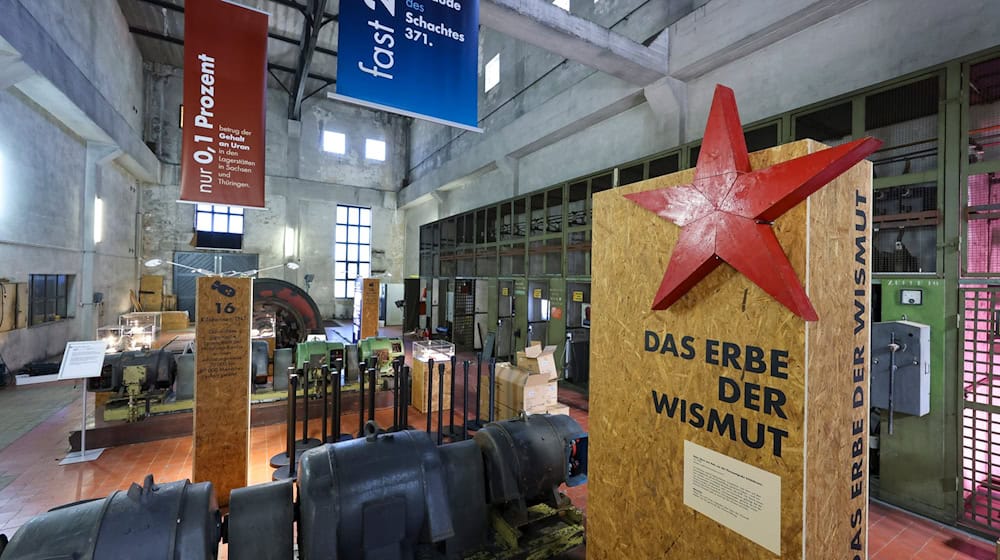
With the remediation of contaminated uranium mining sites in Saxony and Thuringia, many structures such as winding towers and shafts have disappeared from the landscape. The situation is different in Hartenstein, south-east of Zwickau, where the steel headframe still rises 50 meters into the air, along with the historic shaft building and engine house. From May 1, an exhibition will open the doors to part of the plant and the technology of the past. Information will be provided about everyday working life, the global political context of uranium mining in the GDR, its consequences for people and the environment and the remediation of contaminated sites since reunification.

The exhibition is also aimed at people who know little about this chapter of German history - especially younger generations, explains Julia Dünkel, Managing Director of the Wismut Foundation. At the same time, it is intended to give a foretaste of the future presentation of Wismut's legacy.
Forecast of future presentations of the Wismut legacy
While the majority of the legacy has now been remediated, other material and immaterial legacies of this period are increasingly coming into focus. These include extensive files, geological archives including a collection of minerals, the traditions of the miners, works of art created during this period and the memories of contemporary witnesses. The foundation's task is to process and maintain this heritage. In future, it will be presented in Hartenstein and in Ronneburg in Thuringia.
The "No Secret" exhibition will open on May 1 on the anniversary of Shaft 371. It will be open to visitors on the first weekend of every month up to and including October, as well as on Open Monument Day (September 14). At the same time, more than 200 works of art from the Wismut collection - the most extensive art collection of a GDR company - are currently on display in the historic cotton mill in Zwickau under the title "Sonnensucher" (Sun Seeker).
Copyright 2025, dpa (www.dpa.de). All rights reserved