

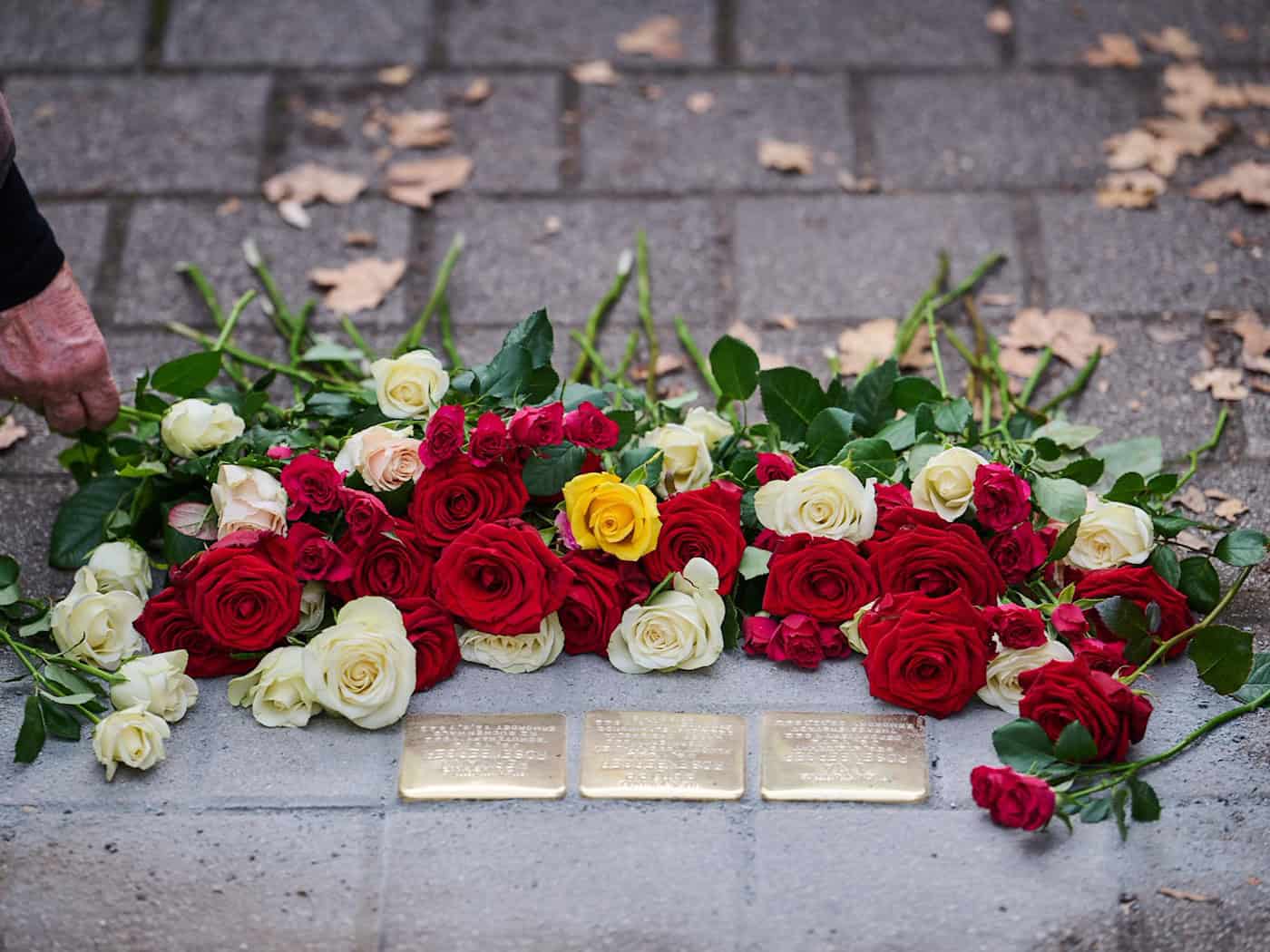
Three new Stolpersteine in Dresden commemorate victims of National Socialism. The new stones were laid in memory of a Jewish family of three who were murdered in various concentration camps, according to a statement from the city. The association “Stolpersteine für Dresden” was founded in 2009. It researches the biographies of Nazi victims, organizes the installations, and maintains contact with relatives. There are currently 417 Stolpersteine in Dresden commemorating the victims of National Socialism. More than 130,000 Stolpersteine have now been laid across Europe. In Heidenau, just under 20 kilometers from Dresden, the city council approved by a majority vote at the end of September a motion submitted by the AfD and CDU to no longer lay Stolpersteine in public streets. Instead, commemorations should preferably take place at the city’s North Cemetery, “so that stepping directly on the memorial elements is prevented,” the resolution stated. The decision sparked criticism and debate nationwide. Stumbling Stones have been used as a form of remembrance since the 1990s and are found in many European countries. These small stones, which are typically funded by donations, are laid at the last known place of residence or activity of victims of National Socialism—their names and dates of birth and death are inscribed on a brass plaque on the top of the stones. In Munich, following a city council resolution, Stolpersteine are not laid on city-owned property. They are found primarily on private property—and they are also permitted on land owned by the Free State of Bavaria. Instead, memorial signs with photos and brief biographical details in front of residential buildings draw attention to the fates of the people who once lived there—before they were torn from their everyday lives by the Nazis. Copyright 2026, dpa (www.dpa.de). All rights reservedNo more Stolpersteine will be laid in Heidenau
Stumbling Stones serve as a reminder in many countries
Memorial markers instead of Stolpersteine in Munich


