

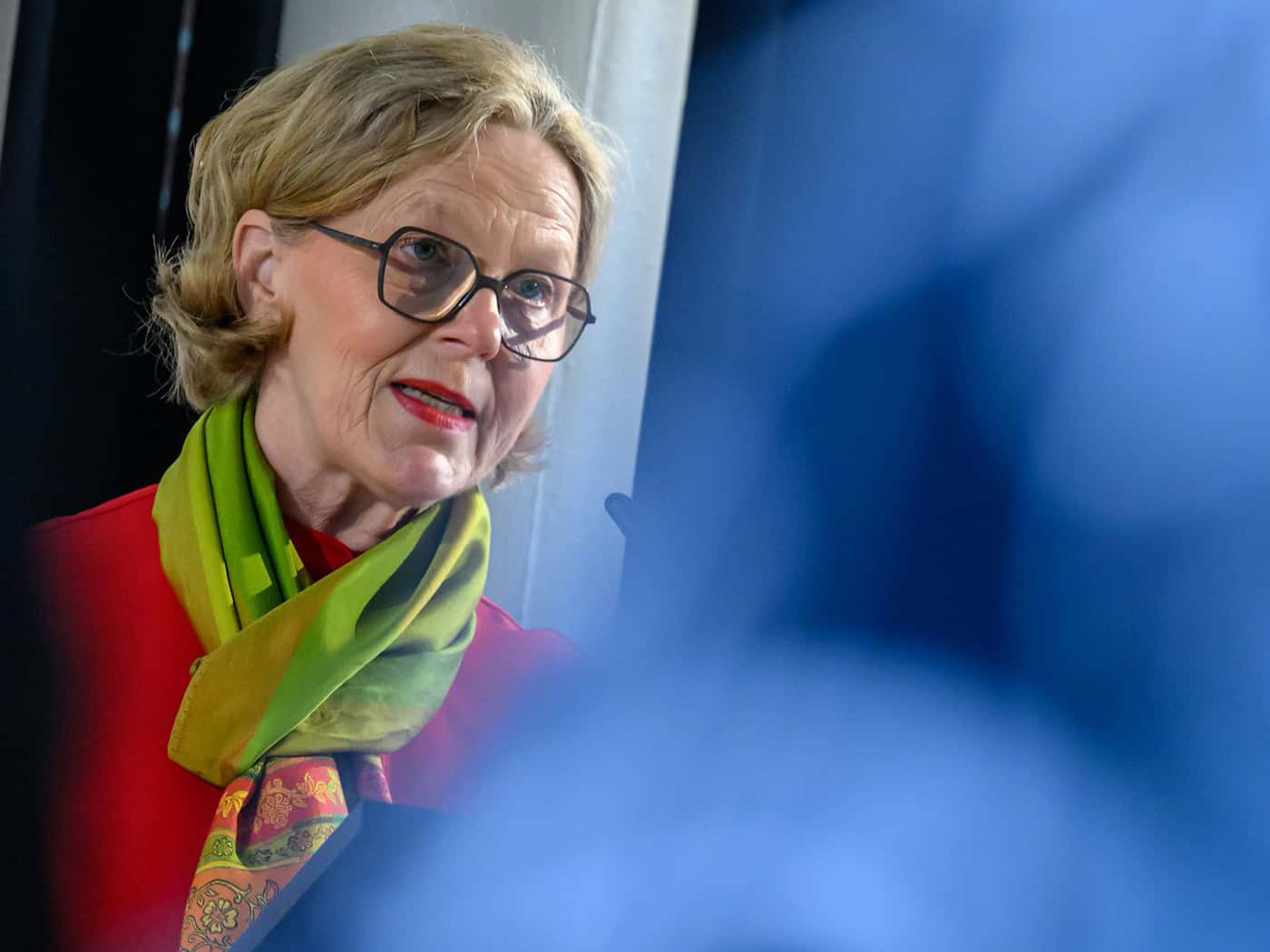
The structural change in the lignite regions of Saxony is irreversible in the view of the political decision-makers and is also on schedule. Infrastructure Minister Regina Kraushaar (CDU) nevertheless sees a challenge, which she formulates as follows: "At the moment, we still have too little that is visible.". At the same time, a lot has already been set in motion. "The federal government's financial aid alone has already committed 940 million euros to projects in the Lusatian coalfield, and around 400 million euros in the central German coalfield near Leipzig," she told the German Press Agency. The affected states of Brandenburg, North Rhine-Westphalia, Saxony and Saxony-Anhalt will receive up to 40 billion euros for the staggered phase-out of lignite by 2038. Saxony will receive 25.2 percent, i.e. just under 10.1 billion euros. Almost 6.9 billion euros have been earmarked for projects in the Saxon part of Lusatia and 3.2 billion euros for projects in the Saxon part of the central German mining district. The money will also flow into several major projects, including two large-scale research centers. The German Center for Astrophysics (DZA) is being established in Lusatia as a leading center in this field of research. It aims to combine research into the universe with the development of new technologies, for example in the field of data processing. The "Center for the Transformation of Chemistry" (CTC) is planned for the Central German mining area in Delitzsch - together with Saxony-Anhalt. The aim is to transform the chemical industry into a resource-conserving circular economy and develop new materials. Both centers will each receive 1.1 billion euros in federal funding by 2038. Money is also to be invested in infrastructure - for example in a high-speed rail line between Berlin-Cottbus-Weißwasser-Görlitz or the completion of the 178 federal highway. The establishment of federal authorities is also on the agenda and has already begun in part - for example in Weißwasser in eastern Saxony, even if the construction of a new branch office of the Federal Office of Economics and Export Control is once again in the stars. "We are currently in the first funding phase until 2029. The projects that have already been approved are investment measures that are always associated with lead times. Planning and tenders take time, sometimes far too much time," emphasized Kraushaar. However, the first projects have already been fully implemented in the individual municipalities in the region. For example, research sites have been established, village community centers have been renovated and projects such as the new kindergarten in Räckelwitz (Bautzen district) have been completed. "We cannot use the money from the federal government to directly promote jobs - unfortunately, the federal states have not prevailed in this regard. We are therefore using the money for investments that are crucial for the attractiveness of the affected areas. This includes, for example, state-of-the-art healthcare, research facilities, meeting places such as village community centers, tourist infrastructure and business parks," emphasized Kraushaar. It is important to stop further migration of the population from these areas and, on the contrary, to attract people. Research in particular could make the former lignite regions attractive, said Kraushaar, citing the Smart Mobility Lab in Hoyerswerda as an example. From 2027, scientists will be researching the mobility of the future there. Projects on automated road traffic, autonomous flight systems and robot-assisted applications in agriculture are planned as focal points. Kraushaar is convinced that facilities such as the DAZ, CTC and Smart Mobility Lab will encourage more companies to settle here. "This will not always create thousands of jobs. But it creates important impulses that promote change in the best sense of the word." It is also true that Lusatia is already looking for workers in certain areas. "There is a shortage of staff in some areas, especially in public services such as care and utilities." "A crucial point for the attractiveness of the regions remains their transport links. How do I get from A to B comfortably and quickly? That's the be-all and end-all," said Kraushaar, also mentioning the pending electrification of the Dresden - Görlitz train line. "The federal government needs to roll up its sleeves." The Free State's two neighbors - the Czech Republic and Poland - would be keeping a close eye on the efforts on the German side. Further delays to such rail projects - including the planned new line from Dresden to Prague - would cause consternation there. Copyright 2026, dpa (www.dpa.de). All rights reservedUniverse to be researched from Lusatia in the future
Planning and tenders take too much time
Research should make former lignite regions attractive
Attractiveness of the regions for residents is crucial


