Logo Die Sachsen News
News / Politics

Tighter EU asylum rules: Saxony feels prepared

Tighter EU asylum rules: Saxony feels prepared
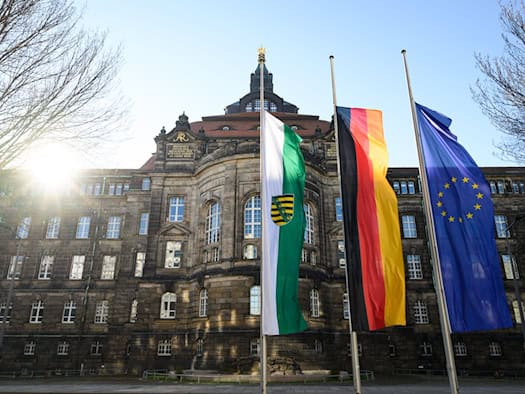
Interior Minister Armin Schuster believes Saxony is prepared for the asylum system reform. (File photo) / Photo: Hendrik Schmidt/dpa
From: DieSachsen News
The new EU asylum law is intended to prevent refugees from moving on unchecked. To this end, a so-called secondary migration center is to be established in Dresden.

Shortly before the EU asylum reform takes effect, Interior Minister Armin Schuster says Saxony is ready. The CDU politician said that work on a so-called secondary migration center began several weeks ago. Under the stricter asylum laws, federal states can establish such facilities with mandatory residency requirements to house people who are required to leave Germany because another EU country has jurisdiction.

According to the State Directorate, the new secondary migration center will begin operations on July 1. To this end, the existing State Departure Center will be continued as a secondary migration center in accordance with the new legal situation. Therefore, no major construction work was required, a spokeswoman explained. 

More from this category

Space for up to 400 people in northern Dresden

Up to 400 foreign nationals can be accommodated at the center in northern Dresden. The facility’s staff is responsible for monitoring entry and exit controls, it was stated. Residents would not be actively prevented from leaving the facility through coercive measures. However, violations of the order could result in a court-ordered detention or fines, according to the State Directorate. Such a center is neither a detention facility nor similar to one, emphasized the spokesperson for the State Directorate.

The background to this is the new EU rules on the Common European Asylum System (CEAS), which take effect on Friday (June 12). Among other things, the reform stipulates that asylum procedures are to be conducted at those EU external borders where asylum seekers first arrive. People with little prospect of protection are to be detained there and deported if their application is denied.

According to Schuster, deportation detention centers remain a bottleneck. If the CEAS functions as intended, there may not be enough space. The minister said that cooperation with other countries is already being sought to address this. Dresden has a deportation detention center.

Refugee organizations accuse the EU and the federal government of violating human rights by tightening asylum laws. “The migration debate has poisoned the political climate and public sentiment in society for many years,” said Schuster. It must be a top priority to remove this from the agenda through sensible procedures. It is in the interest of all countries that the new rules for the European asylum system work.

Copyright 2026, dpa (www.dpa.de). All rights reserved

The translations are automated with the help of AI. We look forward to your feedback and your help in improving our multilingual service. Write to us at: language@diesachsen.com.
Sachsen News
Article from

Sachsen News

Sachsen News is responsible for the content itself. The platform's code of conduct applies. The platform checks and treats content in accordance with the legal requirements, in particular the NetzDG.

Social Media