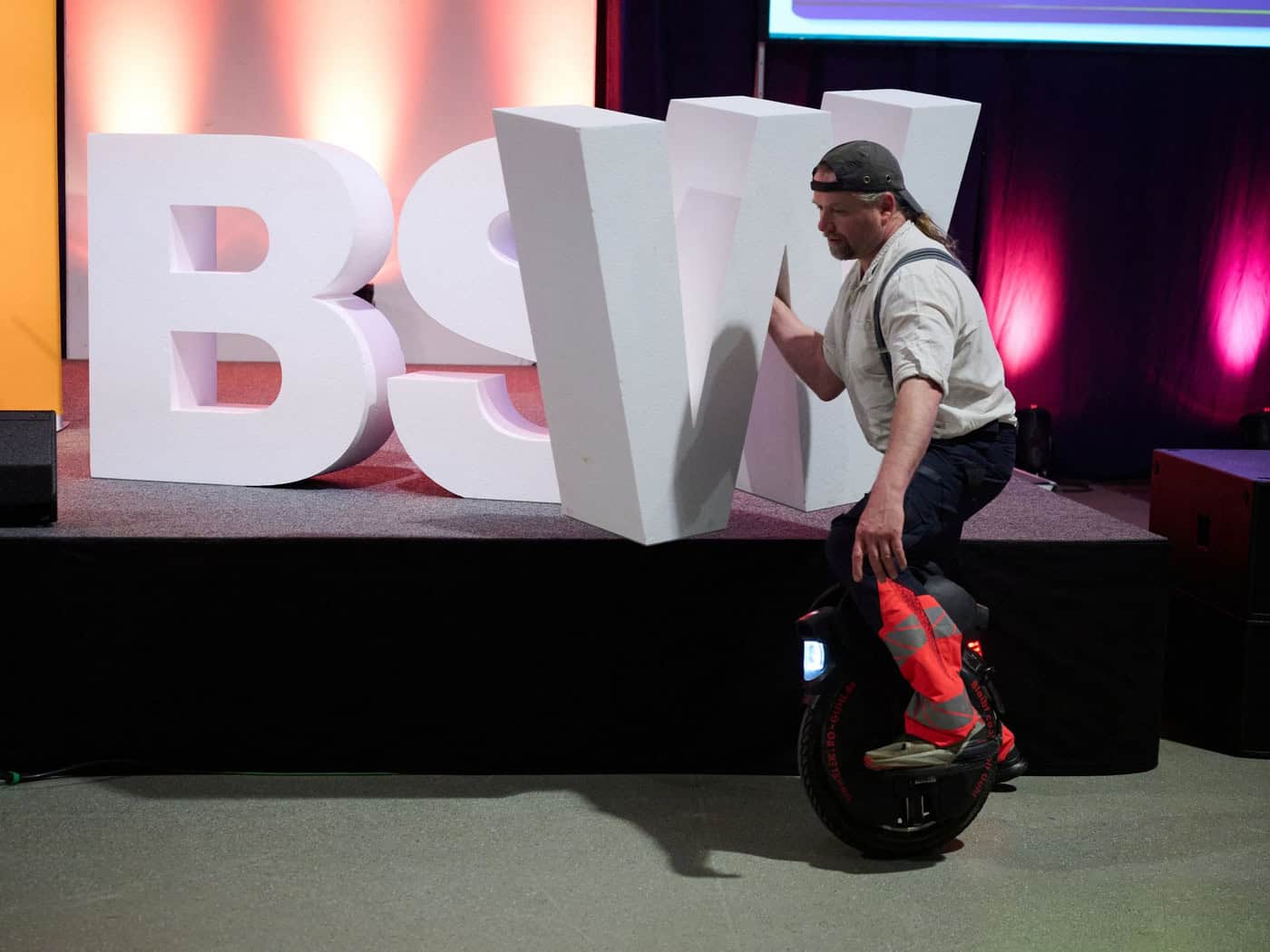
The BSW had long since declared the “firewall” to be “nonsense”—now the party has officially endorsed cooperation with the AfD. A party convention in Dresden approved the new policy proposed by founder Sahra Wagenknecht by a large majority. The AfD in Saxony-Anhalt can thus count on majorities, at least on certain issues. The BSW itself, however, is plunging into crisis ahead of the 2027 state elections in western Germany. A wave of resignations began even while the party was still in Dresden. Klaus Ernst, a longtime ally of Wagenknecht, drew a line under the matter. “This has to do with the fact that we are not clearly distancing ourselves from the AfD,” the 72-year-old told the German Press Agency. “That’s unbearable to me. I wanted a party that is an alternative to the AfD, not one that helps it come to power.” Does he see the BSW coming to an end? “I think so,” said Ernst. Wagenknecht, on the other hand, sees the realignment as an opportunity. How does that add up? The “Magdeburg Path” approved by the party convention means: The BSW does not want a coalition with the AfD or to officially support an AfD minority government. Nor does it want to help elect an AfD candidate as minister-president. However, joint motions, joint votes, and even written agreements with the far-right party are possible. This is in line with the BSW’s practice in Saxony-Anhalt since the state election in September. The local AfD state chapter is classified by the Office for the Protection of the Constitution as a confirmed far-right extremist organization. In the state parliament, the AfD, with 39 seats, and the BSW, with five seats, together hold a majority of the 83 seats. They have already used this majority jointly on several occasions—for a resolution against aid for Ukraine, for example, but also on personnel matters. Claudia Wittig, a leading BSW figure in Saxony-Anhalt, now has more leeway thanks to the party convention resolution. In her party convention speech, Wagenknecht argued against “demonizing” the AfD. While there are indeed politicians in the AfD who hold ethno-nationalist views, advocate for the remigration of millions, or support the wars waged by U.S. President Donald Trump, some in the AfD are as close to the BSW on peace policy as any politicians from any other party. The AfD is not a long-term strategic partner, Wagenknecht said. “But as long as there is a window of opportunity for concrete changes and improvements, we must take advantage of it.” Using AfD votes to push through the BSW’s policies—that is her strategy. To that end, the party founder is also seeking connections with the AfD’s federal leadership. On ZDF, she confirmed a joint dinner with AfD leader Tino Chrupalla in Saarland: “We had a conversation because, of course, it was important to me to discuss how we can position ourselves in relation to one another.” After years of disputes, Wagenknecht left Die Linke in 2023 along with a few loyalists and founded the BSW with them. Always by her side: Christian Leye, Sevim Dagdelen, and Klaus Ernst, all of whom most recently served on the BSW executive board. Ironically, they are now the ones opposing Wagenknecht—the move toward the AfD fundamentally goes against the grain of these former Left Party members. They wanted not only to rule out coalitions and tolerance agreements but also any long-term arrangements with the AfD. Leye was particularly outraged that BSW colleagues from Saxony-Anhalt described themselves as “partners” of the AfD. He summed it up as follows: “What the fuck? Since when have we been partners with the AfD?” This party, he said, could only be an opponent. Ernst said of the AfD: “In my view, it is a racist party, a nationalist party that also has its difficulties with democracy. That is why it cannot be a partner.” Following their defeat in the policy dispute, Leye and others left open the question of whether they would leave. However, some delegates in the hall immediately announced their resignation, some amid boos. Thirty officials declared in writing that they were breaking with the BSW, which they said was destroying itself as “the only anti-war party and party of social justice.” The statement was signed by Bernd Rudolph, a member of the Saxon state parliament, and Berlin co-chair Josephine Thyret, but above all by a large number of BSW members from North Rhine-Westphalia and other West German state chapters. The stance toward the AfD is, to a certain extent, also an East-West conflict within the BSW, Ernst said on the sidelines of the party convention. Wagenknecht acknowledged this as well. In the West and among church and labor union circles, reactions to the “Magdeburg Path” have been negative—in the East, however, they have been positive, said the BSW founder. The AfD is capitalizing on anger and dissatisfaction. “That’s where our potential voter base lies,” she said. In fact, the BSW has so far only managed to win seats in state parliaments in eastern Germany—in Thuringia, Saxony, and Brandenburg in 2024, and in Saxony-Anhalt in 2026. Ahead of the 2027 state elections in Schleswig-Holstein, Saarland, North Rhine-Westphalia, Bremen, and Lower Saxony, however, the party is not polling above three percent in any major survey. Party leader Amira Mohamed Ali said with regard to the elections: “It’s going to be tough.” We must stand together. “We must not do our enemies, who are fighting us, the favor of letting ourselves go under.” Copyright 2026, dpa (www.dpa.de). All rights reservedWhat was decided in Dresden
Why Wagenknecht supports this approach
Why the decision is tearing the party apart
East-West Conflict Within the Party