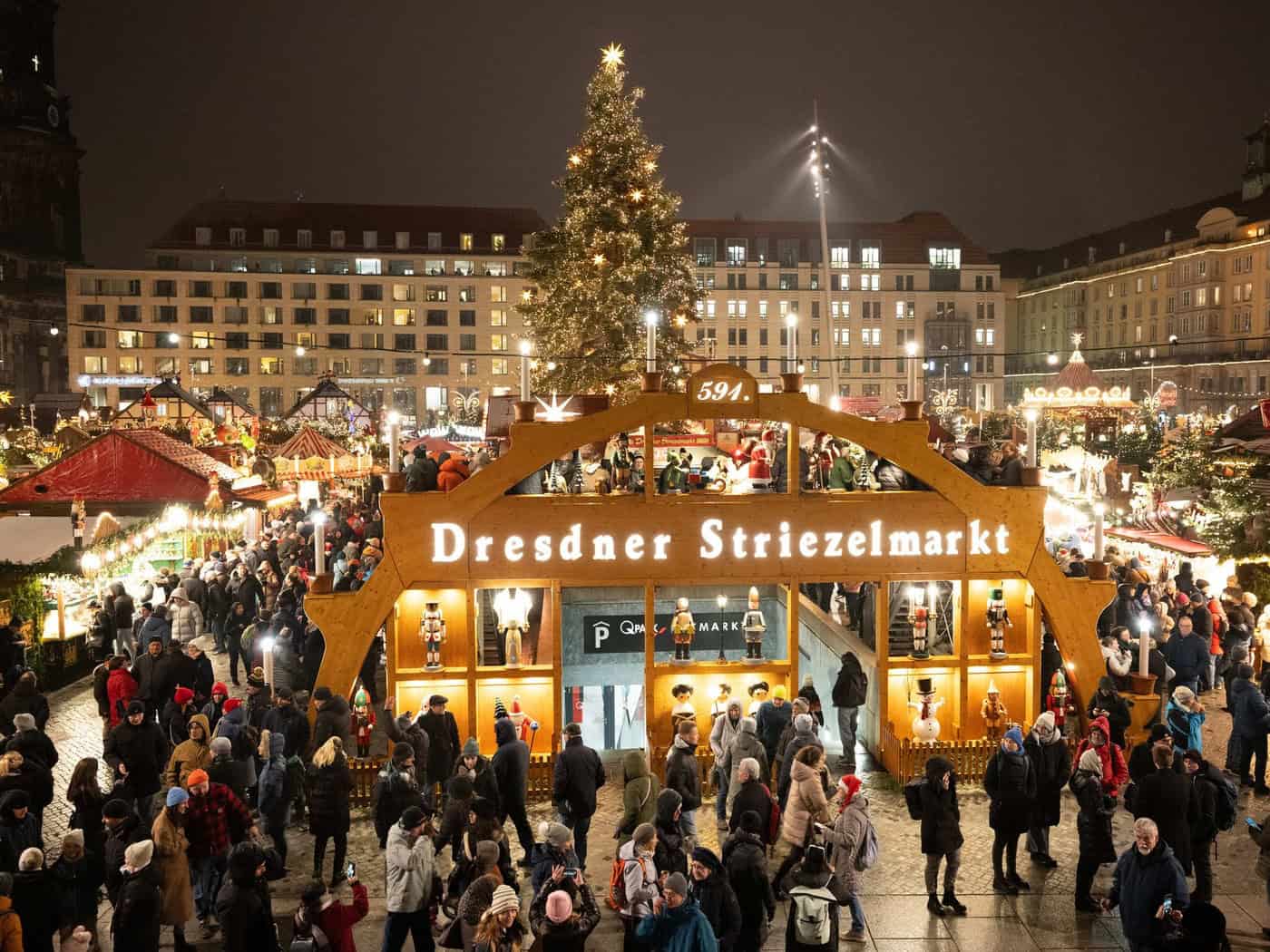
Saxony plans to promote itself as a “Christmas wonderland” in the coming weeks. Culture Minister Barbara Klepsch (CDU) announced this plan following the cabinet meeting in Dresden. To help visitors from Germany and abroad find their way around, the Saxon Tourism Marketing Agency has consolidated the digital offerings on a central website. The season kicks off next Monday with “Meissen Christmas.” After that, the festivities will continue in places like Plauen, Annaberg-Buchholz, Freiberg, Leipzig, Dresden, Bautzen, and Görlitz. Minister Klepsch confidently calls Saxony the “No. 1 German Christmas destination”. In fact, many Christmas markets in the Free State have a long tradition. Bautzen and Dresden, for example, are among the oldest markets of their kind in Germany. Dresden’s Striezelmarkt is celebrating its 592nd edition this year. “The unique combination of centuries-old traditions, vibrant woodcarvings, arts and crafts, culinary specialties, and top-notch cultural offerings draws millions of visitors here every year,” says Klepsch. In her view, Saxony stands out above all for the quality of what it has to offer. “The Christmas market season and the Advent season are at the very heart of Saxon culture and our regional identity. They foster a sense of connection to home; they stand for solidarity; they stand for centuries-old traditions that come to life in a particularly vibrant way during the Advent and Christmas seasons.” Wooden crafts from the Ore Mountains, Dresden Christstollen, Pulsnitz gingerbread, and Herrnhut stars are hallmarks of the region and known worldwide. The programs of the boys’ choirs and the historic miners’ parades are also part of this tradition. An exact number is not known. Klepsch speaks of up to 160 confirmed Christmas and Advent markets. Minister of Economic Affairs Dirk Panter (SPD) estimated there were several hundred markets. According to Klepsch, the Christmas markets are a “tourism brand driver” that gives tourism and the hospitality industry a real boost every year. With a total of 19.7 million overnight stays per year in Saxony, December is consistently one of the strongest months. In Dresden, for example, hotels have a booking rate of more than 90 percent on weekends in December. Occupancy is up to 30 percent higher than usual. “In addition to the major cities, the Ore Mountains, the Elbe Region, Upper Lusatia, the Vogtland, and Saxon Switzerland are also seeing high booking numbers from day-trippers and overnight guests,” said Klepsch. This demonstrates the importance of Christmas for the entire state. International visitors are also increasingly coming to Saxony during this time of year. “These are guests from Austria, Poland, the Netherlands, Switzerland, and the U.S.” In December, Americans in particular are moving up in the overnight stay statistics. This year, Saxony is promoting itself as a Christmas destination in London and major Chinese cities. Economics Minister Panter answers this question with a resounding “yes.” For parts of the retail and hospitality sectors, this is the busiest time of the year in terms of sales. “According to the German Retail Association, we generate a good fifth of our annual revenue in November and December alone.” According to a study by the Dresden Chamber of Industry and Commerce, the total revenue of the Dresden Striezelmarkt exceeds 48 million euros per year. If you extrapolate that figure, the value added across all of Saxony amounts to a three-digit million figure. Saxony’s arts and crafts sector accounts for an annual revenue of over 800 million euros. According to Interior Minister Armin Schuster (CDU), the Advent and Christmas season is a clear priority for the police. “We will be out in force,” he said. “The focus is on the particularly busy times, namely the afternoon and evening hours and, of course, the weekends. This applies above all to the Christmas markets in the major cities and, within those, to special events such as the Stollen Festival and the opening days. But it also applies to rural areas.” According to Schuster, there will be no admission checks this year. “We want to convey the Christmas spirit, not frustrate people. But ensuring safety at the same time—that’s the trick.” The police, however, will be conducting intensive checks to enforce the existing bans on weapons and knives. Like the market organizers, they are preparing meticulously. The minister referred to a directive from the Ministry of the Interior to police departments stating that “police resources will be set as high as possible during these weeks leading up to Christmas and the New Year.” However, there is no ban on vacation time. Schuster’s conclusion: “We are ready.” Copyright 2026, dpa (www.dpa.de). All rights reservedWhat can visitors expect at Saxony’s Christmas markets?
How many Christmas markets are there in Saxony?
How important are they for the economy?
How safe are the Christmas markets?