

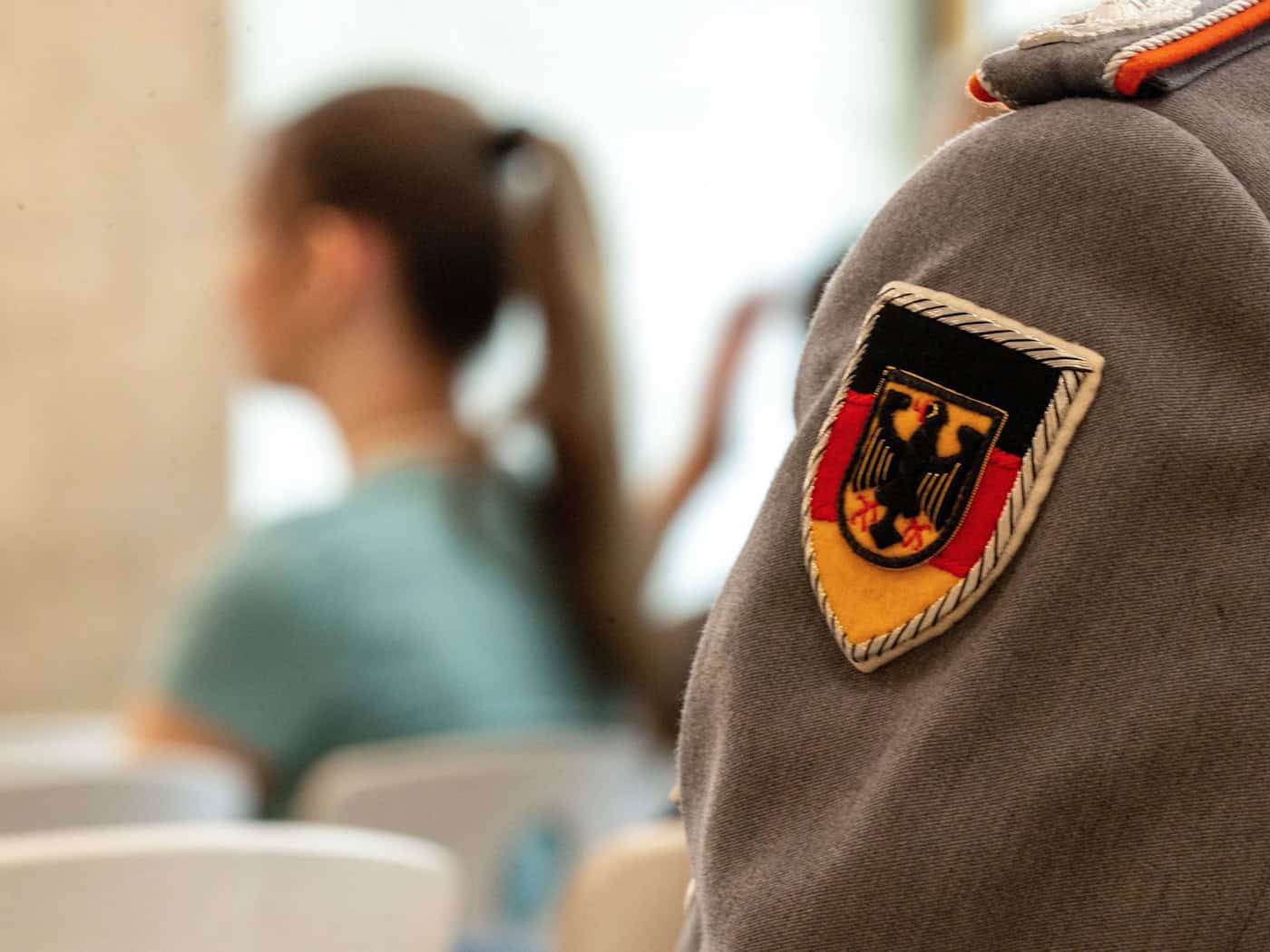
The Bundeswehr visits hundreds of school classes in Saxony every year. Last year, there were 374 visits to schools, according to an answer from the federal government to a question from the Left Party in the Bundestag. This was around 50 fewer visits than in 2024. Compared to 2021, however, there was an increase of around 40 percent. In the current year, 35 visits have already taken place in Saxony and 46 more are planned. Last year, the highest number of visits by Bundeswehr representatives to schools in Germany were in states such as Bavaria (1114), North Rhine-Westphalia (862) and Lower Saxony (844). However, Leipzig MP Sören Pellmann (Left Party) criticized the fact that Saxony has been at the top of the list for years in relation to the number of pupils. Pellmann described the expansion of the Bundeswehr's presence in schools as a dangerous mistake. "Children and young people must not be gradually accustomed to the military and war as the norm." If soldiers were to appear in the classroom, civilian voices, such as those of conscientious objectors and peace initiatives, would be needed on an equal footing. This demand was echoed by the Education and Science Union (GEW) in Saxony. Especially in times of crisis, it is important that pupils get to know different perspectives, which is why civil society actors in schools need to be heard more, demanded the deputy chairwoman of GEW Saxony, Claudia Maaß. "Instead of 'war-mongering education', we need education that is geared towards peace, democracy and diplomatic conflict resolution." Schools are no place for military advertising. The Bundeswehr's youth officers are responsible for visiting schools. They are specially trained to give talks on security policy or explain the Bundeswehr's mission to pupils from the fifth grade up to upper secondary school and vocational schools. They also organize simulation games on international politics and security or troop visits for school classes. In Saxony, these visits are regulated by a cooperation agreement between the Ministry of Culture and the Bundeswehr. The speakers are not allowed to recruit new recruits for the troops in class. In addition, controversial topics discussed in public must also be dealt with accordingly in the classroom. Schools can decide for themselves whether and how to incorporate the offer into lessons. Copyright 2026, dpa (www.dpa.de). All rights reservedLeft criticizes expansion of appearances as a mistake
GEW calls for different perspectives
Youth officers visit pupils from the 5th grade


